The Tuesday Night Transformation
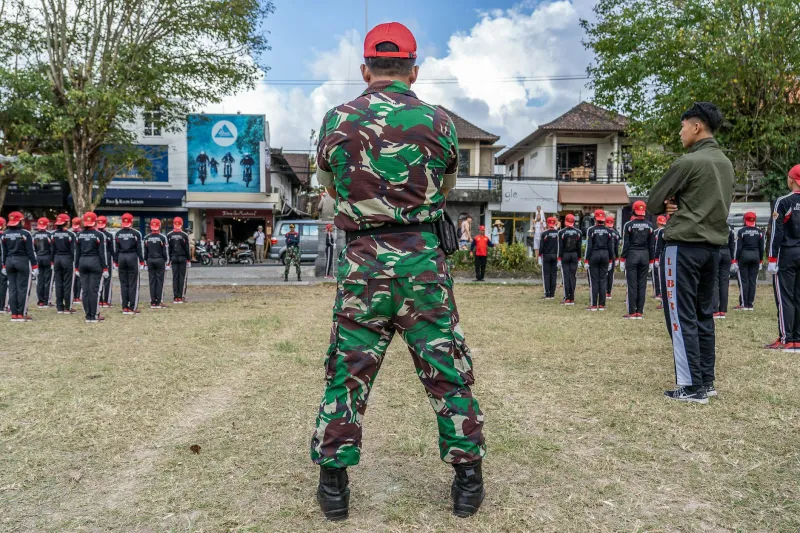
Every Tuesday evening at 7 PM sharp, the drill hall at Catterick Garrison comes alive with the sound of marching boots. Thirty teenagers from the local Army Cadet Force are about to embark on what might be Britain's most effective leg conditioning session – though they'd probably just call it "training."
"When I joined cadets at 13, I could barely walk up the stairs without getting winded," recalls former cadet Sarah Mitchell, now 19 and studying at university. "By the time I left at 18, I had legs like tree trunks and could outrun most of the lads on my football team. The transformation was incredible."
Sarah's story isn't unusual. Across the UK, approximately 40,000 Army Cadets and 30,000 Army Reserve personnel are unknowingly participating in one of the most comprehensive lower-body development programmes available anywhere – and it doesn't cost them a penny.
The Method Behind the Military Muscle
Sergeant Major Tony Harrison has been training cadets for fifteen years. His approach to leg conditioning wasn't learned in any civilian gym – it comes from decades of military wisdom about building functional, battle-ready strength.
"Civvie gyms focus on individual muscles," he explains, watching a squad perform drill movements. "We train the legs as a complete system. Every exercise has to serve multiple purposes – strength, endurance, coordination, and mental toughness."
The cadet training philosophy centres on three core principles:
- Progressive overload through practical application
- Functional movement patterns that translate to real-world scenarios
- Mental resilience built alongside physical strength
"It's not about how much you can squat," continues Sergeant Major Harrison. "It's about whether your legs can carry you and your kit across rough terrain for hours without breaking down. That requires a different kind of strength."
Drill and Ceremony: The Foundation of Power
To outsiders, military drill might look like old-fashioned pageantry. To exercise physiologists, it's a masterclass in isometric training and neuromuscular control.
Dr. Rebecca Foster from the Institute of Naval Medicine has studied military training methods extensively. "Drill movements require sustained muscle engagement while maintaining precise control," she explains. "The legs are constantly working to maintain posture, execute sharp movements, and support body weight during extended periods of standing."
A typical drill session includes:
- Standing to attention: Sustained isometric contraction of all leg muscles
- Quick march: Rhythmic, controlled stepping with precise timing
- About turns: Explosive pivoting movements engaging hip and ankle stabilisers
- Slow march: Maximum control and balance challenge
"I remember my first drill practice," laughs James Cooper, a former cadet from Liverpool. "My legs were shaking after twenty minutes of standing at attention. I thought it would be easy – just standing there. But your quads, calves, everything is firing constantly to maintain that position."
The Loaded March: Ultimate Endurance Builder
Perhaps no single exercise builds leg strength quite like the military's loaded march. Cadets regularly complete 5-10 kilometre walks carrying 15-20kg of equipment, while Reserve personnel tackle 25-kilometre marches with full battle kit.
"The loaded march is the ultimate leg builder," explains Company Sergeant Major Lisa Thompson from the Yorkshire Regiment. "You're not just walking – you're carrying weight over varied terrain while maintaining pace and formation. It builds strength, endurance, and mental toughness simultaneously."
The physiological demands are extraordinary:
- Sustained weight-bearing exercise lasting 2-6 hours
- Varied terrain challenging different muscle groups
- Postural demands from carrying equipment
- Pace discipline preventing rest or recovery
"After my first proper tab [loaded march], I could barely walk the next day," remembers former Reserve soldier Mark Davies. "But within months, my legs felt bulletproof. I was hiking mountains for fun at weekends, carrying heavy packs like they were day bags."
Field Exercises: Functional Strength in Action
While drill and marching build the foundation, field exercises develop the explosive power and agility that make military-trained legs truly special. These scenarios replicate combat conditions, demanding rapid movements, low crawls, and sustained activity under stress.
Typical field exercise movements include:
- Leopard crawling: Full-body movement emphasising leg drive
- Fire and manoeuvre: Explosive sprints followed by controlled positions
- Obstacle negotiation: Jumping, climbing, and scrambling over barriers
- Extended patrolling: Hours of tactical movement across rough terrain
"Field exercises are where you discover what your legs can really do," notes Cadet Sergeant Emma Williams from a Midlands detachment. "You're crawling through mud, sprinting between cover points, climbing over walls – it's like the world's most intense circuit training, except it goes on for hours."
The Mental Multiplier Effect
What separates military leg training from civilian programmes isn't just the physical demands – it's the mental component. Cadets and Reserve personnel learn to push through discomfort, maintain performance under pressure, and support teammates when their own strength is failing.
"The physical training is only half the story," explains Dr. Foster. "Military personnel develop what we call 'psychological resilience' – the ability to maintain performance when tired, stressed, or uncomfortable. This mental strength allows them to train harder and more consistently than most civilian athletes."
This mental toughness creates a positive feedback loop. Stronger minds enable harder training, which builds stronger bodies, which reinforces mental confidence. It's a holistic approach to development that civilian fitness often lacks.
Bringing Military Methods Home: The Civilian Adaptation
Inspired by cadet and Reserve training, here's how you can incorporate military leg conditioning into your routine:
The Drill Foundation (Daily)
- 5 minutes standing to attention (build up gradually)
- 100 precise marching steps in place
- 20 sharp about-turns (10 each direction)
- Focus on posture, control, and sustained engagement
The Loaded Walk (Weekly)
- Start with 3km carrying 10kg (rucksack or weighted vest)
- Maintain steady pace throughout
- Progress distance and weight gradually
- Choose varied terrain when possible
Field Movement Circuit (Twice weekly)
- 50m leopard crawl
- 10 explosive forward bounds
- 30-second wall sit
- 20m lateral shuffles (each direction)
- Repeat 3-5 rounds with minimal rest
The Endurance Challenge (Monthly)
- Extended walk (10-15km) with moderate load
- Include hills, uneven surfaces, and navigation
- Focus on maintaining form throughout
- Build mental toughness alongside physical strength
Beyond Basic Training: Advanced Adaptations
For those ready to progress beyond foundation level, military training offers advanced challenges:
The Assault Course Approach
- Combine loaded carries with obstacle negotiation
- Add time pressure and competitive elements
- Include team-based challenges
- Progress to more complex scenarios
Environmental Training
- Train in all weather conditions
- Use varied terrain and surfaces
- Include night-time sessions
- Embrace discomfort as part of adaptation
The Parade Ground Advantage
What makes military leg training so effective isn't any single exercise – it's the systematic, progressive approach that builds strength, endurance, and resilience simultaneously. Unlike gym programmes that isolate individual muscles, military methods develop the legs as an integrated system capable of sustained, varied performance.
"Civilian fitness often focuses on looking good," observes Sergeant Major Harrison. "Military training focuses on performing well. The strength you build has to work under pressure, in difficult conditions, when you're tired and stressed. That creates a different kind of toughness."
For UK fitness enthusiasts seeking an alternative to conventional leg training, military methods offer proven effectiveness backed by generations of practical application. The principles that have kept British forces mobile and effective for centuries can transform civilian legs too.
Whether you're inspired by the precision of drill movements, the endurance demands of loaded marching, or the functional strength of field exercises, military training methods provide a template for building legs that are truly fit for purpose. After all, if it's good enough for defending the realm, it's certainly good enough for your next leg day.
So consider trading your gym session for some parade ground principles. Your legs – and your mental toughness – will thank you for the upgrade from civilian to military-grade conditioning.