It's Time to Bury the Bro-Science Once and For All
Walk into any British gym and you'll hear them – the whispered warnings, the confident declarations, the "my mate's cousin's personal trainer said" proclamations that pass for fitness wisdom. Nowhere is this more prevalent than when it comes to leg training, where decades of gym folklore have created a minefield of misinformation that's actively sabotaging people's progress.
It's 2024, yet we're still battling myths that should have died with VHS workout videos and protein powder that tasted like chalk. These aren't harmless misconceptions – they're genuine barriers preventing British gym-goers from developing the strong, functional legs they deserve.
Time for some myth-busting that's long overdue.
Myth #1: "Squats Will Destroy Your Knees"
The Lie: Deep squats are dangerous and will inevitably lead to knee problems later in life.
The Truth: This myth is so persistent it's practically become gym gospel, whispered reverently in changing rooms across the country. Yet it's complete nonsense.
Dr. Michael Harper, orthopaedic surgeon at the Royal London Hospital, is blunt about this misconception: "Properly performed squats are one of the best exercises for knee health. The movement strengthens the muscles that support and protect the knee joint. The problems arise from poor technique, not the exercise itself."
 Photo: Royal London Hospital, via www.bcd-urbex.com
Research consistently shows that deep squats, performed with proper form, actually improve knee stability and reduce injury risk. The confusion stems from people with existing knee problems experiencing pain during squats – but correlation isn't causation.
The real knee destroyers? Muscle imbalances from avoiding squats, weak glutes from excessive machine use, and the sedentary lifestyle that many use as an excuse to skip leg training altogether.
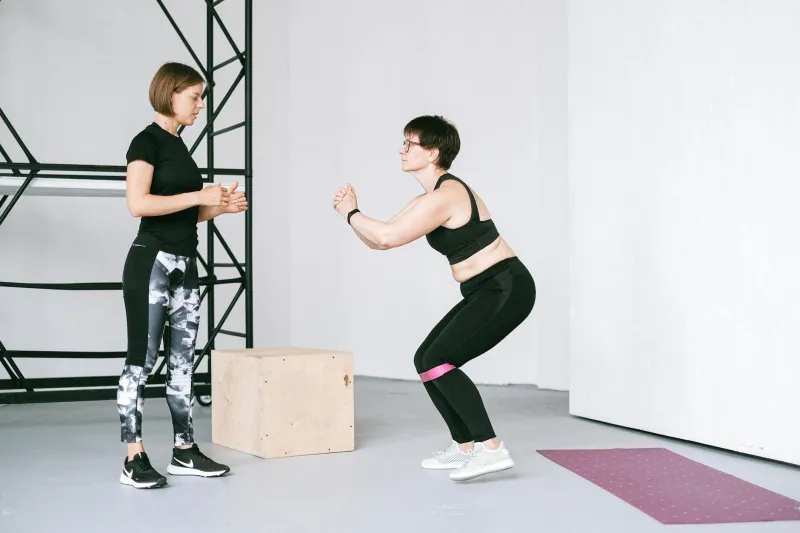
The Fix: Learn proper squat technique. Start with bodyweight, focus on mobility, and gradually add load. Your knees will thank you in thirty years' time.
Myth #2: "Women Shouldn't Train Legs Heavy Because They'll Get Bulky"
The Lie: Heavy leg training will give women unfeminine, bulky thighs.
The Truth: This myth is so outdated it belongs in a museum next to Victorian corsets and medical leeches, yet it persists in British gyms like a bad smell.
Strength coach Sarah Williams from Birmingham has heard this myth countless times: "I've been training women for fifteen years, and the ones doing heavy squats and deadlifts have the most enviable legs in my gym. Strong, shapely, and powerful – not bulky."
The biological reality is that women have significantly lower testosterone levels than men, making it extremely difficult to build the kind of muscle mass that creates a 'bulky' appearance. What heavy leg training actually does for women is create lean, defined muscles and the kind of functional strength that makes everyday life easier.
The irony? Many women spend hours on cardio equipment trying to achieve the very leg shape that heavy squats would give them in half the time.
The Fix: Embrace the barbell. Progressive overload isn't gender-specific, and neither are the benefits of strong legs.
Myth #3: "You Don't Need to Train Legs If You Run/Cycle/Play Football"
The Lie: Cardiovascular activities provide sufficient leg strengthening.
The Truth: This myth is particularly prevalent among British men who play five-a-side football twice a week and consider that sufficient leg training.
Sports scientist Dr. Emma Richardson from Loughborough University explains the flaw in this logic: "Cardiovascular activities primarily train muscular endurance, not strength. Running a marathon doesn't give you the same leg strength as squatting your bodyweight, just as squatting doesn't give you the cardiovascular fitness of a long run."
 Photo: Loughborough University, via brandingstyleguides.com
Footballers, runners, and cyclists who add dedicated strength training to their routine consistently show improved performance, reduced injury rates, and better muscular balance. The activities complement each other – they don't replace each other.
The Fix: If you're active in sports, use strength training to support and enhance your performance, not replace it.
Myth #4: "Leg Press Is Just as Good as Squats"
The Lie: Machine-based leg exercises provide the same benefits as free-weight compound movements.
The Truth: This myth is beloved by people who find squats challenging and are looking for an easier alternative that delivers the same results. Unfortunately, exercise doesn't work that way.
Personal trainer James Morrison from Edinburgh is diplomatic but clear: "The leg press has its place, but it's not a squat replacement. Squats require core stability, balance, and coordination. They're a full-body movement that happens to be initiated by your legs. The leg press is just pushing weight with your quads."
The leg press eliminates the stabilising challenge that makes squats so effective. It's like comparing a conversation on speaker phone to speaking face-to-face – technically similar, but missing crucial elements.
The Fix: Use machines to supplement free weights, not replace them. Both have their place in a well-rounded programme.
Myth #5: "Light Weights and High Reps Are Best for Toning"
The Lie: Using light weights for high repetitions will 'tone' muscles without building unwanted size.
The Truth: This myth has infected British gym culture like a virus, particularly among women who've been sold the fantasy of 'toning' without building muscle.
The biological reality is that 'toning' is simply having muscle definition with low body fat. You can't tone a muscle that doesn't exist, and you can't build significant muscle definition without progressive overload.
Strength and conditioning coach Rachel Davies from Cardiff puts it perfectly: "I've never seen anyone achieve the lean, defined legs they want by doing endless sets of 20-rep leg extensions with 10kg. But I've seen countless people achieve exactly that look through progressive strength training combined with proper nutrition."
The Fix: Train in various rep ranges. Heavy weights build strength and muscle, moderate weights build size, and higher reps build endurance. You need all three for optimal leg development.
The Cost of Confusion
These myths aren't just harmless misconceptions – they're actively holding back British gym-goers from achieving their potential. People avoid squats due to knee fears and wonder why their legs lack strength. Women stick to light weights and can't understand why they're not seeing the definition they want. Athletes skip dedicated leg training and plateau in their sports performance.
The fitness industry bears some responsibility here. For too long, we've allowed marketing to override science, selling quick fixes instead of sustainable solutions. We've created a culture where opinion carries the same weight as evidence, where gym folklore is treated as fact.
Moving Forward
The solution isn't complicated: education, evidence, and a healthy scepticism towards anyone offering absolute truths about training. Question the source, demand evidence, and remember that if something sounds too good to be true, it probably is.
Your legs are capable of incredible things – strength, power, endurance, and resilience that would amaze you if you gave them the chance. But they can't reach that potential while being held back by decades-old myths and misconceptions.
It's time British gym culture grew up, embraced the science, and started treating leg training with the respect it deserves. After all, when the foundation is strong, everything else follows.
Now, who's ready to finally give their legs the training they've been waiting for?