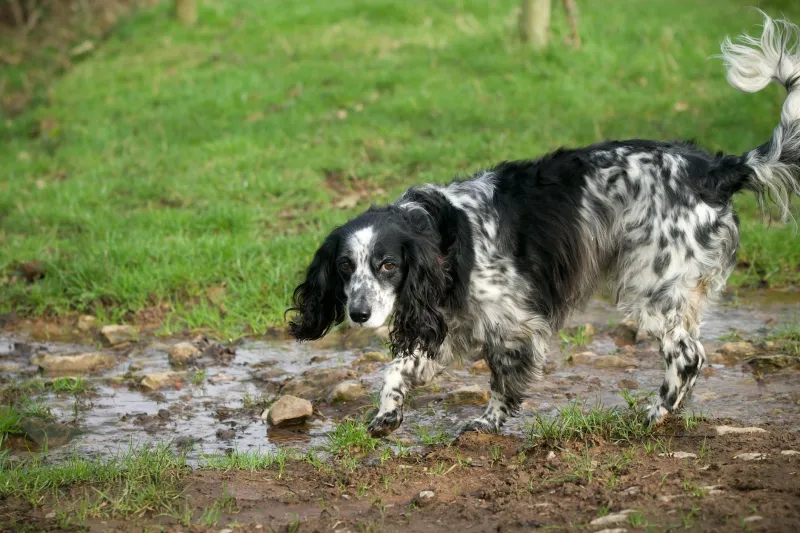
Britain's Best-Kept Fitness Secret Has Four Legs and a Waggy Tail
Every morning at dawn, and every evening as the light fades, millions of Britons lace up their wellies, clip on a lead, and head out into whatever weather the British climate has decided to throw at them. They're not thinking about fitness, muscle activation, or resistance training. They're thinking about preventing their sofa from being destroyed by an under-exercised Border Collie.
But here's what they don't realise: they're participating in one of the most comprehensive, varied, and consistent leg training programmes in the country. Britain's dog walking culture isn't just keeping our four-legged friends happy – it's quietly building some of the strongest, most functional legs in Europe.
The Numbers Don't Lie
The statistics are staggering. With over 13 million dogs in UK households and the average dog requiring two walks daily, we're looking at roughly 26 million individual dog walks happening across Britain every single day. That's 26 million opportunities for functional leg training, happening in parks, on beaches, through forests, and across muddy fields from Land's End to John o' Groats.
Consider the average dog walk: 30-45 minutes of varied-pace movement across uneven terrain, often carrying additional weight (poo bags, tennis balls, treats), frequently interrupted by sudden direction changes courtesy of an excited retriever who's spotted a particularly interesting stick.
Personal trainer and canine behaviour specialist Rachel Green from Manchester puts it perfectly: "Dog walkers are essentially doing interval training combined with functional movement patterns without realising it. They're getting better leg workouts than half the people I see in commercial gyms."
Terrain Training at Its Finest
The secret sauce in dog walking fitness lies in the terrain diversity that our four-legged personal trainers demand. Dogs don't stick to treadmills or predictable gym circuits – they want adventure, and that adventure translates into serious leg conditioning for their human companions.
Beach Walking: Coastal dog walkers are essentially doing sand resistance training. The unstable surface forces constant micro-adjustments in your stance, engaging stabilising muscles throughout your legs and core. Add in the resistance of soft sand, and you're looking at a workout that rivals any fancy gym equipment.
Woodland Trails: Navigation through root systems, fallen logs, and varied elevation changes creates natural obstacle courses. Dog walker Emma Thornton from the Lake District explains: "Following my spaniel through Grizedale Forest is like doing a daily assault course. I'm constantly stepping over, around, and up things. My legs have never been stronger."
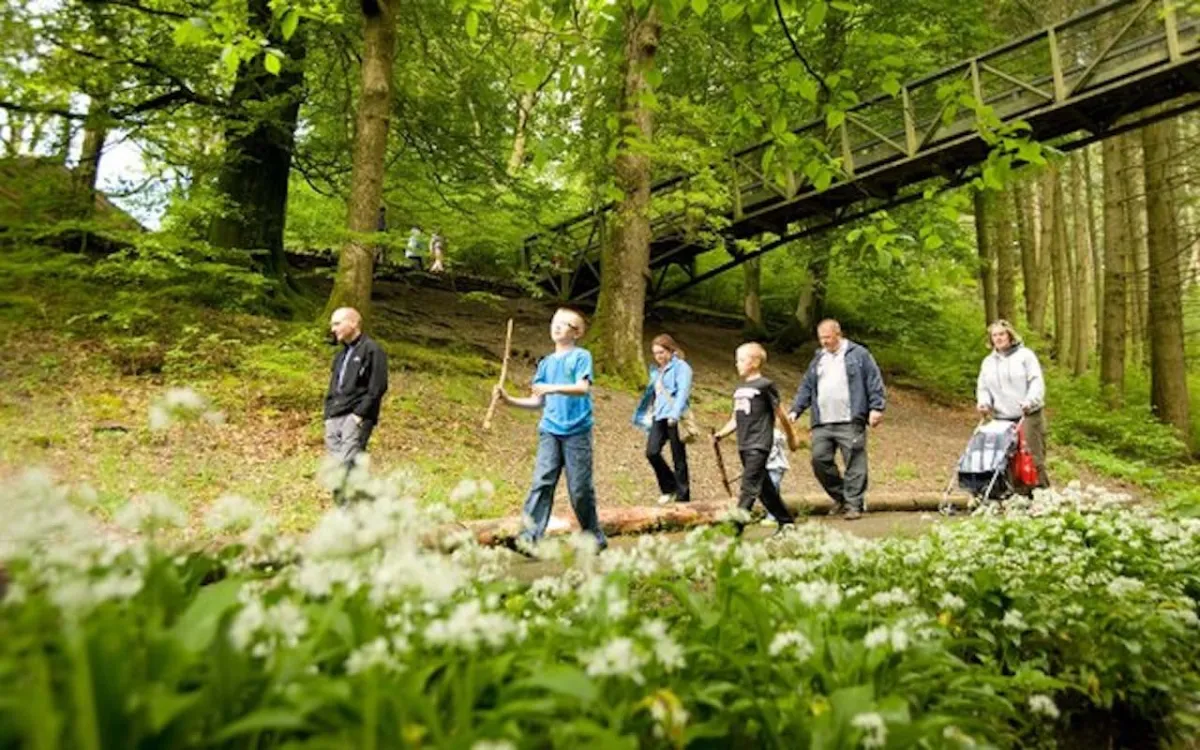 Photo: Grizedale Forest, via abbey-apartments.co.uk
 Photo: Lake District, via www.lakelandretreats.com
Urban Parks: Even city dog walking provides unexpected challenges. Navigating around other dogs, sudden sprints to catch up with an escaped hound, and the constant stop-start nature of urban walks creates a form of interval training that personal trainers spend fortunes trying to replicate in sterile gym environments.
The Unpredictability Factor
What makes dog walking superior to structured gym routines is its beautiful unpredictability. You can't plan for the moment your normally well-behaved labrador spots a squirrel and decides to channel their inner greyhound. These sudden bursts of activity – the quick lateral movements, emergency stops, and unexpected sprints – create reactive strength that gym machines simply can't provide.
Veterinary physiotherapist Dr. James Crawford has observed this phenomenon from both sides: "I treat both human athletes and working dogs. The functional strength I see in regular dog walkers often exceeds that of people following rigid gym programmes. Their bodies have adapted to real-world movement patterns."
Weather Warriors
Perhaps most importantly, British dog walkers train in all conditions. While fair-weather gym-goers make excuses about rain, dedicated dog owners are out there in horizontal sleet, navigating muddy fields that would challenge a rugby player's footing.
This weather-resistant training creates genuine resilience. Walking through thick mud engages muscles throughout your legs and core in ways that no gym machine can replicate. The constant balance adjustments required on slippery surfaces develop proprioception and reactive strength that athletes spend years trying to achieve.
The Social Support System
Unlike solitary gym sessions, dog walking often comes with built-in motivation and social support. Regular walking groups, informal park communities, and the simple fact that your dog needs exercise regardless of your mood creates consistency that personal trainers dream of achieving with their clients.
Mark Stevens, who's been walking his two German Shepherds around Hampstead Heath for eight years, puts it perfectly: "I've never missed a day. Rain, shine, hangover, or happiness – these dogs need their exercise, which means I get mine. It's the most consistent training programme I've ever stuck to."
 Photo: Hampstead Heath, via images.squarespace-cdn.com
Functional Fitness at Its Best
The beauty of dog walking as exercise lies in its functional nature. You're not performing isolated muscle movements – you're using your legs the way they were designed to be used. Climbing over stiles, navigating uneven ground, maintaining balance while being pulled in unexpected directions – these are real-world movement patterns that translate into genuine strength and mobility.
Sports scientist Dr. Helen Matthews from Birmingham University has studied the movement patterns of regular dog walkers: "What we see is exceptional hip mobility, strong stabilising muscles, and cardiovascular fitness that often exceeds that of dedicated gym users. They're getting comprehensive lower body conditioning disguised as pet care."
Making the Most of Your Four-Legged Personal Trainer
If you're already part of Britain's army of dog walkers, here's how to maximise the leg-strengthening potential:
Embrace the Terrain: Seek out varied walking routes. Beaches, hills, woodland trails – each offers different muscle challenges.
Mind Your Posture: Maintain proper walking form even when being dragged by an enthusiastic terrier.
Add Intentional Elements: Incorporate bodyweight exercises during longer walks. Your dog's sniffing breaks are perfect opportunities for calf raises or lunges.
Track Your Progress: Many dog walkers cover impressive distances without realising it. A fitness tracker might surprise you.
The Unleashed Truth
Britain's dog walking culture represents something remarkable: a fitness programme that's accessible, consistent, varied, and enjoyable. It doesn't require expensive memberships, complicated equipment, or motivational mantras. It just requires a dog, a lead, and the British determination to get outside regardless of weather.
So next time someone asks about your leg training routine, you might want to point to your four-legged friend. In a nation obsessed with finding the perfect workout, we've had the answer wagging its tail in our living rooms all along.
After all, when your personal trainer has four legs, boundless enthusiasm, and an unshakeable commitment to twice-daily sessions, you're bound to see results. Even if those results come covered in mud and accompanied by the occasional tennis ball.