Ringing in the Gains: The Church Bell Tower Workout That's Building Britain's Strongest Calves
In villages and cities across Britain, there's a fitness revolution happening that most people never see. Every week, in over 5,000 church towers from Cornwall to the Scottish Borders, dedicated bell ringers are performing one of the most demanding lower body workouts available — and they don't even realise it. Welcome to the hidden world of campanology, where centuries-old traditions are creating some of the strongest legs in the country.
The Vertical Challenge
Before a single bell is rung, Britain's 40,000 active campanologists face their first physical challenge: the climb. Medieval church towers weren't designed with accessibility in mind. Stone spiral staircases wind upward through narrow passages, often climbing 60-100 feet to reach the ringing chamber.
"I've been ringing at St Mary's in Taunton for twelve years, and that climb still gets my heart pumping," admits Sarah Fletcher, a 45-year-old accountant who rings twice weekly. "Ninety-seven stone steps in a spiral staircase barely wide enough for one person. By the time you reach the top, you've already had a serious cardio and leg workout."
Exercise physiologist Dr James Morrison from Bristol University has studied the demands of tower access. "These climbs represent significant cardiovascular and muscular challenges," he explains. "The spiral nature forces constant directional changes that engage stabilising muscles, whilst the step height — often 8-10 inches compared to modern stairs' 7 inches — demands greater range of motion from hip and knee joints."
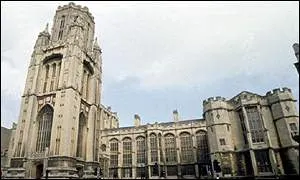 Photo: Bristol University, via newsimg.bbc.co.uk
The Stance That Builds Champions
Once in the ringing chamber, the real workout begins. Change ringing — the uniquely British art of ringing bells in mathematical sequences — demands a specific stance that would challenge any fitness enthusiast. Ringers stand with feet shoulder-width apart, knees slightly bent, maintaining perfect posture whilst controlling ropes that can exert forces of 100+ pounds.
"People think bell ringing is all about the arms, but it's absolutely not," explains Michael Barnes, Tower Captain at Chester Cathedral and a ringer for thirty years. "Your legs are your foundation. You're bracing against significant forces whilst maintaining precise timing. It's isometric training disguised as music-making."
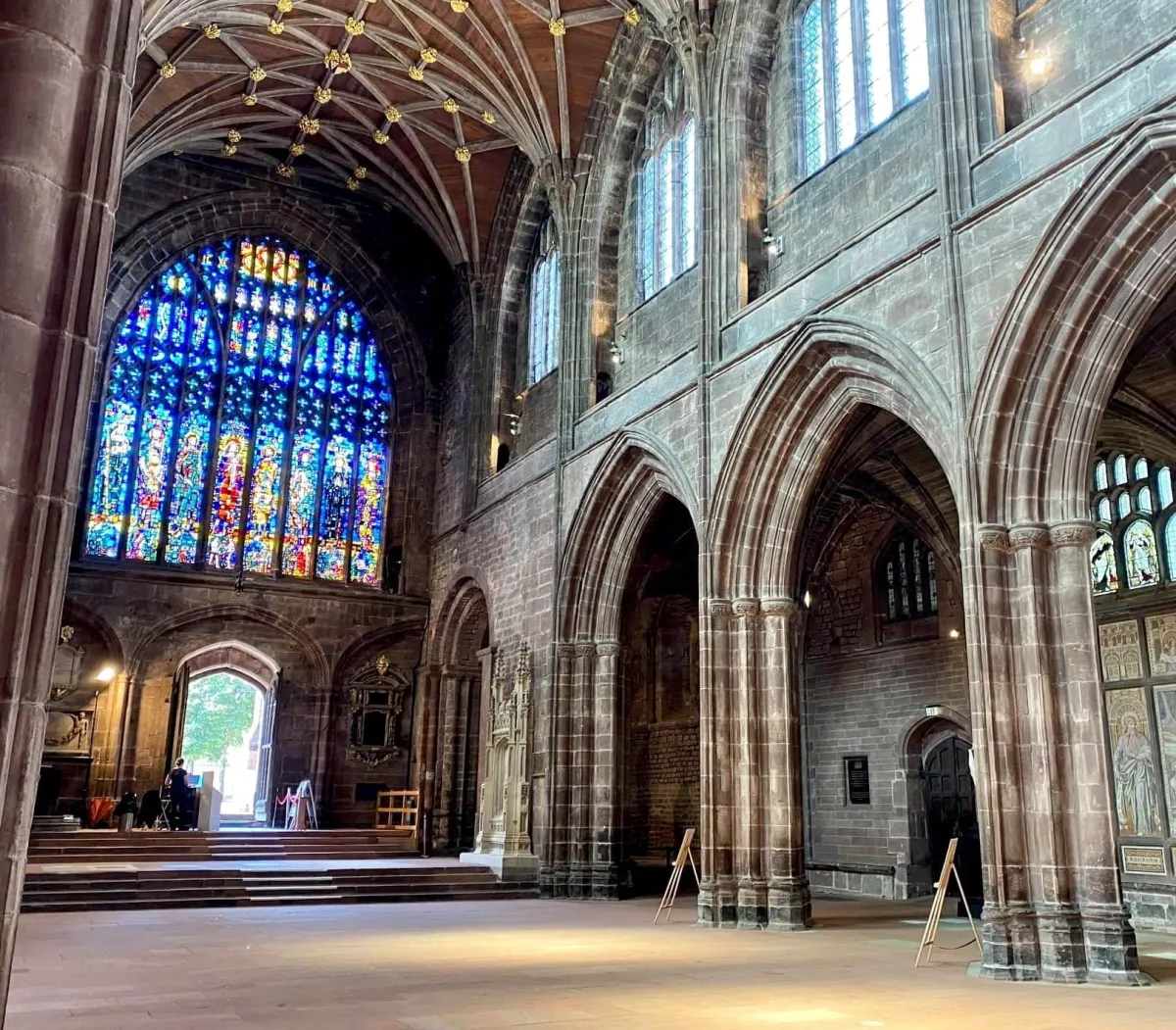 Photo: Chester Cathedral, via chester.com
The physics are impressive. A typical church bell weighs between 5-20 hundredweight (280-1,120kg), and when ringing, generates forces that ringers must control through precise body positioning. This creates sustained isometric contractions throughout the lower body that would make a Pilates instructor proud.
Change Ringing: The Ultimate Endurance Test
A typical ringing session lasts 90-120 minutes, during which ringers perform thousands of controlled movements whilst maintaining perfect stance. Change ringing methods can involve sequences of 5,000+ changes, each requiring precise timing and physical control.
"Quarter peals take 45 minutes of continuous ringing," notes Barnes. "Full peals can last three hours. You're maintaining the same stance, controlling the same forces, for the entire duration. The leg endurance required is phenomenal."
Dr Morrison's research confirms this. Heart rate monitoring during change ringing sessions shows sustained moderate intensity exercise — similar to brisk walking or cycling — combined with significant muscular demands. "Ringers are essentially performing extended isometric holds whilst managing complex timing patterns. It's a unique combination of physical and mental demands."
The Calf Connection
Perhaps nowhere are the benefits more obvious than in ringers' calf development. The constant micro-adjustments required for balance, combined with the need to rise onto the balls of feet during certain ringing techniques, creates natural calf strengthening that rivals dedicated gym work.
"I stopped doing calf raises years ago," laughs Emma Thompson from the Surrey Association of Change Ringers. "Two practice sessions and Sunday service ringing give my calves more work than any gym routine. Plus, it's functional strength — I can stand for hours without fatigue."
The biomechanics are fascinating. During 'setting' — the moment when a bell reaches its balance point — ringers often rise onto their toes to maintain control. Multiply this by thousands of repetitions per session, and you've got a calf workout that would challenge any athlete.
Tower Bells vs. Modern Fitness
What sets bell ringing apart from conventional exercise is the integration of physical demands with mental challenges. Ringers must maintain perfect physical form whilst following complex mathematical patterns, often for extended periods.
"It's like doing a Sudoku puzzle whilst performing an isometric workout," explains cognitive sports scientist Dr Lisa Chen from Cambridge. "The mental engagement actually enhances the physical benefits by improving focus and reducing perceived exertion."
This mind-body integration creates remarkable results. Veteran ringers display exceptional postural control, balance, and lower body endurance well into their seventies and eighties. The combination of regular practice and sustained physical demands creates functional fitness that translates to daily life.
The Social Strength Factor
Unlike solitary gym sessions, bell ringing is inherently social. Bands of 6-12 ringers work together to create complex musical patterns, providing motivation and accountability that keeps people coming back for decades.
"I've been ringing for forty-five years, and I've never missed a practice session," proudly states 72-year-old George Harrison from the Lancashire Association. "When your band depends on you, you show up. That consistency has kept my legs stronger than men half my age."
The social aspect also extends ringing careers far beyond typical sporting activities. Many ringers continue into their eighties, maintaining physical activity levels that would be impressive at any age.
Getting Started: Your Path to the Belfry
Interested in trading your gym membership for a bell rope? Most towers welcome new ringers and provide comprehensive training. The Association of Ringing Teachers maintains a national database of learning opportunities, whilst local ringing societies offer beginner courses.
Start by contacting your local church or searching the Central Council of Church Bell Ringers website. Most towers offer 'have a go' sessions where you can experience the physical demands firsthand.
Expect a learning curve — change ringing is genuinely challenging both physically and mentally. But the rewards extend far beyond fitness: you'll be joining a community that's preserved British cultural heritage for over 400 years whilst building remarkable physical strength.
The Final Peal
In an age of high-tech fitness solutions, Britain's bell ringers have quietly maintained one of the most effective lower body training systems ever devised. Combining cardiovascular challenge, muscular endurance, balance training, and social engagement, campanology offers benefits that no gym can replicate.
So next time you hear church bells ringing out across Britain's landscapes, remember: somewhere above, dedicated ringers are performing a workout that would challenge any athlete. They're not just making music — they're making gains, one peal at a time.
After all, when your training ground has been in continuous use for centuries, you know you're onto something special.