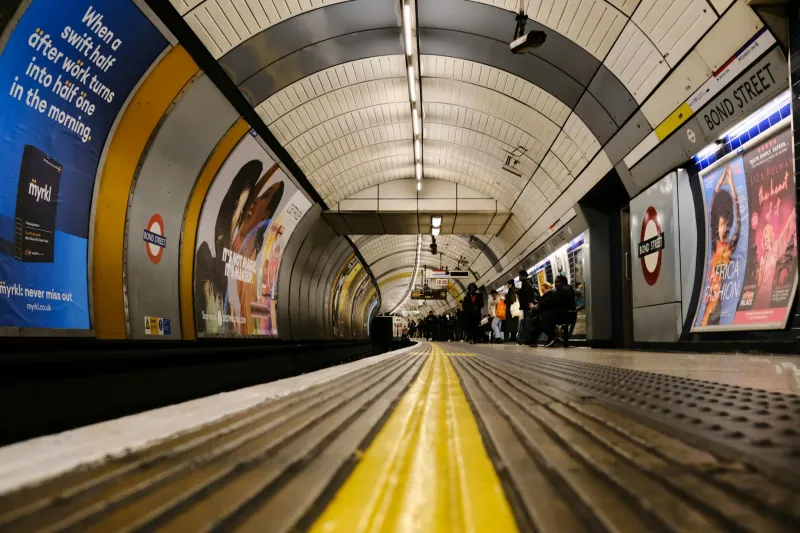
Underground Thunder: Why London's Deepest Stations Are Forging Britain's Ultimate Leg Warriors
Every morning at 8:17 AM, Sarah from Clapham descends into the bowels of London and emerges at street level having completed what personal trainers charge £50 an hour for. She doesn't realise it, but her daily commute through the Tube network is transforming her legs into weapons of mass construction.
Whilst Britain obsesses over boutique fitness classes and Instagram-worthy gym poses, the real leg-building revolution is happening 20 metres underground. London's transport network – and increasingly, similar systems across Manchester, Glasgow, and Edinburgh – represents the most democratic fitness facility in the country. No membership fees, no booking apps, no athleisure required.
The Numbers Don't Lie: Britain's Accidental Athletes
Transport for London data reveals that the average commuter climbs the equivalent of a 15-storey building daily. That's not including weekend trips or the additional journeys that make London life possible. When you factor in the 5 million daily Tube journeys, we're looking at a collective leg workout that would make CrossFit enthusiasts weep with envy.
Covent Garden station stands as the ultimate test of lower-body endurance. With 193 steps and no lift access, it's effectively a vertical gym disguised as public transport. The ascent activates your quadriceps, hamstrings, glutes, and calves in a compound movement that personal trainers spend years perfecting. Yet thousands of Londoners tackle this challenge daily, often whilst juggling coffee, newspapers, and the existential dread of Monday morning.
The Science Behind Subterranean Strength
Dr. Emma Richardson, a sports physiologist at King's College London, explains the phenomenon: "Stair climbing is one of the most effective functional exercises available. It combines cardiovascular conditioning with targeted lower-body strength training, whilst the uneven rhythm of commuter movement adds an element of stability training."
The beauty lies in the variety. Angel station's 318 steps provide an endurance challenge that would humble marathon runners. Meanwhile, the shorter but steeper climbs at stations like Russell Square offer high-intensity intervals that rival any boutique fitness class. Your legs adapt to different demands daily, creating functional strength that translates directly to real-world movement.
Beyond London: Britain's Underground Revolution
Whilst London dominates the underground fitness conversation, other UK cities are quietly building their own communities of accidental athletes. Glasgow's subway system, affectionately known as the Clockwork Orange, features stations like Hillhead that challenge commuters with significant elevation changes. Manchester's Metrolink stations often require substantial stair climbing, particularly at interchange points.
Edinburgh's topography means that even surface-level public transport involves considerable leg work. The city's bus network navigates hills that would challenge professional cyclists, meaning passengers arrive at stops having already completed a warm-up worthy of elite athletes.
The Escalator Epidemic: Britain's Missed Opportunity
Here's where things get interesting – and slightly depressing. Transport for London estimates that 95% of able-bodied commuters choose escalators over stairs when given the option. We're literally paying for gym memberships whilst ignoring free, superior workouts happening beneath our feet.
The psychological shift required is minimal, but the physical benefits are enormous. Choosing stairs over escalators for just one month can improve leg strength by up to 15%, according to research from the University of Birmingham. That's equivalent to 12 weeks of traditional gym-based leg training.
Making Your Commute Count: The Thighs The Limit Challenge
Transforming your daily journey into a leg-building masterpiece requires strategic thinking. Start with one stair climb per journey, gradually building to full stair-only commutes. Document your progress – not with Instagram posts, but with genuine strength improvements.
Consider the compound benefits: improved cardiovascular health, stronger bones, better balance, and legs that could power a small village. Your commute becomes active recovery between proper training sessions, or for time-pressed Britons, it becomes the training session itself.
The Cultural Shift: From Transport to Transformation
What fascinates fitness professionals is how underground systems democratise strength training. Regardless of income, postcode, or social background, every Tube user has access to world-class leg training facilities. The barriers that exclude people from traditional gyms – cost, intimidation, location – simply don't exist.
This accessibility creates communities of inadvertent athletes. The morning rush hour becomes a collective training session, with thousands of Londoners simultaneously building strength. There's something beautifully British about accidentally becoming incredibly fit whilst complaining about transport delays.
The Future of Functional Fitness
As Britain grapples with obesity rates and sedentary lifestyles, our transport infrastructure offers unexpected solutions. Urban planners increasingly recognise that designing cities for active transport creates healthier populations. The accidental fitness revolution happening in our underground systems proves that sometimes the best gyms are the ones we don't recognise as gyms.
Your daily commute represents thousands of pounds worth of personal training, delivered free with your Oyster card. The only question remaining is whether you'll continue sleepwalking through Britain's most accessible fitness revolution, or start treating your journey as the leg workout it's always been.
Next time you approach those stairs at Covent Garden, remember: you're not just catching a train. You're joining millions of Britons in building the strongest legs the underground has ever seen.