Grow Your Gains: Why Your Allotment Is Actually Britain's Best Hidden Gym
Picture this: it's Saturday morning, you've grabbed your wellies and a brew in a thermos, and you're heading down to your allotment for what you think is a relaxing bit of gardening. Little do you know, you're about to embark on one of the most comprehensive leg workouts available in Britain – and you won't pay a penny in gym fees.
Whilst the rest of the country queues for overpriced fitness classes, the UK's 330,000 allotment holders have been quietly building powerhouse pins through nothing more than a love of homegrown tomatoes and the occasional swear word directed at slugs.
The Squat Society You Never Knew You Joined
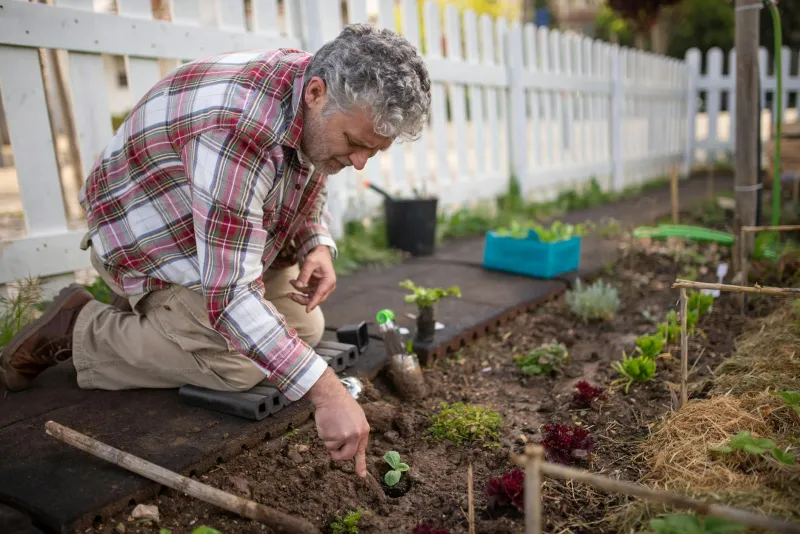
Every time you bend down to plant seedlings, weed between rows, or harvest those prize-winning courgettes, you're performing what fitness professionals call 'functional squats.' The difference? These squats come with the satisfaction of actual productivity, rather than just staring at yourself in a gym mirror.
Consider the humble act of planting potatoes. You're essentially doing weighted squats with a bag of seed potatoes, followed by deep squat holds as you carefully place each one. Do this across a 10-rod plot, and you've clocked up more lower-body work than most people manage in a week.
The beauty lies in the variety. Unlike gym squats that follow the same boring pattern, allotment squats adapt to uneven ground, different depths, and varying loads. Your stabilising muscles work overtime, your glutes fire up to keep you balanced, and your quads get a proper seeing-to as you rise from each plant.
Lunge Like You Mean It (Because You Do)
That awkward sideways stretch you do to reach the back of a raised bed? Congratulations, you've just performed a lateral lunge. Those big steps between rows with a heavy watering can? Walking lunges with functional weight.
British allotments, with their typically narrow paths and densely packed plots, naturally encourage the kind of multi-directional movement that fancy fitness studios charge £25 a session for. You're lunging forward to reach the far corner, stepping sideways to navigate between beds, and reverse-lunging to back out of tight spots – all whilst carrying tools, plants, or produce.
The uneven, often muddy terrain adds an extra challenge that no gym floor can replicate. Your ankles, calves, and deep stabilising muscles work constantly to keep you upright, building the kind of functional strength that actually translates to real-world movement.
The Great British Carry Challenge
Forget farmer's walks – let's talk about the allotment carry. Whether it's hauling bags of compost from the car park, lugging watering cans across the plot, or carrying your weekly harvest back home, allotment life is essentially one long functional fitness session.
These carries work your entire posterior chain – that's your hamstrings, glutes, and lower back working together to keep you upright under load. The irregular shapes and weights (when did a bag of compost ever weigh exactly what it says on the label?) challenge your core and legs in ways that uniform gym equipment simply can't.
Digging Deep: The Ultimate Leg Workout
Here's where allotment training really comes into its own. Proper digging technique – and yes, there is such a thing – engages your legs far more than your back. You should be driving through your legs to push the spade in, using your glutes and quads to lift the soil, and your calves to maintain balance.
An hour of proper digging can burn as many calories as a high-intensity interval training session, whilst building genuine functional strength. Your legs learn to work as a coordinated unit, your core stabilises under real load, and you end up with beautifully prepared soil for next season's crops.
Maximising Your Plot's Potential
Mind Your Form: Just like in the gym, technique matters. Keep your chest up when squatting down to plant, engage your core when carrying heavy loads, and use your legs (not your back) when digging.
Progressive Overload: Start with lighter watering cans and smaller loads if you're new to allotment life. Gradually increase the weight as your strength improves – your vegetables will thank you for the extra water, and your legs will thank you for the gradual progression.
Embrace the Terrain: Don't curse the uneven ground and muddy paths – they're your secret weapons for building better balance and stronger stabilising muscles.
Mix Your Movements: Vary your tasks throughout your allotment session. Alternate between ground-level work (squats and lunges), carrying tasks (functional strength), and standing work (active recovery).
The Body-Positive Plot
Here's the brilliant thing about allotment fitness – it's completely inclusive. There's no judgement about what you're wearing, how you look, or how much you can lift. You're just a person growing food, happening to build incredible leg strength along the way.
Your body adapts naturally to the demands you place on it. Regular allotment holders develop the kind of practical, usable strength that serves them well in daily life – from carrying shopping up stairs to playing with grandchildren.
Reaping What You Sow
Next time someone asks about your exercise routine, don't forget to mention your allotment. You're not just growing prize-winning vegetables – you're cultivating some seriously strong legs. In a country where we spend billions on gym memberships and fitness fads, perhaps the secret to better health has been hiding in plain sight, behind the wonky shed doors and hand-painted plot signs of Britain's allotments.
So grab your wellies, pack that thermos, and head down to your plot. Your legs (and your dinner table) will thank you for it.