Two Hundred Years Before the Squat Rack: Why the Highland Games Were Doing Leg Power First
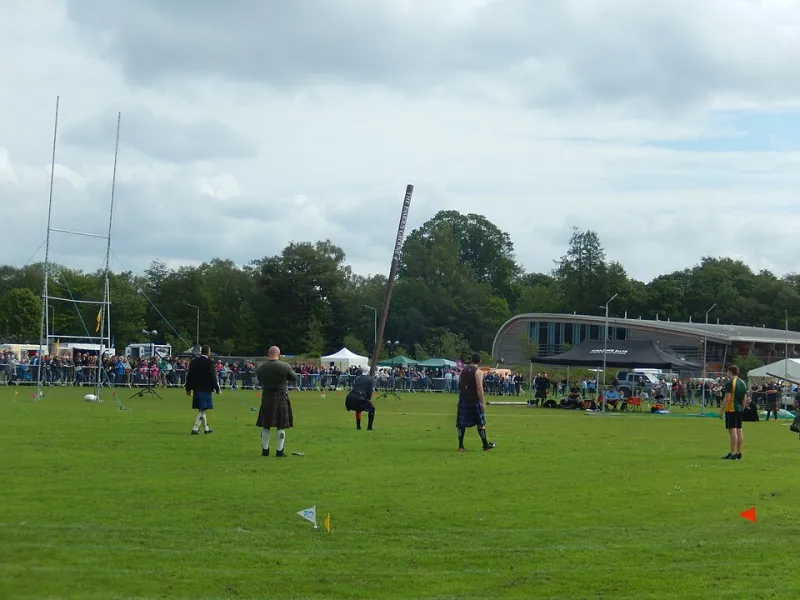
Photo: AlasdairW, CC BY-SA 4.0, via Wikimedia Commons
Let's be blunt about something: the fitness industry has a habit of inventing things that already existed. Functional training? Farmers did it. Kettlebell revivals? Russia got there first. And explosive leg power — the stuff every Instagram coach is selling you a programme for — was being trained, tested and celebrated in the Scottish Highlands centuries before anyone bolted a platform to a gym floor.
The Highland Games didn't emerge as a fitness trend. They emerged as a proving ground. Clan chiefs needed strong people; gatherings became competitions; competitions became tradition. What survives today at games from Braemar to Bute is, frankly, one of the oldest continuously practised leg-power training systems on the planet. And your personal trainer probably can't teach you half of it.
The Caber Is a Leg Event, Whatever Your Eyes Tell You
Watch someone who's never seen a caber toss and they'll assume it's an arms thing. It is not an arms thing. The caber — a tree trunk that can top six metres and 50-plus kilograms — is picked up, controlled against your own body, then thrown with a driving hip extension that would make a barbell lifter weep with recognition.
"People think it's a shoulder event," laughs Callum, a caber competitor on the Highland circuit for eleven years. "It's not. It's a pull, a pick, a hold, then the biggest leg drive you've got. If your hips and quads aren't firing, that caber's going nowhere but down."
The mechanics — deep pick from the ground, braced trunk, explosive triple extension of ankle, knee and hip — are the exact same mechanics behind a clean or a jump squat. The Highlanders got there first, with a tree, in a kilt.
Stones, Braemar and the Original Strength Test
The stone put — heaving a rounded river stone as far as possible — demands rotational power and a ferocious leg drive out of a narrow stance. The Braemar stone, thrown from a standing position, is essentially a ground-based power test with no run-up to hide behind. You either drive from the floor or you don't throw far.
Then there's the weight over the bar, where competitors hurl a 56lb weight backwards over a rising crossbar. Ask any competitor what fails first as the bar climbs. It's never the arms.
Five Things Everyday Gym-Goers Should Steal
- Train the pick, not just the lift. Slow, deliberate ground picks with a heavy object teach bracing better than any machine.
- Embrace awkward loads. Sandbags, stones, odd objects — your stabilisers grow when the weight doesn't cooperate.
- Throw something. Genuinely. Explosive intent trains fast-twitch fibres that slow lifting never touches.
- Push from a wide, braced base. The caber stance is a masterclass in leg positioning under load.
- Compete, don't just train. The Games' secret ingredient is that somebody's watching and the numbers are public. Accountability, 1800s style.
Old Tradition, Modern Lesson
There's a snobbery in modern fitness that assumes anything without a barbell is a gimmick. The Highland Games are the standing rebuttal: a strength tradition older than most gyms, built on legs and hips and raw drive, still filling village fields every summer with people who can toss a tree further than you can deadlift.
Respect the elders. Then go find a heavy, awkward thing and put your legs into it.