Four Miles an Hour, Full Body Burn: The Hidden Leg Day of Britain's Narrowboat Pilots
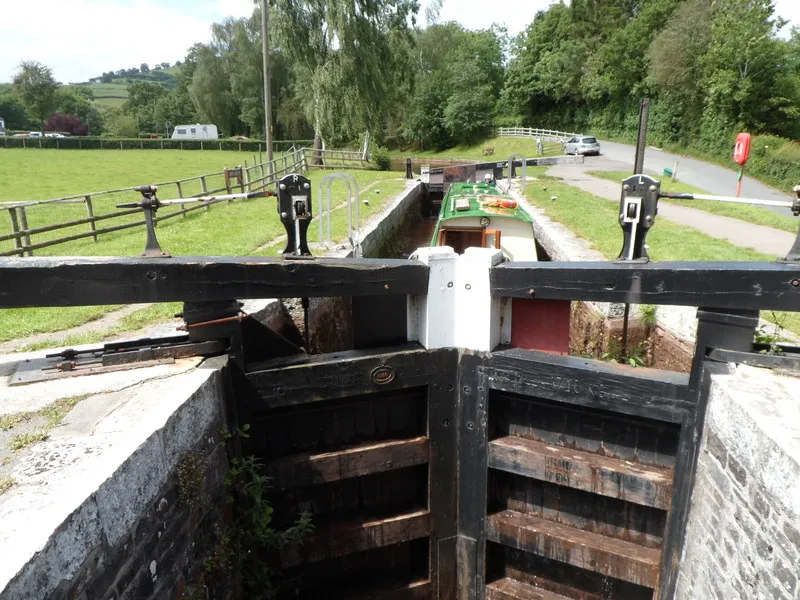
Photo: Jaggery , CC BY-SA 2.0, via Wikimedia Commons
There's a joke among liveaboards that goes round the cut like a well-worn mooring rope: you don't join a gym when you get a boat, because the boat is the gym. Nobody laughs harder than the newcomers who arrived believing that life at four miles an hour would be a gentle drift — and discovered within a fortnight that their calves had opinions.
We spent a week chugging from Birmingham to Market Harborough with a crew of liveaboards and holiday hirers, and honestly? The thigh burn was real. Here's what the 2,000-mile canal network has been quietly doing to the nation's lower bodies.
The Lock Gate Is a Resistance Machine (And It's Free)
Let's start with the obvious culprit. A standard lock gate on the UK canal network can weigh several tonnes, and while the hydraulics of water pressure do some of the work, cracking a stiff paddle mechanism or swinging a heavy beam open is genuinely hard labour. Boaters describe it as a full-body effort, but watch carefully and you'll see the legs doing the heavy lifting — the wide, braced stance, the loaded hips, the push driven from the floor up.
"You learn quickly not to arm it," says Denise, who's lived aboard her 58-foot narrowboat near Braunston for six years. "You plant your feet, drop your weight, and drive through the legs. Otherwise your shoulders pack in by Nantwich."
That's textbook isometric and concentric leg work — the same mechanics a strength coach would program with heavy sled pushes or farmer carries — repeated anything from once to dozens of times per cruising day. On the flight at Hatton, that's 21 locks. Twenty-one leg sessions before lunch.
The Tiller Stance: Isometrics Disguised as Steering
Steering a narrowboat looks restful. It isn't. Standing at the stern for hours, you're constantly making micro-adjustments with your feet, absorbing the boat's wander with subtle weight shifts, bracing against the push of water through the prop. Pilots call it 'reading the tiller', but your quads call it sustained time under tension.
Long-time boaters tend to develop a distinctive stance — soft knees, weight even, core quietly switched on — that's essentially a low-load wall sit you can hold for four hours. Try replicating that on the gym's leg press without crying.
Stepping Between Boat and Bank: The Original Box Jump
Here's the bit nobody warns you about. Mooring up is a dance of uneven surfaces: gunwale to towpath, towpath to gunwale, often with a gap, a wobble and a shopping bag in hand. Every single mooring is a balance drill and a unilateral strength test — one-legged loading, controlled stepping, stabilisers firing.
Multiply that by locks, bridges, water points and pub stops, and a week's cruising racks up hundreds of reactive, single-leg movements. It's the sort of functional lower-body conditioning the fitness industry rebrands every few years. Boaters just call it Tuesday.
What the Science-Adjacent Says
We're not claiming canal life turns you into a sprinter — the pace is famously, gloriously slow. But the pattern of exercise is genuinely excellent: frequent low-intensity leg loading, repeated isometric holds, constant balance challenges and zero sitting in a chair. That combination mirrors what geriatric research keeps telling us protects against falls and preserves strength into old age.
Want a Piece of It? Steal These Three Moves
- The Lock Push-Off: Wide stance, hands on a sturdy surface, drive through heels and push as if swinging a gate. Three sets of ten each side.
- The Tiller Hold: Soft-knee standing hold, eyes forward, two minutes. Sounds easy. Isn't.
- The Gunwale Step-Up: Find a step slightly wobbly (or just imagine it). Slow, controlled single-leg step-ups, five each side.
Or, you know, hire a boat for a week and let the Kennet & Avon do the programming. The slowest commute in Britain might just be the most under-appreciated leg-conditioning environment in the country — and it comes with sunsets, herons and a kettle that's always within reach. Thighs the limit, indeed.