Still Going Strong at Seventy: The Lifetime Leg Strength Built by Britain's Hill Shepherds

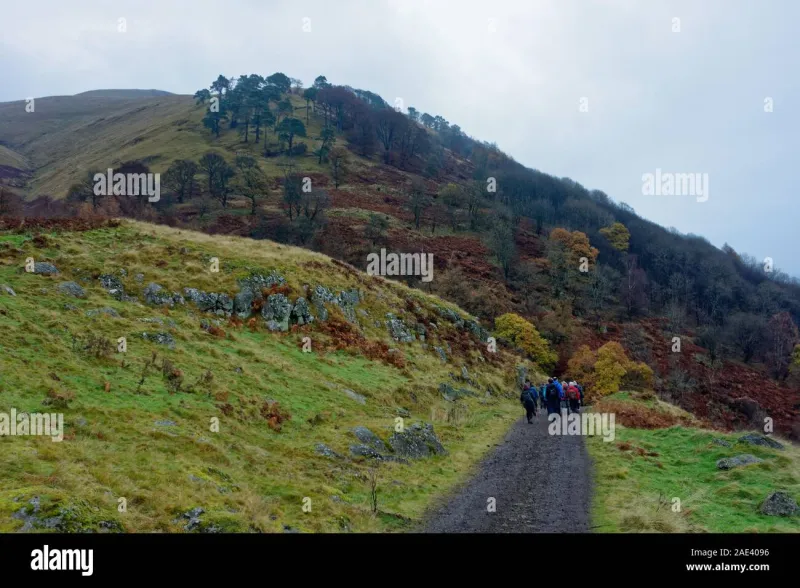
Photo: shepherd walking steep hillside British uplands countryside, via m.media-amazon.com
There's a farmer in the Lake District — we'll call him Thomas, because he'd rather not be written about — who is seventy-three years old and still walks eight to ten miles across steep fell ground most days of his working life. He doesn't stretch before he goes out. He doesn't have a foam roller. He has never, to his knowledge, performed a Bulgarian split squat. And yet, when a physiotherapist visited his farm two years ago as part of a rural health research project, she found lower limb strength and single-leg balance scores that put him comfortably ahead of men twenty years his junior.
"He was genuinely remarkable," she told us. "Not unusual for the population we were studying, but remarkable compared to what we see in urban clinical settings."
The Terrain Is the Training
British upland farming is not a job that accommodates shortcuts. The fells of Cumbria, the Welsh hills, the Pennine moorland, the Scottish uplands — these are environments that demand constant physical negotiation. The ground shifts underfoot. Gradients change without warning. A shepherd checking on a flock in the upper pastures might descend and re-ascend several hundred metres of elevation across a single morning, on ground that would challenge a seasoned hill runner.
What this means for the legs is a lifetime of varied, unscripted loading. Every step on uneven terrain activates the smaller stabilising muscles around the ankle and knee — the peroneals, the tibialis posterior, the VMO — in ways that a flat treadmill or even a gym floor simply cannot replicate. Every descent demands eccentric quad control. Every steep ascent builds the glutes and hip flexors in ways that compound over decades.
Dr Fiona Mackay, a movement specialist and researcher at the University of Edinburgh who has spent three years working with rural farming communities in Scotland and northern England, describes it as "incidental progressive overload." "The terrain changes seasonally, it changes with weather, it changes with the weight a farmer might be carrying. There's no plateau because the stimulus never stays the same. That's actually quite sophisticated from a training theory perspective, even though nobody is programming it."
Compound, Constant, Cumulative
Walk with an experienced shepherd for an afternoon and you'll notice something: they rarely stop moving in the way a gym-goer might between sets. The work is continuous, varied, and spread across the whole day. There's no single explosive effort followed by recovery — instead, there's a sustained, moderate-intensity output that accumulates over hours.
This pattern maps remarkably well onto what exercise science now understands about long-term musculoskeletal health. High-frequency, moderate-load movement appears to maintain cartilage health, bone density, and tendon resilience far more effectively than sporadic intense training followed by sedentary periods. The shepherd who walks the fell every day for fifty years is, in effect, running the most consistent leg maintenance programme imaginable.
"The tendons in particular are interesting," says Mackay. "Tendons respond to load over time. They need consistent stimulus to remain healthy and elastic. What we see in upland farming populations is tendon health that is genuinely exceptional for their age cohort. The Achilles, the patellar tendon — structures that cause enormous problems in sedentary populations — seem to hold up remarkably well."
Robert Elliot, a sheep farmer from the Yorkshire Dales who is sixty-eight and has farmed the same hillside for forty years, puts it in simpler terms. "My father farmed here before me and his father before him. None of us had bad knees. You hear about bad knees all the time in town. Up here, not so much."
What Age Doesn't Take Away
One of the most striking findings from Mackay's research is how gracefully leg function ages in this population compared to sedentary controls. Where urban populations often show steep declines in lower limb strength and balance from their fifties onward, upland farmers tend to maintain functional capacity well into their seventies, with some individuals showing only modest decline into their eighties.
The reasons are likely multiple. Consistent loading maintains muscle mass more effectively than periods of inactivity punctuated by exercise. The proprioceptive demands of uneven terrain keep the neuromuscular system sharp — the brain-to-muscle communication that governs balance and coordination. And the daily necessity of the work means there is no option to opt out during the periods when motivation might otherwise dip.
"In a gym context, adherence is always the problem," says Mackay. "People train hard for a period and then life gets in the way. Farmers don't have that option. The sheep need checking whether you feel like it or not. That enforced consistency is probably the single biggest factor in the outcomes we're seeing."
The Lessons Worth Stealing
None of this means you need to relocate to the Pennines and acquire a flock of Swaledales. But the principles embedded in a shepherd's working life are ones that translate directly into how the rest of us might approach leg training and long-term mobility.
Frequency matters more than intensity. Walking on varied surfaces — even seeking out uneven ground in parks or on footpaths rather than sticking to smooth pavements — activates stabilising muscles that flat surfaces never reach. Carrying load on inclines, even occasionally, builds the kind of functional leg strength that serves you for decades. And consistency over years outperforms any short-term programme.
"The thing I'd most want people to take from this research," says Mackay, "is that the legs are designed to be used daily, on varied ground, across a lifetime. When we remove that stimulus — when we sit for most of the day and do a gym session three times a week — we're working against the biology. These farmers aren't doing anything magical. They're just doing what human legs were built to do."
Thomas, the seventy-three-year-old from the Lakes, is probably out on the fell right now. He hasn't read this article, and he wouldn't think there was anything remarkable about any of it. He's just going about his day — and his legs, apparently, are absolutely loving it.