Two Wheels, Thunder Thighs: The Commuter Cyclists Quietly Out-Squatting Britain's Gym Goers
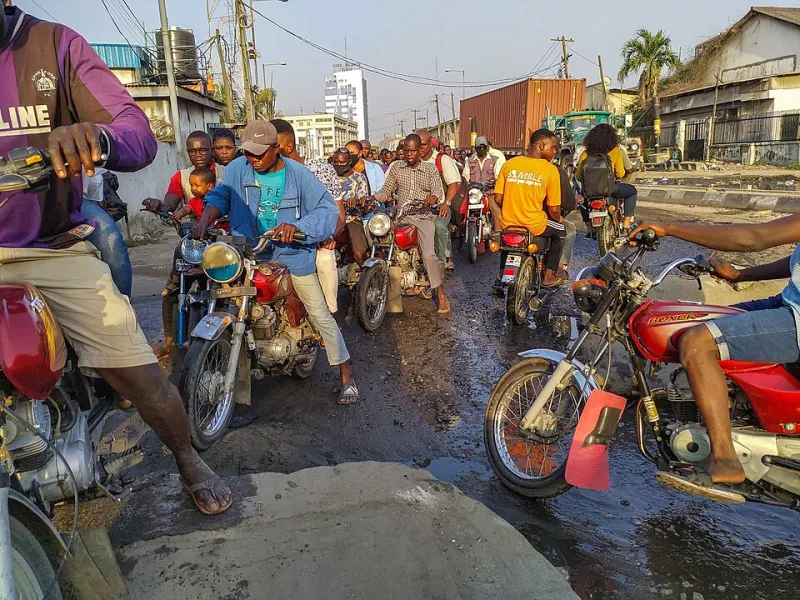
Photo: Dotun55, CC BY-SA 4.0, via Wikimedia Commons
There's a particular kind of smugness that settles over a regular cycling commuter as they lock up their bike outside the office. It's not just the endorphins, or the smug satisfaction of having avoided the Northern line at rush hour. It's something deeper — a quiet confidence that lives in the legs. And as it turns out, that confidence is entirely justified.
Britain's cycling commuter numbers have surged dramatically since 2020, with Cycling UK reporting record uptake across cities from Bristol to Edinburgh. What most of those commuters haven't been told — and what the fitness industry has been weirdly slow to shout about — is that they're participating in one of the most effective leg-building protocols available to ordinary people.
What's Actually Happening Down There
Let's get into the mechanics for a moment, because this is where it gets genuinely interesting.
Every pedal stroke is a compound movement. Your quads fire to push the pedal through the power phase, your hamstrings engage on the pull-back, your glutes contribute at the top of the stroke, and your calves act as stabilisers throughout. Do that movement a few thousand times on a commute — which, for a thirty-minute ride at a moderate cadence, is roughly what you're looking at — and you've accumulated a training volume that would make a leg press machine weep.
Dr. Sarah Fenwick, a sports physiologist based in Leeds who works with both elite cyclists and everyday fitness enthusiasts, puts it plainly: "The mistake people make is thinking that because cycling feels manageable, it isn't doing much. But muscular endurance adaptations happen at submaximal loads repeated over time. A commuter doing forty minutes each way, five days a week, is clocking up more time under tension in their lower body than the majority of gym members who do two leg sessions a week."
Time under tension. That's the phrase that should be making every leg press devotee sit up and pay attention.
Britain's Roads Are Doing the Programming for You
Here's where British cycling commuters have a genuine edge over their counterparts in flatter European cities: our roads are absolutely terrible. And that's a compliment.
The potholes, the cobbled sections, the surprise camber on Victorian-era streets, the grinding ascent through Sheffield's hills or the punishing drag up any road in Edinburgh's New Town — all of that chaos translates into constant micro-adjustments. Your stabiliser muscles — the ones that conventional gym machines deliberately bypass — are firing continuously. You're building functional strength, not just machine-specific strength.
And then there are the actual hills. Anyone who commutes through hilly urban terrain will tell you that standing climbs — where you lift out of the saddle and power up a gradient — are basically a moving lunge. The glute activation during a standing climb rivals what you'd get from a proper barbell exercise, without the spinal loading.
Marcus Okafor, a 34-year-old software developer who cycles from Hackney to Canary Wharf daily, had no idea any of this was happening. "I started cycling to save money and sort out my mental health," he says. "About six months in, I was buying new jeans because my old ones wouldn't go over my thighs. I hadn't changed my diet or done anything else differently. It was just the bike."
Why Repetition Beats the Leg Press
Conventional wisdom in the fitness world has long prioritised heavy, low-rep loading for building leg size and strength. Squats, deadlifts, leg presses — the bread and butter of any serious lower body programme. And those exercises are genuinely excellent. Nobody at Thighs The Limit is telling you to ditch the squat rack.
But there's a growing body of research suggesting that high-repetition, moderate-load training produces comparable hypertrophy to traditional heavy lifting, particularly in trained individuals. Cycling sits squarely in that high-rep, moderate-load territory, and it does so with one enormous advantage: it doesn't feel like training.
The psychological barrier to doing five sets of heavy leg press is real. The psychological barrier to cycling to work — especially once it becomes routine — is almost zero. That consistency compounds over months and years into something remarkable.
Joanna Byrne, a physiotherapist in Manchester who works extensively with recreational cyclists, notes that many of her cycling patients show measurably better knee stability and quad-to-hamstring balance ratios than gym regulars. "The cycling motion builds strength through a very natural range of movement," she explains. "It's not isolating muscles in artificial patterns. Everything works together, which is exactly how the body is designed to function."
The Commuter Advantage Nobody's Marketing
Here's the thing the fitness industry doesn't particularly want you to know: you don't need a fancy gym membership, a spin class subscription, or a personal trainer to build genuinely impressive leg strength. You might just need a decent bike and a commute with a couple of hills in it.
The UK's cycling infrastructure is improving — slowly, grudgingly, but improving. More protected lanes, more bike-friendly employers, more cities taking the whole thing seriously. As that infrastructure grows, so does the quiet army of commuters arriving at work with legs that are getting progressively stronger, more resilient, and more powerful.
If you're not cycling to work yet, it's worth at least considering why. And if you are — well, give yourself some credit. You've been doing leg day this whole time. You just didn't know it.
The thighs? They absolutely are the limit. And yours are probably closer to that limit than you think.