Gradient Nation: Why the Ground Beneath Scotland's Feet Builds Legs That the Rest of Britain Can't Match
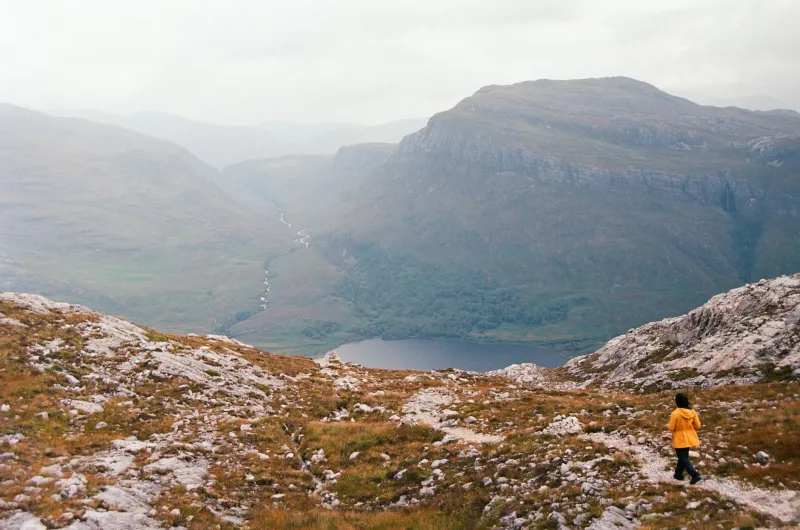
There's a particular kind of leg strength that you only see in people who've spent serious time in the Scottish Highlands. It's not the polished, symmetrical musculature of a gym regular. It's something denser, more functional — a resilience built into the tissue itself that shows up in the way these people move, the way they stand, the way their legs respond under load. Ask a Highland gamekeeper, a Munro bagger with a decade of peaks behind them, or a stalker who covers twenty miles of rough ground a week, and they'll tell you the same thing: the land does it to you. The land makes you strong.
But why? And is Scotland genuinely producing superior leg development compared to other parts of Britain, or is this just romantic mythology dressed up in tartan?
The answer, it turns out, is more nuanced — and more interesting — than either camp usually admits.
Beyond Altitude: The Myth We Need to Retire
When people think about why mountain environments produce strong legs, they tend to reach for altitude as the primary explanation. Higher elevations mean lower oxygen availability, which forces cardiovascular and muscular adaptations. This is true, and it's the basis of altitude training camps used by elite endurance athletes.
But here's the problem with applying this logic to Scotland: the Highlands aren't actually that high. Ben Nevis, Britain's tallest peak, tops out at 1,345 metres — modest by European standards and well below the threshold at which altitude-driven physiological adaptation becomes a dominant factor. Most Scottish hillwalking and running happens between 300 and 900 metres, where the altitude effect on muscle development is relatively minor.
Something else is going on. And when you start examining the actual biomechanical demands of Scottish terrain, the picture becomes considerably more compelling.
The Gradient Inconsistency Advantage
Modern exercise science has become increasingly interested in the concept of variable resistance — the idea that unpredictable changes in load, angle and surface demand more from the neuromuscular system than consistent, predictable effort. This is partly why free weights outperform machines for functional strength development, and why trail running produces different adaptations than treadmill running.
Scottish terrain takes variable resistance to an extreme that no artificial training environment can replicate.
A single kilometre of Highland walking might include a bog crossing that demands exaggerated high-knee action and lateral hip stability, followed by a boulder field requiring precise foot placement under load, followed by a steep heather-covered slope where each step sinks slightly differently depending on how much rain fell last Tuesday. The gradient isn't just steep — it's inconsistent. It changes every few metres. Your body cannot settle into a rhythm because the ground won't allow it.
This constant adaptation demand is enormously taxing on the stabiliser muscles of the lower leg and hip — the peroneals, the tibialis anterior, the gluteus medius, the deep hip rotators — muscles that barely register in a standard gym programme but are absolutely fundamental to real-world leg strength and injury resilience.
Soil Variability: The Overlooked Factor
Here's something that doesn't get nearly enough attention in fitness discussions: the ground you train on matters enormously, and Scottish ground is unlike anything else in Britain.
Highland peat bog, for instance, creates a surface that compresses unpredictably under foot strike, forcing continuous micro-adjustments in ankle, knee and hip position. Walking on deep heather is essentially a form of resistance training for the hip flexors, because every step requires you to lift your foot higher and push forward against the springy, tangled mass of stems. Rocky scree demands rapid, precise weight transfer between feet, building proprioceptive acuity — the body's ability to sense its own position in space — that translates directly into strength and stability.
Compare this to the terrain most commonly available to English walkers: managed footpaths, maintained bridleways, graded surfaces. These are pleasant and accessible, but they're also relatively uniform. The body adapts to them efficiently and then stops adapting, because the stimulus becomes predictable.
Welsh valleys offer some of the gradient challenge of Scotland, and the Lake District has pockets of genuinely demanding ground. Cornish moorland, particularly around Bodmin, presents its own challenges — soft, boggy patches and ankle-testing tussock grass. But none of these regions combine the sheer scale, the remoteness, the extended duration of exposure and the ground variability of the Scottish Highlands in quite the same way.
Environmental Resistance: Wind, Wet and Cold
There's another dimension to Highland training that rarely features in fitness analysis: the weather. Scotland is, to put it diplomatically, not gentle. The wind on an exposed ridge isn't just uncomfortable — it's a physical force that your body must continuously resist. Walking into a strong Highland headwind requires sustained muscular effort that goes far beyond what the gradient alone would demand. Your whole posterior chain braces against it. Your glutes and hamstrings work harder. Your calves grip harder to maintain traction.
Wet conditions compound this. Wet grass, wet rock and wet peat are all significantly more demanding surfaces than their dry equivalents, not only because of the additional traction challenge but because the altered surface feedback forces heightened neuromuscular engagement. Your legs are, in effect, working harder to process more complex information from the ground.
Cold temperatures add a further wrinkle. Research suggests that muscles working in cold conditions experience greater metabolic stress and require more energy to produce the same force output. Over time, training in cold environments may contribute to greater mitochondrial density in working muscle — the same adaptation sought by endurance athletes training in altitude chambers, just achieved through a different mechanism.
What the Rest of Britain Can Learn
If you're not fortunate enough to live within reach of the Highlands — and most of us aren't — the question becomes how to approximate these conditions within your own training environment.
The honest answer is that you can't fully replicate it. But you can borrow the principles.
Seek out variable surfaces. Managed paths are convenient, but they won't build your stabilisers. Find trails with root networks, uneven stones, boggy patches. Seek out the awkward ground rather than avoiding it.
Embrace gradient inconsistency. Rather than walking a single long steady incline, look for routes that change character frequently — up, then flat, then up again, then down, then scrambling. The variation is the training.
Add load. A rucksack changes everything. Even ten kilograms dramatically increases the muscular demand of any outdoor activity and more closely approximates the sustained loaded effort of Highland walking.
Go further than is comfortable. The real adaptations in Highland walkers come partly from duration — long days on rough ground that push well beyond what a typical gym session or organised walk would involve. Extended effort builds resilience that short, intense sessions simply can't.
And if you ever get the chance to spend a week in the Cairngorms, Glen Coe or the Torridon hills — take it. Your legs will come back different. Tougher, more capable, more alive.
The Highlands have been building extraordinary lower bodies for centuries. The ground up there doesn't care about your programme. It just makes you stronger.