Grow Strong, Grow Veg: The Allotment Workout That's Outperforming Your Gym Membership
Grow Strong, Grow Veg: The Allotment Workout That's Outperforming Your Gym Membership
Somewhere in Britain right now, a retired schoolteacher named Derek is doing his third set of loaded squats. He doesn't know that's what it's called. He thinks he's earthing up his potatoes. But his glutes, his quads, and the whole beautiful chain of his posterior lower body are firing in a coordinated sequence that a personal trainer would charge good money to programme.
Derek, mate — you're absolutely smashing leg day.
Britain's allotment culture is having a moment. Waiting lists at local authority plots stretch to years in some areas. The National Allotment Society estimates there are over 330,000 plots actively cultivated across England and Wales, with demand significantly outstripping supply. The pandemic sent a wave of new enthusiasts towards growing their own, and many of them never left. What nobody seems to have told them — or Derek — is that they've accidentally enrolled in one of the most comprehensive lower-body conditioning programmes available in the UK.
The Squat You're Already Doing
Let's start with the movement that underpins almost everything that happens on an allotment: the deep squat.
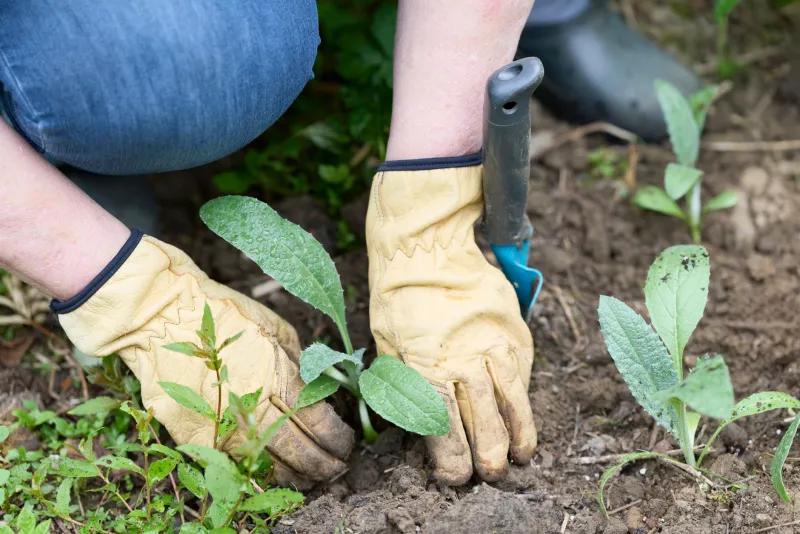
Seeding trays, weeding between rows, checking root depth, harvesting anything that grows at ground level — all of it requires descending into a squat position and holding it, often for extended periods. Unlike a gym squat, which typically involves a controlled descent and a quick return to standing, the allotment squat demands an isometric hold at depth. You're down there rooting around for a stubborn parsnip. You're not rushing.
That isometric component is genuinely valuable. Research in strength and conditioning circles has consistently shown that time under tension — the amount of time your muscles spend in a loaded position — is a key driver of muscular development. A gym squat might have you under load for three or four seconds. A proper weeding session can keep you at depth for minutes at a time. Your quads and glutes are working continuously, even if you're not counting reps.
Marion, 58, has held a plot at a South London allotment site for eleven years. "I've never really thought of it as exercise," she told us. "But I know I'm a lot stronger than I was before I started. My knees used to ache on stairs. They don't anymore. My physio said my leg strength had improved significantly and asked what I was doing differently. I said I'd taken up growing leeks."
Digging: The Deadlift's Underappreciated Country Cousin
If the squat is the allotment's signature lower-body movement, digging is its compound companion.
A proper digging action — foot driving the spade into soil, body weight loading through the standing leg, then the hip hinge as you lift and turn — is a movement pattern that overlaps significantly with both the deadlift and the Romanian deadlift. The standing leg is doing single-leg stability work throughout. The driving leg is producing force through the foot and up through the calf and quad. The lower back and hamstrings are controlling the loaded hinge.
A study from the University of Bath examining the metabolic demands of allotment gardening found that digging for thirty minutes burns roughly the same calories as a moderate-intensity cycling session. More interestingly for our purposes, the muscle activation patterns recorded during digging showed significant engagement of the erector spinae, gluteus medius, and hamstrings — precisely the muscles that conventional gym programmes often struggle to recruit effectively.
Jamie, 34, took on an allotment plot in Sheffield two years ago after a sports injury forced him to step back from five-a-side football. "I needed something low-impact but I didn't want to lose the fitness I'd built up," he explains. "I started digging and I was absolutely shattered after the first few sessions. My legs were sore in places I hadn't felt since pre-season training. I started thinking about it more intentionally after that — treating the digging like a workout rather than just a chore."
The Terrain Factor
Here's something that separates allotment training from almost anything you'll do in a gym: the ground is never flat, never stable, and never predictable.
Uneven soil, raised beds, awkward kneeling positions, carrying heavy watering cans across rutted paths — all of it demands constant micro-adjustments from the stabilising muscles of the ankle, knee, and hip. This proprioceptive challenge is the kind of thing that sports physios actively programme into rehabilitation protocols, because it builds the neuromuscular connections that prevent injury in dynamic, unpredictable situations.
Every time you shift your weight to avoid a muddy patch, every time you kneel on one knee to reach across a bed, every time you carry an unbalanced load of produce back to the shed — you're training the stabiliser muscles that conventional gym equipment largely ignores. The machines at your local leisure centre keep you on a fixed plane. The allotment does no such thing.
Getting the Most From Your Plot (Fitness-Wise)
If you already have an allotment, here's how to consciously amplify the leg-training benefits without changing what you're growing.
Deepen your squat during ground-level tasks. Rather than bending at the waist to weed or harvest, drop into a full squat. It takes a bit of practice if you're not used to it, but the payoff in glute and quad activation is substantial. Your lower back will also thank you.
Drive through the heel when digging. Similar principle to stair climbing — pressing through the heel rather than the toe shifts the load from the calves onto the glutes and hamstrings. Better strength development, better posture, more efficient movement.
Use the carrying. Don't make multiple small trips to avoid heavy loads. Within sensible limits, carrying full watering cans, heavy bags of compost, or loaded harvest baskets is loaded carries training. It builds grip, core stability, and lower limb endurance simultaneously.
Work on both sides. Digging, hoeing, and raking all have a natural dominant side. Deliberately switching to your non-dominant side for portions of the session builds more balanced lower limb development and reduces the asymmetry that leads to injury over time.
Vary your kneeling positions. Half-kneeling (one knee down, one foot forward) is a position that sports scientists use specifically to activate the hip flexors and glutes of the rear leg. Every time you're working at low height, consciously cycling through different positions rather than defaulting to the same one.
The Waiting List Is the Warm-Up
There's a broader point lurking underneath all of this. Britain's allotment tradition is, at its core, a practice of sustained physical engagement with the land — something that has kept generations of people active, capable, and strong without any of them ever needing to think about it as exercise.
The fitness industry has spent decades trying to bottle that kind of functional, full-body conditioning and sell it back to us in the form of kettlebell classes and outdoor bootcamps. The allotment was doing it all along, quietly, behind a corrugated iron fence somewhere off the A-road, while Derek earthed up his potatoes and built championship legs without ever once asking what his macros were.
If you're on a waiting list for a plot, good. Use the time to work on your squat depth. You're going to need it.