Hauling, Wading, Bracing: How Britain's Coastal Fishermen Have Been Winning Leg Day Since Before Gyms Existed
Hauling, Wading, Bracing: How Britain's Coastal Fishermen Have Been Winning Leg Day Since Before Gyms Existed
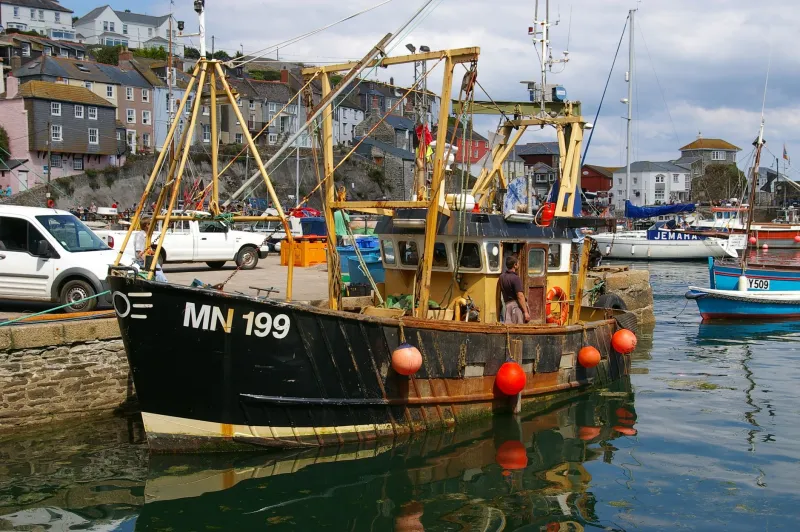
It's half five on a Tuesday morning in Mousehole, Cornwall, and the quayside is already alive. Ropes creak, engines idle, and somewhere in the grey pre-dawn, Jago Trewin is doing something that no personal trainer has ever programmed for him: hauling a crate of crab pots up seventeen steep granite steps from the harbour wall to the road above, then turning around and going back down for another one.
He'll do this perhaps forty times before breakfast.
"Nobody ever told me this was exercise," says Jago, 52, who has been fishing out of Mousehole since he was sixteen. "It's just the job. The steps are the steps. The gear's got to come up."
Jago's calves are, frankly, remarkable. His quads fill his work trousers in a way that would make a competitive cyclist take notice. He hasn't been inside a gym in his life.
The Accidental Athlete
Along Britain's coastlines — from the crab fishers of Cornwall to the whelk boats of Norfolk and the creel men of the Outer Hebrides — there exists a population of accidental lower-body athletes who have been performing elite-level leg training as a matter of professional necessity for generations.
The movements involved in traditional inshore fishing are, when you examine them through a sports science lens, almost comically well-designed as a lower-body training protocol. Steep harbour steps loaded with heavy gear. Wading through tidal channels and shallows where water resistance and unstable footing demand constant muscular engagement. Bracing on rolling decks where the body must continuously stabilise against unpredictable movement. And the repetitive, powerful hip extension of hauling rope hand over hand while anchored through the legs.
Dr Callum Fraser, a sports scientist at the University of Aberdeen who studies occupational movement in coastal communities, has spent the last four years documenting exactly this phenomenon. "When I started mapping the movement patterns of active inshore fishermen against contemporary evidence-based lower-body training protocols, the overlap was striking," he says. "These men — and increasingly women — are performing the functional equivalent of weighted step-ups, wading resistance training, reactive balance work, and isometric posterior chain loading, all within a normal working day. The stimulus is genuinely significant."
Steep Steps and Serious Gains
Harbour steps are a defining feature of Britain's oldest fishing communities, and they are nothing like the gentle staircases of a modern office block. Mousehole's steps are steep enough to require a forward lean with every ascent. The harbour steps at Staithes in North Yorkshire — one of the most dramatic fishing villages on the English coast — drop almost vertically from the clifftop road to the beck below. In Clovelly in Devon, donkeys were historically used to carry goods up a cobbled main street so steep that wheeled vehicles can't navigate it.
Carrying heavy loads up gradients like these is, biomechanically, an extremely effective glute and quad exercise. The steeper the incline, the greater the hip flexion required at each step, and the more the gluteus maximus is forced to work through its full range of contraction at push-off. Add a crate of wet crab pots — which can weigh upwards of 20 kilograms — and you have a loaded step-up protocol that any strength coach would be proud to prescribe.
"The load, the gradient, and the repetition volume are all there," confirms Dr Fraser. "From a muscle development perspective, the stimulus is more than sufficient for meaningful hypertrophy and strength adaptation over time. The fact that it's incidental rather than intentional doesn't change the physiology."
Duncan Mackay, 44, has fished for langoustines out of Mallaig on the west coast of Scotland for twenty years. His harbour steps are cut into rock and rise sharply from the water's edge. "In winter when the gear's heavy and the steps are icy, you're working hard," he says, with the Highland understatement of a man who has clearly never considered his training load. "You get used to it. Your legs just sort of... get on with it."
Duncan's "getting on with it" has produced what he calls, with some embarrassment, "big daft legs." Sports science would call them the product of years of progressive overload.
Wading: The Resistance Training Nobody Talks About
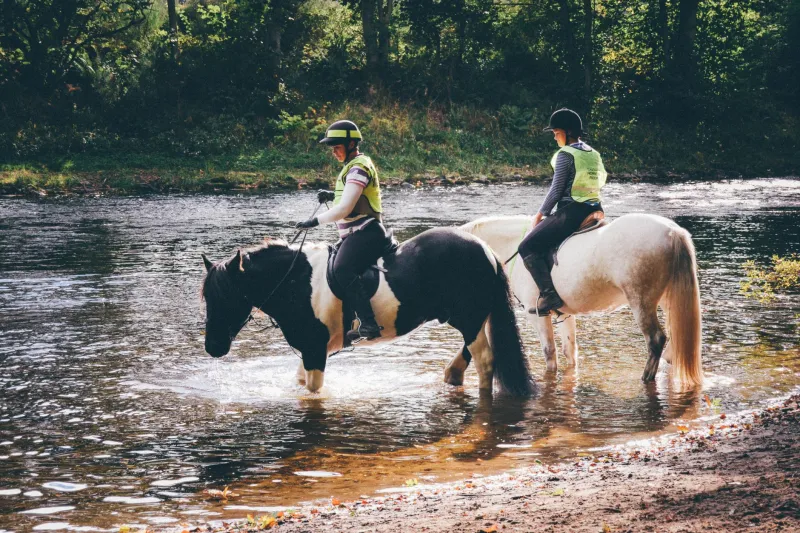
Not all of Britain's fishing traditions involve boats. Along the tidal flats of Norfolk, the Solent, and the shallow estuaries of the West Country, shellfish gathering has historically been done on foot — waders pulled on, baskets in hand, sloshing through knee-to-thigh-deep water for hours at a stretch.
Wading through water is a profoundly underappreciated form of lower-body resistance training. Water at knee depth increases the resistance against leg movement by a significant and constantly varying amount, depending on speed and direction. The instability of soft tidal sediment underfoot forces the ankle stabilisers, peroneal muscles, and tibialis anterior into continuous isometric work. And the hip flexion required to lift the knee against water resistance with each step produces a training stimulus that targets the hip flexors and quadriceps in ways that standard gym exercises rarely replicate.
Margaret Colby, 61, has gathered cockles on the Norfolk coast her whole working life. She wades out most mornings when the tide permits, dragging a wire rake and a floating basket behind her. "My legs have always been strong," she says simply. "I've never thought about why. It's just what you do out here."
Dr Fraser has thought about why. "The combination of water resistance, unstable footing, and sustained duration makes tidal wading one of the most complete lower-body endurance stimuli I've encountered in an occupational context. If you designed a training session to replicate it, you'd probably use a resistance pool, a wobble board, and a 45-minute continuous effort protocol. The fisherwomen doing this daily have been running that session without realising it."
The Rolling Deck: Core, Hips, and Reactive Strength
Get offshore — even just a few miles — and the training environment becomes considerably more demanding. A small inshore fishing vessel in any kind of sea state is an unstable platform that demands constant, reactive lower-body stabilisation.
Bracing on a moving deck recruits the gluteus medius, the hip abductors, the knee stabilisers, and the entire proprioceptive system of the ankle and foot in a continuous, unpredictable pattern. There's no rhythm to work with, no predictable oscillation. The boat moves when it moves, and the body responds.
"It's not unlike training on a BOSU ball or a balance board, except the forces are larger, the duration is longer, and the consequences of failing to stabilise are considerably more serious," says Dr Fraser, with some dry academic humour. "The reactive strength and proprioceptive development in long-term fishermen is genuinely impressive when you test it formally."
Jago Trewin nods when this is explained to him. "You do develop a sea legs thing. Even on land, you're always slightly... ready. Like your legs are always switched on." He pauses. "Is that what the gym people call being activated?"
Yes, Jago. That's exactly what the gym people call it.
What the Rest of Us Can Learn
The lesson from Britain's coastal fishing communities isn't that we should all go and become fishermen (though honestly, the legs are a compelling argument). It's that the most effective lower-body training often involves functional, loaded, varied movement performed consistently over time — not isolated machine exercises or rigidly periodised programmes.
Weighted step-ups on a steep incline. Wading sessions in open water or a resistance pool. Single-leg balance work on unstable surfaces. Loaded carries up gradients. These are movements that Britain's fishing communities have been performing as a matter of course for centuries, and the results speak for themselves — or rather, they speak through the extraordinary lower-body development visible on every working quayside from Newlyn to Lerwick.
The gym is a brilliant tool. But sometimes the best leg day is the one that doesn't know it's a leg day at all.