Off the Beaten Track and Into the Best Legs of Your Life: The Fell Running Secret Britain's Been Hiding
Off the Beaten Track and Into the Best Legs of Your Life: The Fell Running Secret Britain's Been Hiding
Up in the Pennines on a Sunday morning, a woman in a vest and muddy trail shoes is doing something that looks, from a distance, like controlled falling. She's descending a steep, rocky ridge at a pace that would make most people's eyes water, her legs absorbing impact after impact across loose stone and boggy heather, her body making a thousand tiny adjustments per minute. She's not thinking about her quads. She's not thinking about her glutes. She's thinking about the next rock, the next step, the next breath.
But her legs? Her legs are getting an absolute masterclass.
Fell running — the ancient, wonderfully masochistic British tradition of racing up and down hills with minimal fuss and maximum suffering — is having something of a moment. And if you've ever wondered why fell runners seem to possess legs that belong on a strength athlete's body despite logging their miles outdoors rather than in a gym, the science is genuinely fascinating.
What Even Is Fell Running?
For the uninitiated: fell running is cross-country running over open, unmanaged terrain — typically the hills, moors, and mountains of northern England, Scotland, and Wales. Unlike trail running, which follows marked paths, fell running often involves navigation across trackless ground. The sport has its own governing body (the Fell Runners Association), its own culture, and its own particular brand of understated northern toughness.
Events range from short, sharp "sprint" fells of a few kilometres to epic mountain marathons covering fifty-plus miles over multiple days. The Bob Graham Round — a 66-mile circuit of 42 Lake District peaks — is considered something of a rite of passage for serious participants.
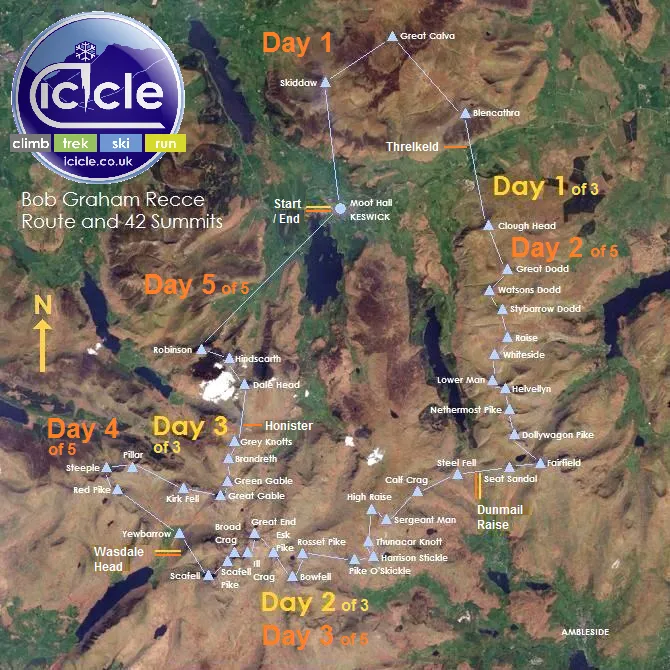 Photo: Bob Graham Round, via www.icicle-mountaineering.ltd.uk
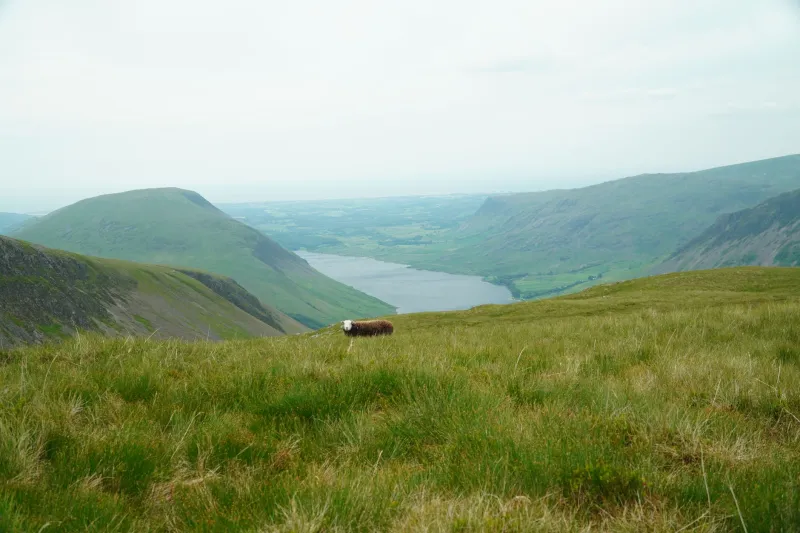
 Photo: Lake District, via www.worldatlas.com
But you don't need to be eyeing up the Bob Graham to benefit from what fell terrain does to your legs. Even a modest local hill run delivers training stimulus that road running simply cannot match.
The Biomechanics: Why Gradient Changes Everything
Road running is, biomechanically speaking, a fairly repetitive activity. Your stride pattern is consistent, your foot strike lands on a predictable surface, and your muscles fire in a regular, rhythmic sequence. This is great for cardiovascular fitness and running economy — but it's a limited stimulus for building comprehensive leg strength.
Fell running blows all of that apart.
"The constant gradient changes are the key thing," explains Dr. James Hartley, a sports scientist based in Leeds who has studied lower limb mechanics in hill runners. "On an uphill section, you're essentially performing continuous concentric contractions — your quads, glutes, and calves are driving you upward against gravity. On the descent, you switch to prolonged eccentric loading, particularly in the quadriceps, which have to act as brakes to control your speed and protect your joints. That combination, repeated over varied terrain, is extraordinarily effective for building both strength and resilience."
Eccentric loading — where a muscle produces force while lengthening — is widely recognised as one of the most potent stimuli for muscle development. It's the reason the downward phase of a squat builds more muscle than the upward drive. Fell runners are essentially performing thousands of weighted eccentric repetitions every time they descend a hillside.
The Stability Dividend
Then there's the question of balance and proprioception — the body's ability to sense its own position in space and make real-time corrections.
On a flat road, your stabilising muscles — the hip abductors, the peroneals in the ankle, the deep rotators of the hip — are relatively dormant. The surface does the work. On a fell, every single footfall lands on a slightly different surface: loose scree, boggy peat, slippery grass, hidden rock. Your neuromuscular system has to respond instantly, every time.
"Fell running is essentially a continuous proprioceptive challenge," says Dr. Hartley. "The muscles of the lower leg and hip are constantly active, making micro-adjustments that you'd never get on a track or treadmill. Over time, this builds a kind of functional stability that's genuinely protective against injury — both in running and in everyday life."
This is why fell runners tend to have remarkably robust ankles and knees despite the aggressive demands of their sport. The terrain that looks so dangerous is, paradoxically, building the resilience to handle it.
The Muscle Groups in Question
So which muscles specifically are getting the fell running treatment? Pretty much all of them below the waist, but a few deserve particular mention:
Quadriceps take the lion's share of work on descents. The eccentric braking load on a steep, technical downhill is substantial — fell runners routinely report DOMS (delayed onset muscle soreness) in their quads after a hard race that rivals anything from a heavy leg session.
Glutes drive the uphill push and are constantly recruited to stabilise the pelvis on uneven ground. Fell running builds strong, functional glutes in a way that translates directly to real-world movement.
Calves and tibialis anterior work in opposition to manage foot placement on unpredictable surfaces. The tibialis anterior — that oft-neglected muscle along the shin — gets a remarkable workout on technical descents where controlled dorsiflexion is critical.
Hip abductors and adductors are perpetually active, managing lateral stability as each foot lands at a different angle and height.
Real Runners, Real Results
Hannah, 31, from Harrogate, switched from road running to fell running two years ago after a physio suggested the varied terrain might help with recurring knee issues. "Within six months, my legs looked completely different," she says. "More defined, more balanced. But more importantly, they felt capable in a way they never did on the roads. I can carry heavy shopping, sprint for a bus, hike for hours — everything feels easier."
Marcus, 45, from Ambleside, has been fell running in the Lake District for fifteen years. "I've never done a leg session in a gym in my life," he says cheerfully. "I don't need to. The fells do everything. My physio once told me I had the knee stability of someone ten years younger. I'll take that."
Starting Out: Practical Advice for Flat-Land Converts
Fell running has a reputation for being the preserve of grizzled northerners in vests, but the reality is far more welcoming. Local fell running clubs — there are hundreds across the UK — are almost universally friendly to newcomers, and many organise beginner-specific events and guided runs.
A few pointers to get you started safely:
- Walk before you run. Literally. Spend time on hilly terrain walking before you attempt to run it. Your ankles and stabilisers need time to adapt.
- Invest in proper footwear. Fell shoes have aggressive lugs designed for grip on wet grass and mud. Don't attempt technical terrain in road trainers.
- Start with shorter, lower-key events. The Fell Runners Association website lists races by category — Category A events are the most serious; start with a Category C or local fun run.
- Embrace the poles on steep ascents. Many fell runners use them on the hardest climbs. There's no shame — and it takes load off the quads.
- Respect the descents. This is where injuries happen. Take your time learning the technique before pushing the pace downhill.
The Bigger Picture
Fell running is, at its heart, a very British thing — born from the landscape, shaped by the weather, sustained by a community of people who find joy in discomfort and beauty in effort. But its benefits extend well beyond the hills.
The legs built by fell running are strong, stable, resilient, and balanced. They're legs that work in three dimensions, that respond to the unexpected, that carry you not just across finish lines but through life.
And they look pretty spectacular, too. Just saying.