Step Up: The Urban Staircase Movement That's Quietly Taking Over Britain's Cities
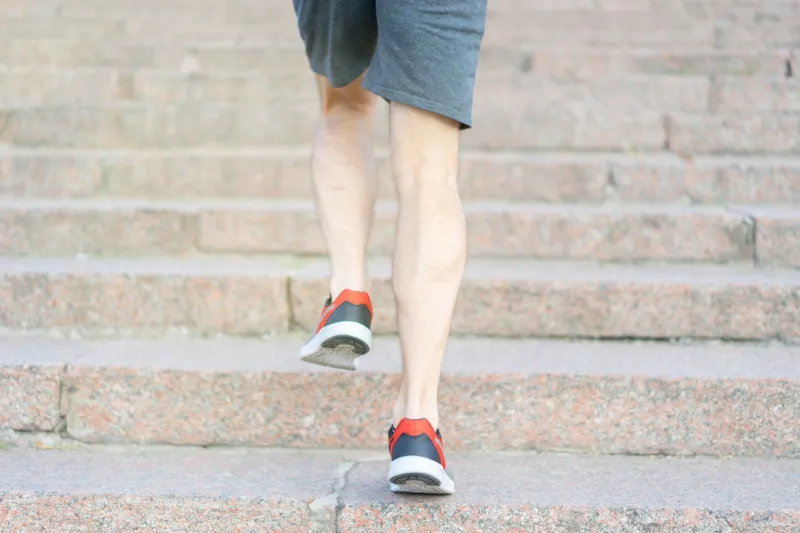
Somewhere in Edinburgh's Old Town, at approximately 6:47 on a Tuesday morning, a group of eight people are climbing the same close for the fifth time. They're not lost. They're not tourists. They're breathing hard, their quads are on fire, and they are absolutely, deliberately, joyfully doing this to themselves.
This is urban stair climbing — and it might just be the most honest leg workout available in Britain right now.
The Movement That's Been Building for Years
It didn't start with an app or a fitness influencer. Like most genuinely grassroots movements, it started with people noticing something obvious: that the cities they lived in were full of hills, steps, and staircases that made their legs work harder than any gym machine ever had, and that using them cost precisely nothing.
In Edinburgh, where the Old Town's closes and wynds stack vertical metres like a geographical accident of genius, informal stair climbing groups have been forming for the better part of three years. In London, the multiple levels of the South Bank, the steps of Primrose Hill, and the brutal climb through Greenwich Park have attracted their own devoted communities. Manchester's Northern Quarter and Ancoats — districts built in the Victorian era when nobody worried much about gradients — offer urban routes that'll humble even experienced runners within the first ten minutes.
"I'd been going to the gym for four years," says Callum Bryce, 34, a software developer who now leads one of Edinburgh's most active stair climbing groups on Saturday mornings. "I was doing leg press, machine squats, the usual stuff. Then I moved to the New Town and started walking up the Vennel steps to work every day, and within three weeks my legs had changed more than they had in years of gym work. I couldn't ignore it."
Callum's group now has over 200 members across social media and regularly draws 15 to 30 people for weekend climbs. Entry requirements: trainers and a willingness to suffer briefly.
Why Real Stairs Beat the Machine Every Single Time
The StairMaster has its place. Nobody's arguing otherwise. But there are several reasons why actual urban staircases provide a training stimulus that the gym version simply cannot replicate.
Variable step height and depth. Machines are uniform by design. Real staircases — particularly historic ones — are magnificently inconsistent. Edinburgh's closes vary from shallow tourist-friendly steps to steep, narrow risers that demand genuine ankle and hip flexor engagement with every stride. This variability forces constant neuromuscular adjustment, recruiting stabilising muscles that machine-based training leaves largely dormant.
Outdoor environment and proprioception. Training on uneven, real-world surfaces develops balance and proprioception — your body's ability to understand its position in space — in ways that flat gym floors cannot. For long-term joint health and injury prevention, particularly in the ankles and knees, this is genuinely valuable.
No membership fee. We'll say it plainly: in a cost-of-living crisis, a workout that's completely free and available seven days a week, 24 hours a day, in most UK cities is not a trivial advantage. The barriers to entry are almost nonexistent. You need shoes. That's essentially it.
The psychological dimension. Multiple members of urban stair climbing communities across the UK mentioned the same thing unprompted: climbing real staircases in real places feels meaningful in a way that a gym machine doesn't. You can see your progress. You can measure it in steps, in landmarks, in the view from the top. "There's something about reaching the top of Arthur's Seat or standing at the top of the Monument steps in London," says fitness coach Yemi Adeyinka, who runs urban conditioning sessions in south London, "that a StairMaster just cannot give you. It's embodied. It's real."
Britain's Best Urban Stair Routes
You don't need to travel far. Britain's cities are riddled with opportunities if you know what to look for.
Edinburgh: The Old Town is an embarrassment of riches. The Vennel steps off the Grassmarket, the closes along the Royal Mile, and the approach to Calton Hill all offer genuine vertical challenge. For the ambitious, combining multiple closes into a circuit can accumulate serious elevation gain within a compact geographic area. Arthur's Seat is the obvious headline act, but the closes in between are where the real training lives.
London: The Monument steps (311 of them, a genuine classic), the climb through Greenwich Park toward the Royal Observatory, the South Bank's multiple levels, and the stairs of Alexandra Palace all feature regularly in urban climbing communities. The city's tube stations — particularly on the deep lines — offer their own brutal vertical challenge for those willing to ignore the escalators.
Manchester: The Northern Quarter's Victorian streetscape hides some surprisingly punishing gradients. The climb from Piccadilly up toward Ancoats, the steps around Castlefield's Roman fort remains, and the approach to Kersal Moor from the Irwell Valley are all popular with local running and climbing groups.
Bristol: Clifton and its surrounding streets were clearly designed by someone who wanted to punish leg muscles. The climb from the harbourside up to Clifton Village is a legitimate workout in itself. The area around Totterdown — sometimes called Bristol's steepest residential district — has developed its own small but dedicated community of stair enthusiasts.
Cardiff: The approach through Bute Park, the steps around Cardiff Castle, and the climb up to Castell Coch on the edge of the city for those willing to travel slightly further afield.
How to Build a Stair Climbing Routine That Actually Works
If you're new to this, the advice from experienced urban climbers is consistent: start with more than you think you need to warm up and less volume than you think you can handle.
"The eccentric load on the descent is where most beginners get caught out," says Yemi Adeyinka. "Going up is hard. Coming down is where the DOMS comes from. Especially on steep, uneven steps. Start with two or three repeats of a good staircase, see how you feel 48 hours later, and build from there."
A basic progression for beginners might look like this: two weeks of single repeats on a local staircase, focusing on posture and controlled descent. Then add a second repeat. Then vary the pace — slower ascents with deliberate single-leg control, faster ascents for cardiovascular challenge. After a month, introduce carrying a rucksack with a small amount of weight to add load without changing the fundamental movement.
For more experienced trainers, interval work — alternating between maximum-effort ascents and active recovery descents — provides genuine cardiovascular and muscular stimulus comparable to structured gym sessions.
Community Is the Secret Ingredient
Ask anyone who's stuck with an exercise habit long-term what made the difference, and the answer is almost always the same: other people. The urban stair climbing communities forming across UK cities understand this instinctively.
Callum's Edinburgh group chats on WhatsApp, shares route discoveries, celebrates personal bests, and occasionally meets for coffee after Saturday morning sessions. "It started as just me and two mates," he says. "Now I've got friends I'd never have met otherwise. And my legs are the best they've ever been. Both things happened at the same time. I don't think that's a coincidence."
The steps are already there. The city is already your gym. All that's left is to start climbing.