When Your Postcode Doubles as a Personal Trainer
Forget expensive gym memberships and complicated training programmes. If you're lucky enough to call one of Britain's famously steep hill towns home, you've been handed a leg-sculpting masterclass courtesy of Mother Nature and centuries of stubborn town planning.
From the eye-watering inclines of Clovelly in Devon to the lung-busting climbs of Hebden Bridge in Yorkshire, these topographically challenging communities are turning simple trips to the shops into full-blown lower body conditioning sessions. And the residents? They're walking around with pins that would make professional athletes jealous, completely oblivious to their geographical good fortune.
The Science Behind the Slopes
Dr. Sarah Mitchell, a sports scientist at Leeds University who's spent considerable time studying the effects of incline training, puts it perfectly: "What these hill town residents are doing daily is essentially weighted step-ups and incline walking combined. They're performing compound movements that target the quadriceps, hamstrings, glutes, and calves simultaneously."
Take Shaftesbury's Gold Hill – yes, the one from the Hovis advert. That seemingly innocent cobbled street has a gradient of 1 in 3. Walk up it carrying your weekly shopping, and you're performing the equivalent of a weighted sled push. Do it twice a day for years, and you've essentially completed an elite-level strength programme without realising it.
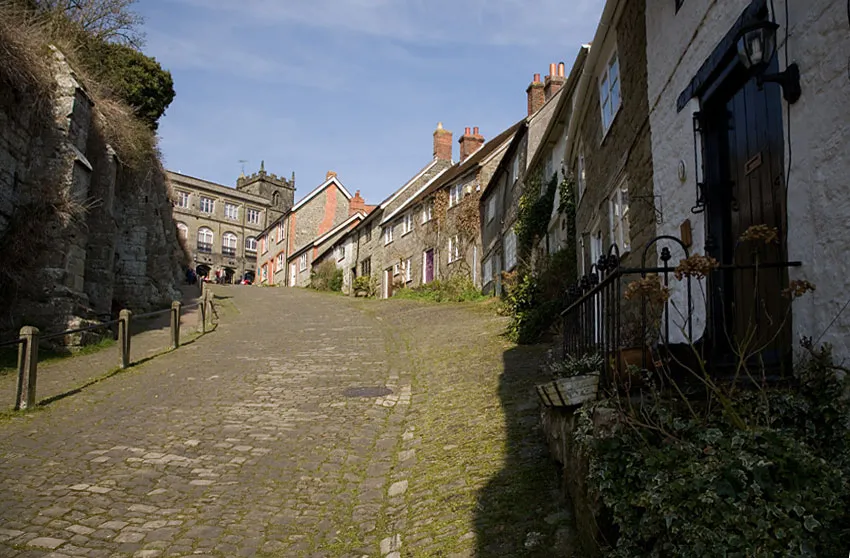 Photo: Shaftesbury's Gold Hill, via www.dorsets.co.uk
The constant micro-adjustments required to navigate uneven cobblestones add another layer of complexity. Your stabilising muscles are working overtime, creating the kind of functional strength that gym machines simply can't replicate.
Real Towns, Real Results
Take Whitby, where residents regularly navigate the 199 steps leading to the abbey. Local postwoman Janet Morrison, who's been covering the same route for fifteen years, laughs when asked about her fitness regime: "Fitness regime? Love, I climb those steps six times a day minimum. My legs could probably power the town."
She's not wrong. Those daily ascents are performing the same muscle-building function as a StairMaster session, but with the added resistance of carrying post bags and navigating Yorkshire weather.
In Ludlow, the medieval street layout means residents regularly tackle gradients that would challenge a mountain goat. Local café owner Mike Thompson noticed the difference when he moved from flat Birmingham: "First month here, I thought I was having a heart attack every time I walked to work. Six months later, I'm practically bouncing up these hills."
The Flat-Lander's Guide to Hill Town Training
Not blessed with a postcode that doubles as a natural gym? Fear not. You can replicate the hill town effect with some strategic training choices.
Stadium Steps: Find your local football ground and make friends with their stairwells. Twenty minutes of step-ups on proper stadium steps will give you a taste of what Whitby residents experience daily.
Weighted Incline Walking: Treadmill incline training with a weighted vest or backpack mimics the shopping-laden climbs of Shaftesbury or Clovelly. Start with 10% incline and build up – these hill town heroes didn't develop their strength overnight.
Uneven Surface Training: Seek out cobbled streets, gravel paths, or even balance boards. The constant micro-corrections required for stability are crucial for developing that hill town strength.
The Cultural Advantage
What makes Britain's hill towns particularly effective as natural training grounds is their lived-in nature. Unlike purpose-built fitness facilities, these communities demand daily engagement. You can't skip leg day when leg day is literally getting home from work.
Hay-on-Wye residents don't have the luxury of taking the lift – there isn't one. Every trip to the bookshops (and there are many) involves navigating slopes that would challenge a seasoned hiker. The result? A community with collectively outstanding lower body strength and the cardiovascular fitness to match.
Beyond the Burn
The psychological benefits shouldn't be overlooked either. While gym-goers often struggle with motivation, hill town residents have purpose-driven training built into their daily routine. They're not exercising for the sake of it – they're living their lives, and the strength gains are a welcome side effect.
Local doctor Patricia Hughes from Hebden Bridge has observed this phenomenon firsthand: "My hill town patients consistently show better lower body strength and bone density than their flat-dwelling counterparts. They're getting functional fitness through functional living."
The Bottom Line
Britain's hill towns aren't just picturesque postcards – they're inadvertent training camps producing some of the strongest legs in the country. While not everyone can relocate to a vertical village, understanding what makes these communities so effective can transform how we approach leg training.
Next time you're planning a weekend break, consider swapping the spa for Shaftesbury, or trading the beach for the cobbled climbs of Clovelly. Your thighs will thank you, even if your lungs might need a moment to catch up.
After all, when your daily routine includes conquering gradients that would challenge a mountain goat, every day truly becomes leg day – and that's exactly the kind of natural training programme we could all learn from.