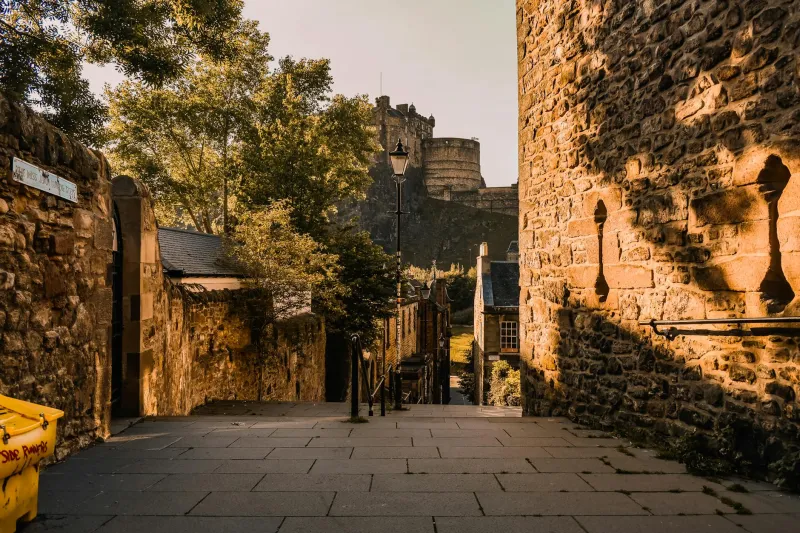
When History Meets Hamstrings
Brilliant news, leg lovers – you don't need to shell out £50 a month for a fancy gym membership when Britain's got centuries of free fitness equipment scattered across our most beautiful town centres. Those wonky cobblestones you've been cursing in your best trainers? They're actually doing your ankles a massive favour. That steep climb up to Durham Cathedral that leaves you gasping? Your glutes are absolutely loving every step.
It's time we stopped seeing our historic town centres as tourist traps and started recognising them for what they really are: outdoor gyms that have been perfecting their leg-strengthening game for over a thousand years.
The Cobblestone Challenge: Nature's Balance Board
Let's start with the obvious – those beautiful, infuriating cobblestones that seem designed to destroy ankles and ruin heels. But here's the thing: every wobbly step you take across York's Shambles or Canterbury's ancient streets is firing up stabiliser muscles that spend most of their time snoozing on modern pavements.
Think about it – when you're navigating uneven surfaces, your body becomes a constant balancing act. Your ankles are working overtime to keep you upright, your calves are engaging with every micro-adjustment, and your core is switched on like a personal trainer's been shouting at it for an hour. It's functional fitness at its finest, and you don't even realise you're doing it.
The irregular spacing and varying heights of cobblestones mean no two steps are identical. Unlike the predictable rhythm of a treadmill, your legs are constantly adapting, strengthening, and building the kind of real-world stability that actually matters when you're carrying shopping up three flights of stairs or chasing after the bus.
Castle Conquests: Medieval Stair Masters
Now let's talk about Britain's ultimate leg day challenge – castle staircases. These weren't built with modern accessibility in mind (shocking, I know), which means they're basically medieval torture devices disguised as tourist attractions. But what absolute gold mines they are for anyone serious about building proper leg strength.
Take Edinburgh Castle's approach – it's essentially a never-ending series of inclines and stone steps that would make a StairMaster weep with envy. Or consider the spiral staircases inside castle towers, where the steps are deliberately uneven heights (apparently to trip up invading armies, but now they're tripping up your comfort zone and switching on every muscle fibre in your legs).
These ancient architects unknowingly created the perfect plyometric workout. The varying step heights mean your quads and hamstrings are constantly adjusting their power output, while your glutes are working harder than they would on any modern gym equipment.
The Hidden Hills of Historic Centres
One thing that catches people off guard about Britain's older towns is just how hilly they are. There's a reason medieval settlements were built on elevated ground (defence, drainage, dramatic effect – take your pick), and that means your innocent afternoon of window shopping becomes an inadvertent hill training session.
Bath's streets are basically a series of leg-burning inclines disguised as Georgian elegance. Lincoln's Steep Hill isn't trying to hide what it's about – it's right there in the name, challenging your quads with every step. Even seemingly flat places like Chester surprise you with unexpected gradients that have your heart rate spiking faster than spotting a Greggs with no queue.
These natural inclines are doing incredible things for your posterior chain. Every uphill step is essentially a single-leg press combined with a calf raise, while the downhill sections are giving your quads an eccentric workout that'll have them talking to you for days.
Beyond the Burn: Why This Matters
Here's what makes historic town centre workouts so brilliant – they're completely accessible and utterly inclusive. You don't need special kit, you don't need to feel intimidated by gym culture, and you definitely don't need to worry about whether you're doing it 'right'. Your body knows how to walk, and these ancient streets are simply asking it to work a bit harder.
Plus, there's something wonderfully British about getting your fitness fix while absorbing a bit of culture. You're not just building stronger legs – you're connecting with centuries of history, supporting local businesses, and probably discovering some cracking independent coffee shops along the way.
Making the Most of Your Heritage Workout
To really maximise your historic town centre leg day, embrace the terrain rather than fighting it. Wear comfortable trainers with good grip (those cobbles can be slippery), take your time to really feel each surface change, and don't be afraid to take breaks – those medieval benches and pub gardens aren't just there for decoration.
Consider it mindful movement rather than intense training. Notice how your body adapts to different surfaces, celebrate the burn in muscles you'd forgotten you had, and remember that every step is strengthening your legs in ways that hours on a gym bike simply can't match.
The Bottom Line
Britain's historic town centres aren't just beautiful – they're functional fitness playgrounds that have been waiting centuries for us to appreciate their leg-strengthening potential. So next time someone suggests a cultural day out, smile and book it in as your weekly leg session. Your thighs will thank you, your calves will celebrate, and your Instagram feed will look absolutely brilliant.