Strong Is the New Strong: Why British Women Are Reclaiming the Squat Rack and Never Looking Back
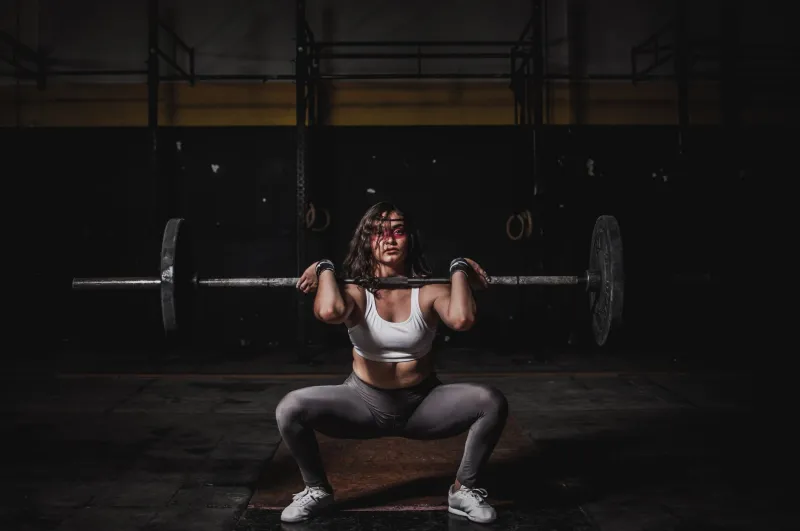
Let's get one thing straight from the off: lifting heavy weights will not make you look like a bodybuilder. It will not make your thighs "too big." It will not turn you into something you don't want to be. This myth — persistent, insidious, and almost entirely without scientific basis — has kept women away from the squat rack for decades, and frankly, we're done with it.
Across Britain, something is shifting. In gyms from Glasgow to Guildford, women are loading barbells, hitting depth on their squats, and building legs that are powerful, capable, and genuinely theirs. They're not doing it to look a certain way for anyone else. They're doing it because strong legs feel extraordinary — and because the culture that told them otherwise was always working against them, not for them.
The Myth That Wouldn't Die
Ask any female personal trainer in the UK about the most common concern she hears from new clients, and you'll get a remarkably consistent answer: "I don't want to get too bulky." It comes up again and again, delivered apologetically, almost as a disclaimer, as though wanting to be strong is something that requires justification.
The irony is that building significant muscle mass — the kind that would make someone look dramatically different — requires years of dedicated effort, a substantial caloric surplus, and in many cases, pharmaceutical assistance. The idea that a woman might accidentally stumble into a bodybuilder's physique by doing a few sets of squats is, to put it politely, not how human bodies work.
"I hear it constantly," says personal trainer Jade Williams, who runs women's strength classes in Bristol. "And I understand where it comes from — it's been drilled into women for so long. But once my clients actually start lifting properly, within a few weeks they're asking me why they didn't start sooner. The feeling of getting stronger is completely addictive. And their legs look incredible."
The roots of this myth run deep. Decades of fitness marketing aimed at women emphasised toning and lengthening — meaningless terms that implied strength training was somehow aggressive and unfeminine. Women were steered towards light weights, high repetitions, and endless cardio. The squat rack was implicitly coded as male territory. The result? Generations of women who undertrained their lower bodies and missed out on one of the most transformative things you can do for your health and confidence.
What Heavy Leg Training Actually Does
Here's what the science actually says. Women have significantly lower testosterone levels than men — the primary anabolic hormone responsible for rapid muscle growth. This means that even when women train at high intensities with heavy loads, the rate of muscle hypertrophy is considerably slower and more modest than in their male counterparts. What women do gain from heavy leg training is strength, muscle definition, improved bone density, better metabolic function, and — crucially — a quality of life improvement that's hard to overstate.
Strong legs mean easier stairs, less knee pain, better balance as you age, improved posture, and a physical confidence that permeates everything else you do. The NHS has been increasingly vocal about the importance of resistance training for women, particularly in relation to osteoporosis prevention and healthy ageing. Your future self is begging you to do the squats.
And yes — your legs will look different. They'll be more defined, more shapely, more present. Not bigger in the way the myth implies, but stronger in a way that's genuinely visible and, for most women who experience it, deeply satisfying.
The Women Leading the Charge
Sophie, 26, a nurse from Newcastle, started strength training eighteen months ago after years of exclusively running. "I was terrified of the weights section at first — it felt like it wasn't for me. But I found a programme online designed for women, started with the basics, and within a month I was obsessed. My legs are the strongest they've ever been. I can squat more than most of the blokes at my gym now and I am absolutely not sorry about it."
For Amara, 38, a secondary school teacher from Leicester, the shift came after a conversation with her GP about bone density. "She basically told me I needed to be lifting weights, not just walking. I was resistant at first — all those old ideas about getting bulky. But I found a women's lifting group online through a Facebook community and it completely changed my perspective. We talk about strength in terms of what our bodies can do, not what they look like. It's been genuinely life-changing."
Ruth, 52, from Edinburgh, came to heavy leg training late and wishes she'd found it sooner. "I spent twenty years doing aerobics classes and wondering why I never felt strong. Now I deadlift, I squat, I lunge. My legs at 52 are better than they were at 32. I tell every woman I know to stop messing around with resistance bands and pick up something heavy."
The Online Community Changing the Conversation
Social media — for all its well-documented problems — has played a genuinely positive role in shifting how British women think about leg training. Instagram and TikTok are full of UK-based women sharing their lifting journeys, posting squat PRs, and celebrating muscular legs without apology. Hashtags like #strongnotskinny and #liftingwomen have accumulated millions of posts, and the tone has shifted markedly from aesthetic aspiration to genuine celebration of capability.
UK-based online communities like women's lifting Facebook groups and Reddit communities dedicated to female strength training have created spaces where beginners can ask questions without judgement, share progress, and find the kind of encouragement that the traditional gym floor doesn't always offer.
"The community aspect is huge," says Jade Williams. "Women are sharing their squat depth, their PB lifts, their before-and-after strength comparisons — not weight loss photos, but what they could lift three months ago versus now. It's a completely different framing and it's incredibly powerful."
Practical Starting Points: Building Your Own Leg Day
If you're ready to stop skipping leg day and start building something genuinely impressive, here's where to begin:
Start with the fundamentals. Squats, Romanian deadlifts, hip thrusts, and Bulgarian split squats form the backbone of any effective leg programme. Master the movement patterns with lighter weight before adding load.
Progressive overload is the game. The goal is to gradually increase the weight, reps, or difficulty of your sessions over time. This is what drives adaptation — and it's what most women's programmes historically failed to include.
Don't fear the barbell. If you've been doing everything with dumbbells, try a barbell squat. The stability demands are different and the loading potential is significantly greater. Most gyms offer induction sessions — use them.
Find your people. Whether it's a women's lifting class, an online community, or just a training partner who gets it, having support makes a measurable difference to consistency and enjoyment.
Track your progress in strength, not size. The most motivating metric in leg training isn't the tape measure — it's the weight on the bar. Watch that number go up and everything else follows.
The Bigger Point
This isn't really about legs. It's about reclaiming the right to take up space — physical space in the weights room, psychological space in your own relationship with your body. The myth that women shouldn't train heavy was never about protecting women's health. It was about keeping women small, literally and figuratively.
British women are done with that. They're loading bars, building thighs that could crack walnuts, and discovering that strong is not a consolation prize — it's the whole point.
Thighs the limit. And it always was.