Five Forgotten Leg Exercises Britain's Been Doing for Centuries (And Why Your Quads Need Them Now)
Five Forgotten Leg Exercises Britain's Been Doing for Centuries (And Why Your Quads Need Them Now)
Modern fitness has a short memory. We chase new methodologies, rebranded movement patterns, and whatever's trending on the algorithm this week — all while ignoring the fact that Britain's working and cultural traditions have been producing functionally extraordinary lower bodies for centuries without a squat rack in sight.
We've done the digging (sometimes literally). Here are five genuinely underrated, authentically British lower-body movements that deserve a serious second look — with the biomechanics unpacked and practical guidance on how to bring them into your training.
1. The Canal Haul-Step
Rooted in: Lock-keeping and canal boating traditions, particularly across the Midlands waterway network
What it is: Working a traditional canal lock involves pushing or pulling heavy balance beams — some weighing several hundred kilograms — using a combination of full-body lean and a very specific stepping pattern. Lock-keepers and working boaters historically performed a deep, driving step forward into the push, loading the lead leg heavily through a long hip-to-ankle chain while the rear leg drove through full extension.
The movement is essentially a weighted split squat combined with a horizontal force drive — similar to a sled push, but with added rotational resistance through the torso.
Muscles targeted: Gluteus maximus, quadriceps (particularly vastus lateralis), hip flexors of the trailing leg, and the entire posterior chain through the drive phase.
How to replicate it: Set up in a split stance with your front foot flat and rear heel raised. Hold a resistance band anchored to a fixed point at chest height in front of you. Drive forward through the front heel, extending the hip fully, while pulling the band toward you. The key is the horizontal drive — think pushing through the floor and forward simultaneously, rather than straight up. Three sets of eight per side, with a slow, controlled three-second drive phase.
Why it works: The horizontal force vector is criminally underused in most leg training programmes. It specifically loads the glutes through their most powerful range and builds the kind of functional strength that transfers directly to walking uphill, climbing stairs, and almost every real-world movement that involves actually going somewhere.
2. The Northumbrian Sword Dance Lateral
Rooted in: Traditional rapper sword dancing, a form native to County Durham and Northumberland
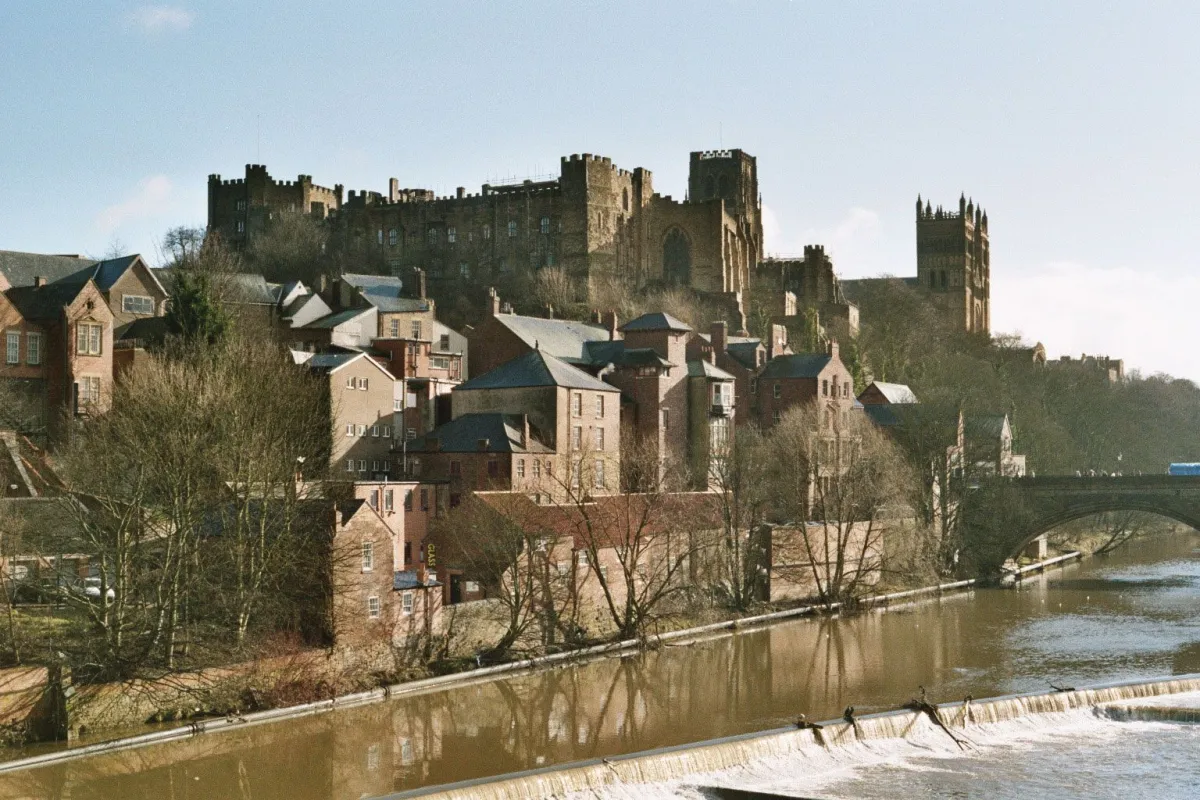 Photo: County Durham, via cdn.britannica.com
What it is: Rapper sword dancing is fast, intricate, and demands explosive lateral movement patterns that most gym programmes simply don't programme. Dancers perform rapid side-to-side shuffles combined with deep lateral lunges, weight transfers, and reactive pivots — often in tight formation with other dancers, which demands precise spatial awareness and single-leg stability.
The lateral lunge pattern in particular — a wide step to the side with a deep knee bend over the lead foot, holding momentarily before driving back to centre — is a textbook hip abductor and adductor loading pattern.
Muscles targeted: Gluteus medius (the chronically neglected side-glute), hip adductors, lateral quadriceps, and the stabilising muscles of the ankle and knee.
How to replicate it: From standing, take a wide step to the right, pushing the hips back and down as you bend the right knee, keeping the left leg straight. At the bottom, pause for a count of two. Drive back to standing through the right heel. Add a small explosive element on the return to mimic the reactive nature of the dance. Perform in sets of ten per side, progressing to a dumbbell held at the chest for additional load.
Why it works: The gluteus medius is one of the most important muscles for knee health, hip stability, and injury prevention — and one of the least trained. Lateral loading patterns target it far more effectively than any sagittal-plane exercise (that means anything going forwards and backwards, which is most of what people do).
3. The Harbour Haul
Rooted in: Fishing communities along the Cornish and Scottish coasts
What it is: Traditional fishermen hauling creels, nets, or catch up steep harbour steps perform a very specific loaded stair-climb pattern: a deep, deliberate step up with a heavy load either carried in the arms or on the back, followed by a complete hip extension at the top of each step before committing to the next. The steepness of historic harbour steps — often far steeper than modern staircases — forces a greater range of hip flexion and extension with each repetition.
Muscles targeted: Gluteus maximus through full hip extension, quadriceps eccentrically on the way up (controlling the load), calves and soleus, and the erector spinae for postural support under load.
How to replicate it: Weighted step-ups onto a box or bench, performed with deliberate intention. The critical cue is full hip extension at the top — stand completely tall, squeeze the glute, before stepping down. Most people rush this and lose the primary training stimulus entirely. Use a box height that puts your thigh at or just below parallel when the foot is planted. Add a dumbbell in each hand or a weight vest for progressive overload.
Why it works: The full hip extension at the top of the movement is the difference between a mediocre step-up and an exceptional glute exercise. It's the range that most machines completely ignore.
4. The Shepherd's Traverse
Rooted in: Upland farming communities across the Yorkshire Dales, Lake District, and Welsh hills
 Photo: Lake District, via cottage-escapes.co.uk
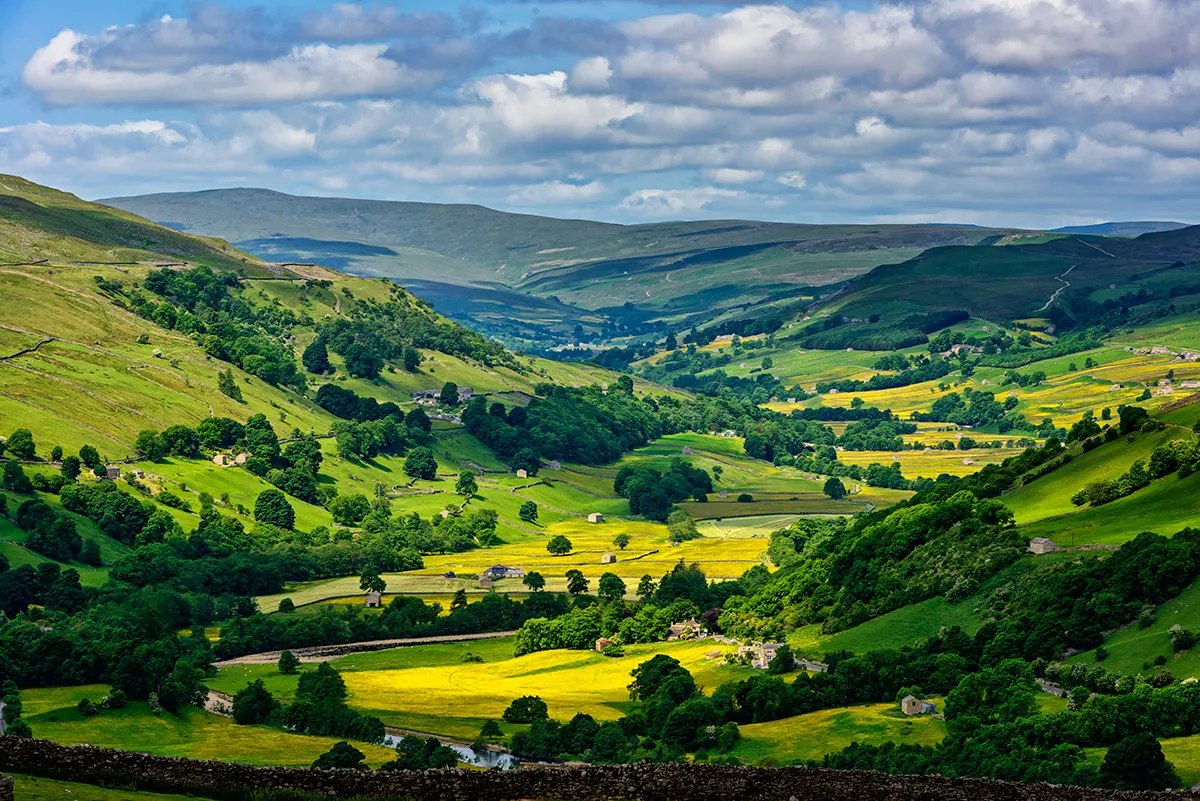 Photo: Yorkshire Dales, via beaconalpacas.co.uk
What it is: Hill shepherds traversing steep, uneven terrain develop a distinctive movement pattern — a controlled diagonal step across a slope, loading the uphill leg heavily while the downhill leg acts as a stabilising brake. This repeated lateral-diagonal loading, performed for hours across rough ground, builds extraordinary unilateral leg strength and ankle stability.
Muscles targeted: Unilateral quadriceps and glutes of the uphill leg, peroneal muscles and tibialis anterior of the downhill leg, and the entire hip stabiliser complex.
How to replicate it: Find a grassy slope (you live in Britain — there's one nearby). Walk across the slope rather than up it, taking deliberate, controlled steps and pausing briefly on the uphill leg with each stride. Increase the gradient progressively. In the gym, a Bulgarian split squat performed on a slight incline — front foot elevated on a slant board — approximates the loading pattern beautifully.
Why it works: Unilateral training on an incline demands far greater hip abductor recruitment than flat-ground equivalents, and the ankle instability of real terrain (or a wobble board) builds proprioception that protects knees and ankles over the long term.
5. The Pit Pony Squat
Rooted in: Mining communities across South Wales, Yorkshire, and the North East
What it is: Underground mine workers in low-seam pits spent entire shifts in a deep squat or duck-walk position — moving, hauling, and working with their hips below knee height. This sustained deep squat position, maintained for hours at a time, built extraordinary hip mobility and posterior chain endurance that modern sedentary lifestyles have almost entirely eroded.
Muscles targeted: Deep hip flexors, gluteus maximus through full range, hamstrings in their lengthened position, and the often-neglected adductor magnus.
How to replicate it: The Cossack squat is your gateway here. Stand with feet wider than shoulder-width, toes turned out. Shift your weight to one side, lowering into a deep squat on that leg while the opposite leg remains straight with the heel on the floor. Hold the bottom position for a breath, then shift across to the other side. Start without weight, progress with a kettlebell held at the chest. The goal is a full, comfortable range — not a half-hearted dip.
Why it works: Deep hip mobility is the foundation of every lower-body exercise. Without it, squats are shallow, lunges are cramped, and the posterior chain never fully engages. This movement addresses the root cause of most leg training limitations in one go.
Britain's physical heritage is richer than any fitness trend. These movements weren't invented by coaches or content creators — they were forged by necessity, repeated daily for generations, and quietly building some of the strongest legs this island has ever seen. Your programme could do with a bit of that old-fashioned graft.