Going the Distance: What Britain's Posties Know About Leg Strength That the Fitness Industry Has Completely Missed
Going the Distance: What Britain's Posties Know About Leg Strength That the Fitness Industry Has Completely Missed
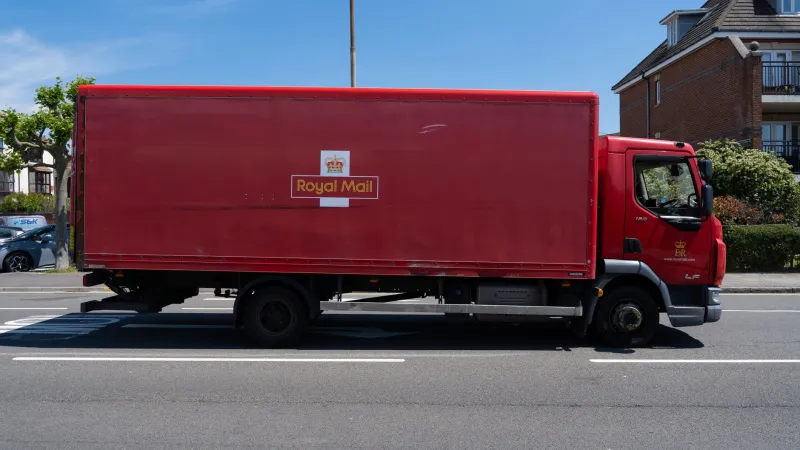
Most fitness trends come with a price tag. A gym membership. A new pair of trainers. A subscription to some app that tells you to do forty squats before breakfast. Britain's posties have been ignoring all of that for generations, quietly logging more daily mileage than most half-marathon runners, building extraordinary lower body endurance and strength in the process, and then going home for a cup of tea without making a fuss about it.
It's time someone made a fuss on their behalf.
A Day in the Life of Britain's Legs
Let's talk numbers first, because they're genuinely staggering.
The average Royal Mail delivery worker covers between ten and fifteen miles per shift on foot. Some routes — particularly in rural Scotland, hilly Welsh villages, or densely packed urban areas with multiple flats per building — push that figure considerably higher. Multiply that by five or six working days a week, fifty weeks a year, and you're looking at somewhere between 2,500 and 4,500 miles annually.
For context, that's the rough equivalent of walking from London to Kabul. Every year. In a high-vis jacket, carrying a bag full of parcels.
And unlike recreational walking — which tends to happen on pleasant, chosen routes at a comfortable pace — postal rounds are non-negotiable. You walk in rain, ice, summer heat and autumn fog. You navigate steep driveways, uneven pavements, garden paths with questionable surfaces, and staircases in tower blocks when the lift is broken (which, in certain postcodes, appears to be its default state). You carry weight. You move at pace. You don't stop when you feel like it.
This is not gentle exercise. This is systematic, cumulative, load-bearing endurance training. It just doesn't have a hashtag.
What the Science Says About Walking for Leg Strength
Walking tends to get dismissed in fitness circles as the soft option — something your nan does around the park, not something serious athletes do for gains. That dismissal is, frankly, embarrassing.
Research consistently demonstrates that high-volume walking produces measurable improvements in lower body muscular endurance, bone density, and cardiovascular fitness. A 2019 study published in the British Journal of Sports Medicine found that walking ten or more miles daily was associated with significantly stronger hip flexors, glutes, and calf muscles compared to sedentary control groups — not just better cardiovascular markers, but actual muscular improvements.
Carrying weight amplifies this effect. The average postal bag weighs anywhere from five to fifteen kilograms depending on the day's load. That additional mass increases the demand on the quads, hamstrings, and glutes with every step, turning what might otherwise be a moderate walk into something considerably more challenging.
Dr. Simone Kaur, an exercise physiologist based in Edinburgh, explains it like this: "The cumulative effect of high-volume, loaded walking is often underestimated. It doesn't produce the acute muscle soreness of a gym session, so people assume it's not doing very much. But over weeks and months, the adaptations are substantial — particularly in the slow-twitch muscle fibres that support endurance and everyday functional movement."
 Photo: Dr. Simone Kaur, via www.opiniatimisoarei.ro
What Posties Know That Gym-Goers Don't
Talk to anyone who's spent years on a postal round and you'll hear the same things: their legs never really give up on them. They can walk for hours without fatigue. Hills that leave other people breathless barely register. Their ankles are bulletproof. Their knees — despite the mileage — are often remarkably robust, because years of functional movement have built strength in the supporting structures around the joint.
Retired postman Alan Docherty, who spent twenty-two years delivering in the Stirling area — a route that included some genuinely punishing hillside roads — puts it simply: "I never once thought about exercise. I just did my round. But I'm sixty-three now and I can still walk all day without any bother. My doctor says my legs are in better shape than most people half my age."
Then there's Fatima Osei, who delivers in a large estate in Birmingham and has been doing so for nine years. "I know my round has a lot of stairs — probably two hundred steps on a bad day, just for the flats. My calves are unreal. I'm not being funny, they're proper solid. My sister goes to the gym three times a week and she's always asking me what I do for my legs. I tell her I just go to work."
That's the thing about the postal round. It doesn't care about your leg day schedule. It just shows up, every morning, and asks your legs to perform.
The Terrain Factor: Why Variety Is Everything
One of the reasons postal workers develop such well-rounded lower body strength is the sheer variety of surfaces and gradients they cover. A single round might include flat tarmac, gravel paths, grass verges, cobbled lanes, steep hills, and multiple flights of stairs — all in the same morning.
This variety is the secret ingredient. Different surfaces demand different muscular responses. Gravel and uneven paths recruit stabilising muscles around the ankle and knee. Hills load the quads on the way up and the hamstrings and glutes on the way down. Stairs are essentially step-ups — one of the most effective exercises for the posterior chain — performed repeatedly throughout the day. Flat, fast sections build cardiovascular efficiency and work the hip flexors through a fuller range of motion.
No single gym machine can replicate this variety. Which is, perhaps, why the fitness industry hasn't figured out how to sell it to you.
The Postal Route Training Programme: Build Postie-Proof Legs
Inspired by the postal round model, here's a practical walking-based leg training programme you can start this week. No gym required.
The Foundation Week Aim for 45-60 minutes of brisk walking daily, incorporating at least one significant hill and a set of stairs where possible. Focus on maintaining an upright posture and driving through your heel with each step to engage the glutes properly.
Add the Load Once daily walking feels manageable, introduce a loaded rucksack — start with five kilograms and build gradually to ten. This immediately increases the demand on your quads, hamstrings, and core without changing anything else about the session.
The Stair Protocol Find a building, car park, or outdoor staircase and incorporate dedicated stair climbing into your route. Aim for ten minutes of continuous stair climbing two or three times per week. This single addition will transform your calf and glute strength faster than almost anything else you could do.
The Long Haul Once a week, aim for a longer outing — two hours or more, across genuinely varied terrain. This is your endurance anchor, building the slow-twitch muscle fibre and joint resilience that posties accumulate over years.
Track Your Mileage There's something motivating about seeing the numbers add up. Most posties don't count their steps — they just do the round. But knowing you've covered eight, ten, or twelve miles in a day is genuinely satisfying, and it recalibrates your sense of what your legs are capable of.
The Bigger Picture
Britain's posties are, without realising it, ambassadors for a simple, democratic, completely free approach to building strong, capable legs. No expensive equipment. No complicated programming. No gym selfies. Just consistent, purposeful movement across real terrain, day after day, week after week.
That's the Thighs The Limit philosophy in its purest form. Your legs don't know the difference between a treadmill and a delivery round. They just know whether you're asking them to work.
So next time your postie knocks on the door, take a moment to appreciate what's standing in front of you: living, breathing proof that the best leg training programme in Britain costs absolutely nothing and happens six days a week, rain or shine, across every postcode in the country.
Now get your coat on. There's mileage to be made.