Clog Off: Why This Forgotten Northern Tradition Is Stamping Its Way Back as Britain's Wildest Leg Workout
Clog Off: Why This Forgotten Northern Tradition Is Stamping Its Way Back as Britain's Wildest Leg Workout
There is a moment, roughly twenty minutes into your first clog dancing session, when your brain stops worrying about looking ridiculous and starts issuing urgent messages from your lower legs. The messages are not polite. They are along the lines of: "What exactly do you think you're doing to us?"
This is the moment you understand that clog dancing — percussive, grounded, rhythmically relentless English clog dancing — is not the quaint hobby you assumed it was. It is, from the ankle to the hip, an absolute bruiser of a workout.
A Tradition With Roots in the Hard Stuff
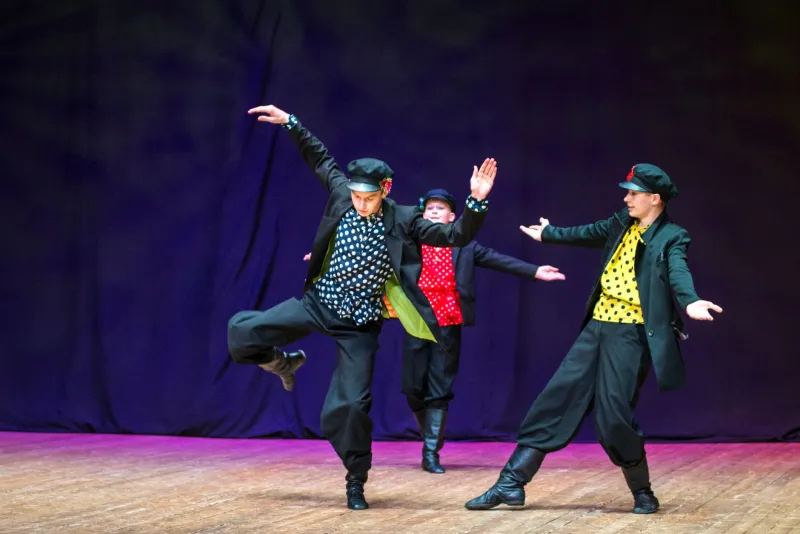
English clog dancing didn't emerge from a leisure culture. It grew out of necessity, practised by mill workers in Lancashire, miners in County Durham, and quarrymen in the Yorkshire Dales who wore wooden-soled clogs as standard working footwear and danced in them because the sound they made on stone floors was satisfying, communal, and — crucially — free.
The style differs meaningfully from the more widely known Irish or Welsh step traditions. English clog dancing is characterised by a heavier, more grounded aesthetic: the feet work close to the floor, the upper body stays relatively relaxed, and the emphasis is on rhythmic complexity rather than height or elevation. It is, in movement terms, all about what happens from the knee downward.
That specificity is precisely what makes it so brutally effective as a lower body stimulus.
"People come to their first session expecting a nice bit of folk culture," says Deborah Firth, a clog dance teacher who runs classes in Hebden Bridge and has been dancing for over twenty-five years. "By the end they're absolutely gobsmacked that their legs are so tired. I've had people who run marathons tell me they've never felt their calves work like that before."
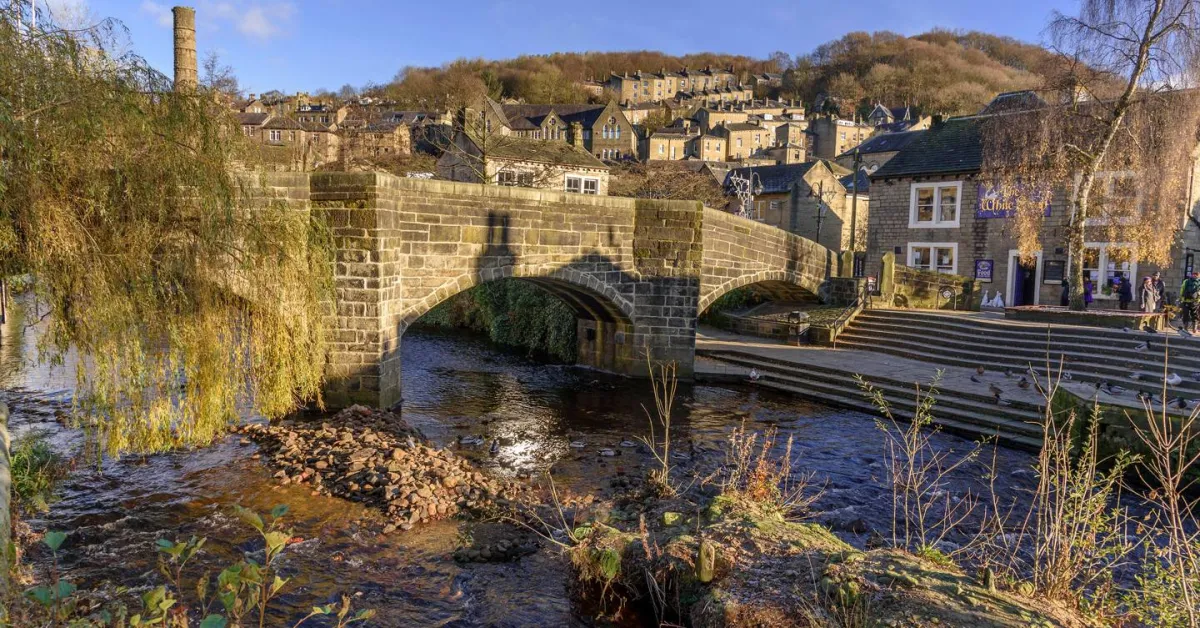 Photo: Hebden Bridge, via tr-images.condecdn.net
The Biomechanics of the Stamp
Let's get into it, because the science here is genuinely compelling.
The foundational movement of English clog dancing is the stamp — a controlled, deliberate, full-foot contact with the floor that generates both the percussive sound and the primary muscular demand. Unlike a jump or a hop, the stamp requires the dancer to absorb force eccentrically through the ankle, calf, and tibialis anterior (the muscle running along the shin) before immediately loading for the next beat.
This eccentric-concentric cycle, performed repeatedly at tempo across a three to five minute dance, is functionally identical to the plyometric calf training used by sprinters, basketball players, and high jumpers to develop reactive lower leg strength. The difference is that in clog dancing, you're doing it for the duration of an entire piece of music, often without pause, often in a sequence that demands rapid directional changes and weight transfers.
The tibialis anterior — that oft-forgotten shin muscle that runners discover painfully during training blocks — gets a particularly thorough workout. Every controlled stamp, every toe-lift between beats, every dorsiflexed recovery step loads it in a way that conventional gym training rarely replicates.
"My shin strength has always been the thing that holds my running back," says Tom Arkwright, 29, a PE teacher from Rochdale who stumbled into a clog dancing class at a folk festival two years ago and has been attending weekly ever since. "Three months of dancing and that problem basically disappeared. My running coach couldn't work out why I'd suddenly improved. I was slightly embarrassed to tell him."
Glutes, Stance, and the Long Burn
The stamp is the headline, but the supporting cast is doing serious work too.
English clog dancing is performed in a consistently lowered stance — not dramatically so, but enough that the hips and knees are never fully locked out during active sequences. This sustained partial-squat position keeps the glutes and quads under continuous low-level tension for the duration of each dance, accumulating the kind of time-under-tension that resistance training coaches deliberately engineer into programmes for hypertrophy and endurance.
The lateral weight transfers that characterise many traditional sequences — shifting sharply from foot to foot in response to rhythmic cues — demand hip abductor engagement that would make a physiotherapist nod approvingly. The gluteus medius, the hip stabiliser that everyone's told they should be training more of, is working constantly.
"I had a hip problem that my physio had been trying to sort for two years," says Margaret Clegg, 55, a retired nurse from Preston who took up clog dancing at the suggestion of a friend. "Within six months of dancing it had resolved itself. She actually asked me what I'd changed in my exercise routine. When I said clog dancing she wrote it down."
Finding New Feet
For decades, English clog dancing occupied a narrow cultural niche — beloved by folk enthusiasts, largely invisible to everyone else. That's changing, and the reasons are interesting.
The folk revival that's been quietly gathering momentum across the North of England has brought new audiences to traditions that might otherwise have faded. Festivals like Whitby Folk Week and Saddleworth Folk Festival regularly feature clog dancing performances that draw curious crowds. And social media — particularly short-form video — has given the form a visibility it never had before, with clips of accomplished dancers racking up views from audiences who have no idea what they're watching but can't quite look away.
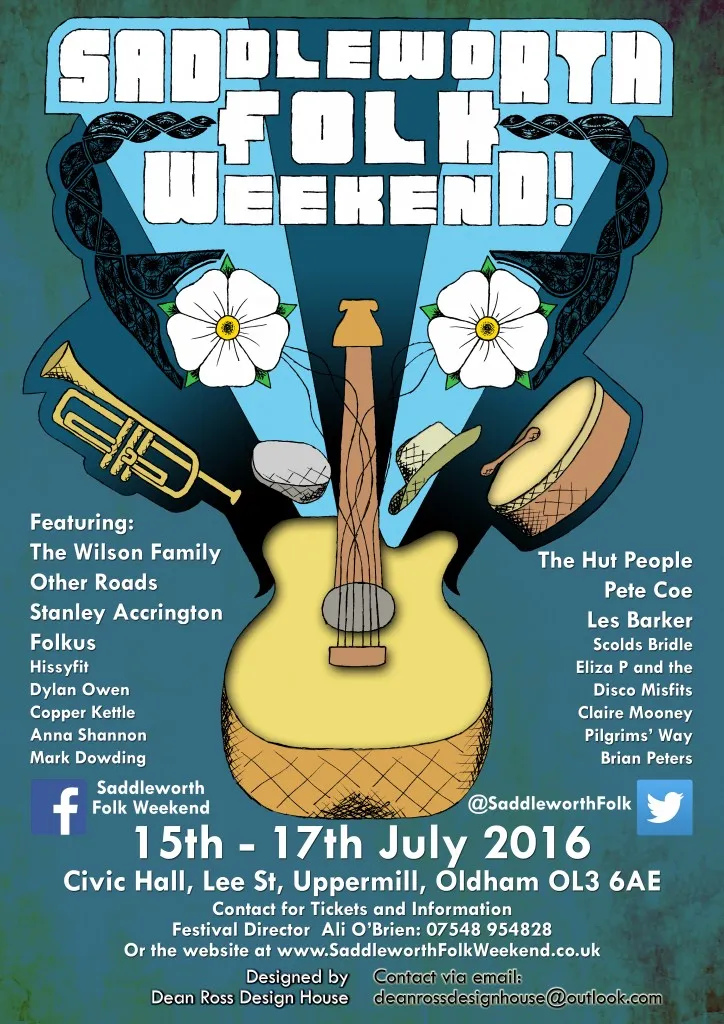 Photo: Saddleworth Folk Festival, via saddind.co.uk
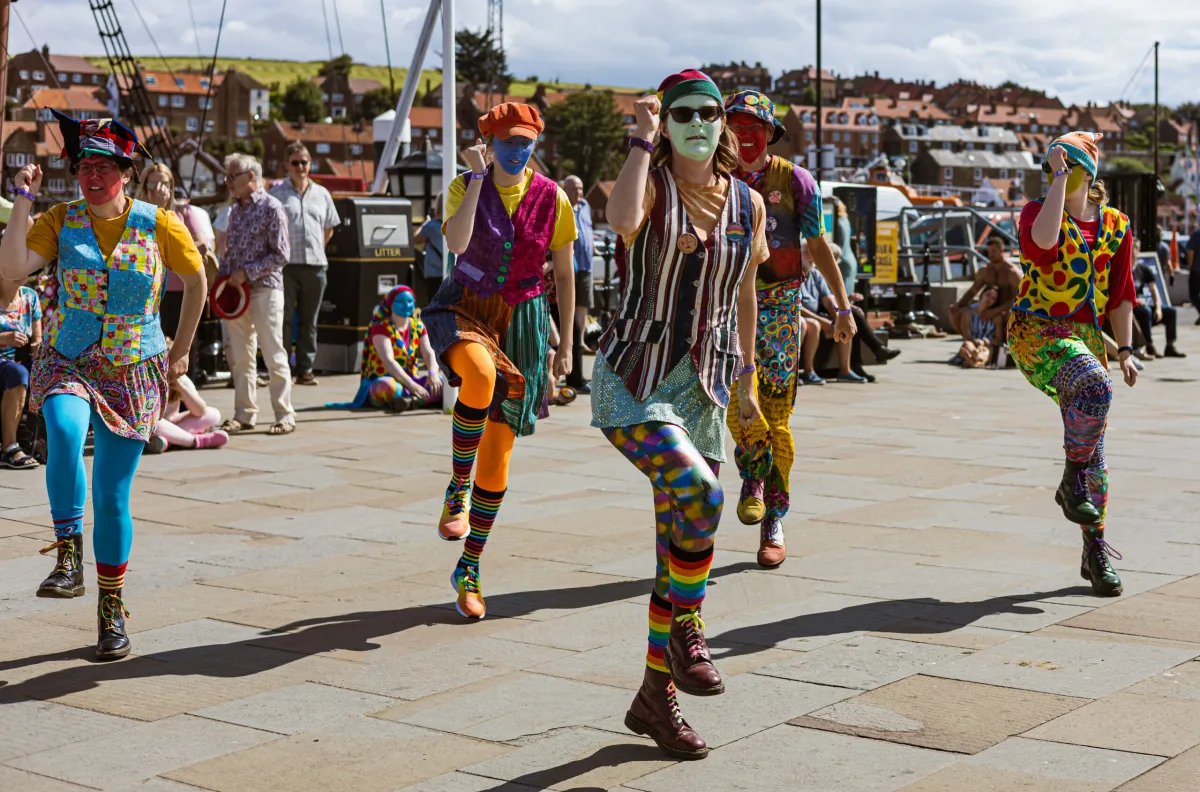 Photo: Whitby Folk Week, via gogmagogmolly.org.uk
Classes are growing. Many are deliberately welcoming to beginners, and the community around the form tends to be warm, unpretentious, and refreshingly unconcerned with perfection.
"You don't need to be graceful," says Deborah Firth. "You need to be willing to commit to the stamp. Everything else follows."
Why Your Legs Need This
If you've been training for a while, you'll know that novelty is one of the most powerful tools in any fitness toolkit. The body adapts to familiar movements; unfamiliar ones force adaptation in ways that structured training sometimes can't.
Clog dancing offers a genuinely different stimulus — percussive, rhythmic, socially embedded, and rooted in a working-class Northern tradition that deserves far more recognition than it currently gets. Your calves will notice. Your tibialis anterior will notice. Your glutes will notice, and they'll be grumpy about it for a day or two.
But you'll come back. Because unlike leg press, clog dancing has a beat you can feel in your chest, a community you can laugh with, and a cultural heritage that makes the whole thing feel like something more than just another workout.
Stamp your way in. Your legs will catch up eventually.