Hundreds of Jumps a Routine: Inside the Explosive Leg Engine Room of Highland Dancing
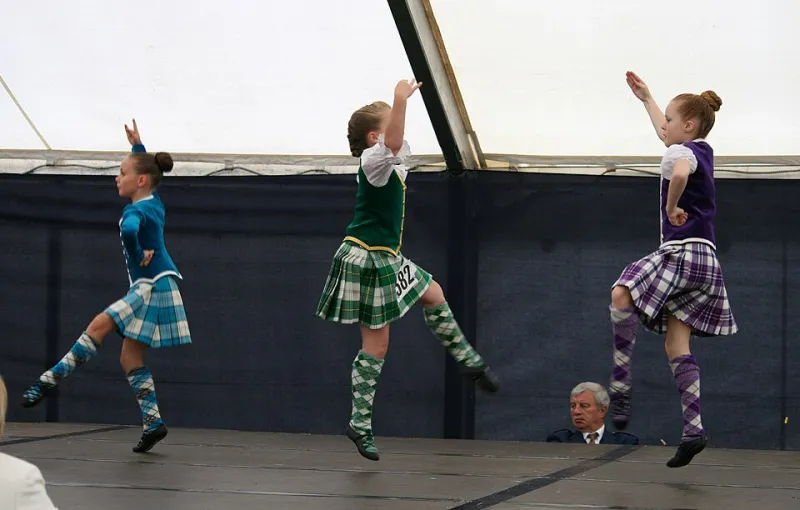
Photo: Thyes, CC BY-SA 3.0, via Wikimedia Commons
Watch a competitive Highland dancer for thirty seconds and the misconception dies quickly. This is not a costume parade. It's a sustained plyometric event — a discipline where performers execute the Highland Fling, the Sword Dance and the Seann Triubhas on the balls of their feet, absorbing hundreds of landing forces in a single routine.
The Numbers Don't Lie
Sports scientist Dr Fiona MacLeod, who has worked with dancers at championship level, puts it bluntly: "In a four-minute Sword Dance, you're looking at well over a hundred discrete jumps, each requiring a controlled landing on a single leg. Elite sprinters do plyometric volumes like that in training — these dancers do it in performance, in heavy wool, on a board."
The calf complex takes the brunt. Every hop, every beat of the pas de basque, is a rapid lengthening-then-shortening cycle of the Achilles tendon — the same mechanism that powers a vertical jump. Do it repeatedly and you build a tendon that stores and returns energy like a coiled spring.
Balance Is the Hidden Skill
But raw power is only half the story. Highland dancing demands that all of this happens on one leg, often with the free leg extended and the arms held aloft. Former champion Alastair Bremner, who took the Cowal Gathering title twice, describes it as "strength with the volume turned down and control turned all the way up."
"Anyone can jump," he says. "Landing silently, on one foot, with your knee tracking perfectly, for the tenth time in a routine — that's the actual sport."
Take-Home Drills for the Gym-Goer
You don't need to don a kilt to borrow from the discipline. Three drills translate directly:
- Single-leg pogo hops: Two sets of twenty on each foot, staying quiet on landing. Builds calf-tendon elasticity.
- Static single-leg balance with eyes closed: Sixty seconds per side. The proprioceptive work underpins every dance landing.
- Releve holds: Rise onto the balls of the feet on one leg and hold for fifteen seconds. Three rounds. Your soleus will let you know about it the next day.
Britain's Best-Kept Leg Secret
There's a strong argument that Highland dancers possess the most functionally trained lower bodies in the country — explosive, resilient and built through tradition rather than trend. The kilt may be optional for your training. The jumping needn't be.