The Deceptive Calm of the Cricket Green
Picture this: a quintessentially British summer afternoon, the gentle thwack of leather on willow echoing across manicured village greens. Spectators sip tea from thermos flasks whilst players in pristine whites engage in what appears to be the most civilised sport known to humankind. But beneath this veneer of genteel recreation lies one of Britain's most demanding lower-body workouts – and most participants haven't got a clue.
"People think we're just standing about having a laugh," chuckles Sarah Mitchell, wicket-keeper for Little Thetford Cricket Club in Cambridgeshire. "But by the end of a six-hour match, my quads are absolutely screaming. I've been behind those stumps in a deep squat position for most of the afternoon, and that's before we even talk about the diving catches."
Sarah's onto something that sports scientists have been quietly documenting for years. Village cricket – that most British of pastimes – delivers a comprehensive functional fitness programme that would make personal trainers weep with envy.
The Wicket-Keeper's Secret Squat Marathon
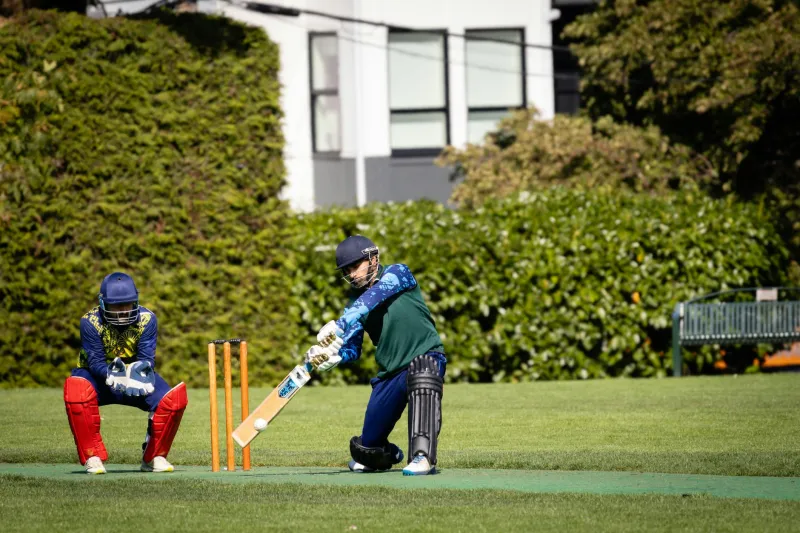
Let's start with the most obvious leg-burner: wicket-keeping. For the uninitiated, this role requires crouching behind the stumps for potentially hours at a time, maintaining a position that's essentially a sustained squat hold with explosive movement capability.
"The biomechanics are fascinating," explains Dr. James Hartwell, sports scientist at Loughborough University. "A wicket-keeper maintains what we'd call a 'ready position' – knees bent, weight on the balls of their feet, core engaged. It's an isometric hold that targets the quadriceps, glutes, and calves simultaneously. Then they need to explode laterally for wide deliveries or spring forward for stumpings. It's plyometric training disguised as sport."
Tom Richardson, who's kept wicket for Ashby-de-la-Zouch Cricket Club for twelve seasons, didn't realise he was essentially doing gym work until his daughter started studying sports science. "She watched me play one Saturday and said I'd basically done three hours of wall sits with interval sprinting. Made me look at the game completely differently."
Fielding: The Ultimate Agility Circuit
Whilst the wicket-keeper gets the obvious leg workout, fielders across the ground are engaging in their own lower-body conditioning session. Modern cricket demands athletic fielding – gone are the days when you could simply amble after the ball.
"In the slips, you're in a semi-crouch for hours," explains Emma Watson, captain of Gloucestershire women's team Thornbury Cricket Club. "Your weight's forward, knees bent, ready to react. It's like holding a squat position but with the added challenge of maintaining concentration and explosive reaction capability."
But it's the boundary fielders who really clock up the leg work. A typical village cricket match can see fielders sprinting, diving, changing direction, and covering significant ground across uneven surfaces.
Mark Thompson, a fast bowler and boundary fielder for Weybridge Cricket Club in Surrey, tracked his movement during a recent match using a fitness watch. "Fourteen kilometres. I covered fourteen kilometres in a six-hour match, and that's not including all the explosive starts and stops. No wonder my legs were knackered."
Between the Wickets: Sprint Interval Training in Disguise
Then there's the running between wickets – cricket's answer to high-intensity interval training. Batsmen might sprint 22 yards multiple times per over, often carrying heavy protective gear, with irregular rest periods that mirror HIIT protocols.
"The interesting thing about cricket running is the variability," notes Dr. Hartwell. "You might do a quick single, then three balls later sprint for a risky two. Your legs never know what's coming next, which is excellent for developing both anaerobic power and recovery capacity."
Jamie Foster, opening batsman for Hertfordshire's Berkhamsted Cricket Club, discovered this the hard way during a particularly aggressive innings last season. "I scored 87 not out, but I reckon I ran about forty-five singles and doubles. My calves were like concrete the next day. It's basically interval running with the added pressure of potentially getting run out."
The Uneven Surface Advantage
Unlike gym-based training, cricket takes place on natural grass surfaces that provide constant proprioceptive challenges. Village greens, in particular, can be delightfully unpredictable.
"Our ground's got this slight slope that catches everyone out," laughs Rachel Green, all-rounder for Cotswolds-based Chipping Campden Cricket Club. "Fielding on uneven ground means your stabilising muscles are constantly engaged. It's like doing squats on a BOSU ball for six hours."
This natural instability training develops functional strength that translates brilliantly to everyday activities. The constant micro-adjustments required for balance and stability on grass surfaces engage the deep stabilising muscles of the hips, ankles, and core.
The Social Fitness Revolution
Perhaps most importantly, village cricket delivers this comprehensive leg workout within a social, community-focused environment that makes the physical demands almost incidental.
"I joined the club for the social side," admits Peter Davies, veteran middle-order batsman for Welsh club Llanfairpwll Cricket Club. "The fact that I've maintained decent leg strength into my sixties is just a bonus. It doesn't feel like exercise when you're having a laugh with your mates."
This social aspect addresses one of the biggest challenges in fitness: adherence. Whilst gym memberships often go unused, cricket club members turn up religiously every weekend, rain or shine, motivated by team commitment rather than personal fitness goals.
Bringing Cricket Training Home
For those inspired to incorporate cricket-style leg training into their routine, the exercises are beautifully simple:
The Wicket-Keeper Hold: Maintain a deep squat position for 30-60 seconds, weight on the balls of your feet, ready to spring in any direction.
Boundary Sprints: Short, explosive runs with quick direction changes, mimicking chasing a ball to the rope.
The Slip Catch Position: Semi-squat hold with forward lean, building the specific strength pattern used by close fielders.
The Beautiful Game's Beautiful Secret
As Britain's summer cricket season approaches, it's worth appreciating that our village greens are hosting some of the most comprehensive functional fitness sessions in the country. Behind the polite applause and cucumber sandwiches lies a sport that's quietly building explosive power, endurance, and functional strength in participants who think they're just having a gentle knock-about.
So next time you pass a village cricket match, remember: those players in whites aren't just preserving a charming British tradition – they're engaged in one of the most effective leg workouts you'll find outside a professional gym. And they're having considerably more fun doing it.