Hard Lessons from the Fells: What Britain's Most Brutal Runners Know About Leg Training That You Don't
Hard Lessons from the Fells: What Britain's Most Brutal Runners Know About Leg Training That You Don't
There is a particular breed of person in Britain who, when faced with a steep, boggy, rock-strewn hillside, doesn't slow down. They speed up. These are fell runners — the slightly unhinged athletes who race up and down the Lake District, the Pennines, the Brecon Beacons, and the Scottish Highlands at speeds that make no physical sense given the terrain involved.
Fell running is one of Britain's oldest and most gloriously eccentric sporting traditions. It is also, without question, one of the finest lower body training methodologies ever developed — accidentally, through generations of people who simply wanted to see how fast they could get up a mountain and back down again.
What these athletes know about legs — from hard experience, from injury, from the specific education that comes from having the fells beat seven kinds of hell out of your lower limbs — is worth considerably more than most of what gets written on gym-floor whiteboards. Here are five lessons the fell running community wishes you'd take seriously.
Lesson One: Your Legs Don't Know What Flat Is
Walk into most commercial gyms and you'll find leg training conducted almost exclusively on flat, level surfaces. Squats on rubber flooring. Leg presses on fixed tracks. Lunges across polished concrete. Everything controlled, predictable, and — from a fell runner's perspective — slightly baffling.
"The fells don't care about your comfort zone," says Katie Braithwaite, a fell runner from Cumbria who has competed at national level for over a decade. "Every step is different. You're constantly reacting, adjusting, absorbing. Your legs have to think for themselves."
This isn't just motivational rhetoric. Research from Northumbria University has demonstrated that running on varied terrain activates significantly higher levels of proprioceptive neuromuscular activity than treadmill or track running — meaning the stabilising muscles around the ankle, knee, and hip work substantially harder just to keep you upright.
For gym-goers, the lesson is simple: get off the flat. Even introducing a wobble board, a BOSU, or simply taking your squats outside onto grass starts to address the proprioceptive gap that flat-surface training creates. Better still, find a hill and use it.
Lesson Two: Eccentric Strength Is the Thing You're Probably Neglecting
Ask a fell runner what the hardest part of a race is and most will tell you: the descent. Going uphill hurts in a cardiovascular sense — your lungs catch fire, your heart rate spikes. But coming down a steep, technical fell at pace is where the legs truly suffer.
Downhill running places enormous eccentric load on the quadriceps — the muscles are contracting while simultaneously lengthening to control the deceleration of each stride. Do this for extended periods, on steep and unpredictable terrain, and you'll develop quad strength that no amount of leg presses can replicate.
"I've seen athletes who can squat impressive weights absolutely fall apart on a long technical descent," notes sports scientist Dr. Paul Rennie, who works with endurance athletes in the north of England. "Concentric strength — the pushing phase — is what most gym programmes develop. Eccentric strength — the braking, the control — is what the fells demand. They're not the same thing."
The fix: introduce slow-tempo eccentric work into your training. Five-second lowering phases on squats and lunges. Single-leg Romanian deadlifts with a controlled descent. And when you do go outside, find a hill to walk or run down, not just up.
Lesson Three: Endurance and Strength Aren't Opposites
There's a persistent myth in gym culture that building strong legs and building endurance legs are mutually exclusive pursuits. Fell runners, who need both simultaneously, have never had the luxury of believing this.
A competitive fell race at the longer end of the discipline — the kind that takes in multiple Lakeland summits over twenty or thirty miles — demands the muscular strength to power up technical ascents, the eccentric control to descend safely, and the endurance to maintain both for hours. The legs that can do all three are built through a training approach that refuses to separate the qualities.
"I do strength work in the winter — weighted step-ups, split squats, deadlifts," says Marcus Webb, a fell runner from Yorkshire who has completed the Bob Graham Round. "But I never stop running the hills. The two things feed each other. Strong legs run better. Running legs become strong. You can't silo them."
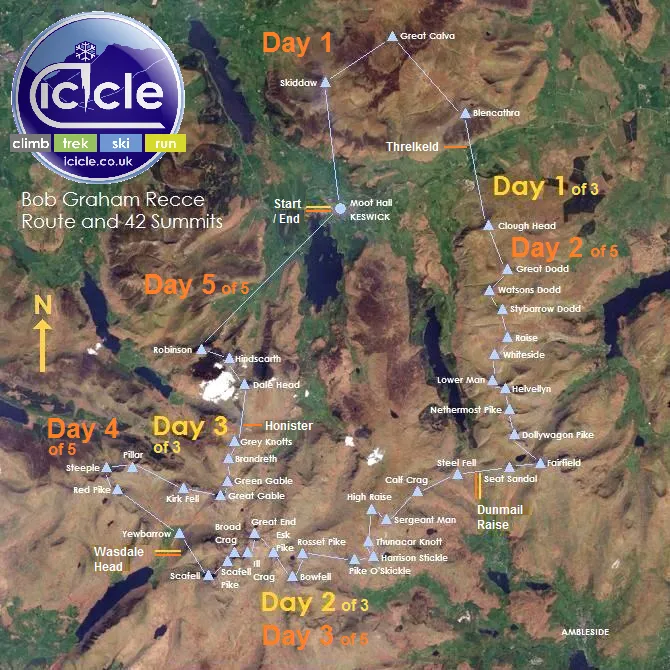 Photo: Bob Graham Round, via www.icicle-mountaineering.ltd.uk
The lesson for gym-goers: if your leg training exists entirely within the gym, you're developing only part of the picture. Complementing your strength work with regular hill walking, trail running, or even stair climbing bridges the gap between gym strength and functional performance.
Lesson Four: Your Ankles Are Doing More Work Than You Think — and You're Not Training Them
Fell runners have a reverence for ankle strength that borders on religious. It makes complete sense: racing across loose scree, wet peat, and root-laced woodland paths at speed means that ankle stability is quite literally the difference between finishing a race and being airlifted off a hillside.
"I spend more time on ankle work than almost anything else," says Katie Braithwaite. "Single-leg balance on uneven surfaces, calf raises with inversion and eversion, resistance band work. People think of ankles as an afterthought. Fell runners think of them as the foundation."
Dr. Rennie agrees. "The ankle complex — the joint itself, the surrounding tendons, and the peroneal muscles on the outer lower leg — is massively undertrained in conventional gym programmes. Most leg training doesn't challenge it at all. Then people go for a walk on uneven ground and turn an ankle. It's not bad luck; it's a training gap."
Adding single-leg balance work, lateral band walks, and deliberate calf raise variations (toes in, toes out, single-leg) to your routine addresses this gap. It's unglamorous work, but fell runners will tell you it pays dividends in ways that no amount of leg pressing can.
Lesson Five: The Mountain Doesn't Care About Your Programme
This one's less about biomechanics and more about philosophy — but fell runners are insistent on it.
Gym-based leg training operates within a framework of control. You choose the weight. You choose the rep range. You choose the rest periods. The environment accommodates your plan. The fells do not. A sudden change in gradient, a hidden bog, a technical rocky section that demands immediate deceleration — the fell runner adapts constantly, without the luxury of a pre-planned response.
This creates a quality of physical resilience — and indeed mental toughness — that structured training alone struggles to cultivate. "The gym makes you strong in the ways you train for," says Marcus Webb. "The fells make you strong in ways you didn't know you needed."
For gym-goers, the practical takeaway isn't to abandon structured training — it's to occasionally step outside its boundaries. Unplanned hill walks. Trail runs where the terrain dictates the pace. Outdoor workouts where conditions mean adapting on the fly. These experiences don't replace programming; they complete it.
The Verdict From the Hillside
Britain's fell running community isn't interested in telling you your gym routine is worthless. They're too busy running up mountains for that. But if you pressed them — if you caught one on the way down from Scafell Pike and asked what leg training truth they'd share with every gym-goer in the country — the answer would probably sound something like this:
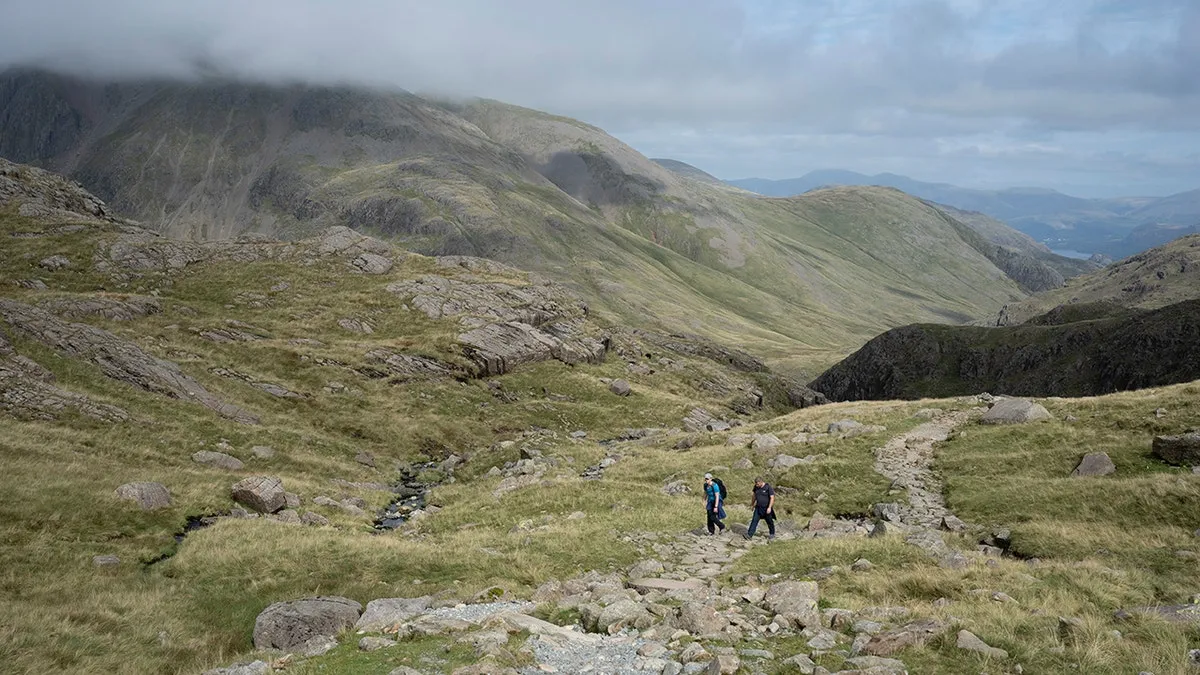 Photo: Scafell Pike, via a57.foxnews.com
Get off the flat. Train the descent. Don't separate strength from endurance. Respect your ankles. And occasionally, let the terrain be the programme.
The fells have been building extraordinary legs for generations. They're not going anywhere. Neither are the lessons.