The Quiet Sport That Builds Ridiculously Strong Legs: What Lawn Bowls Isn't Telling You
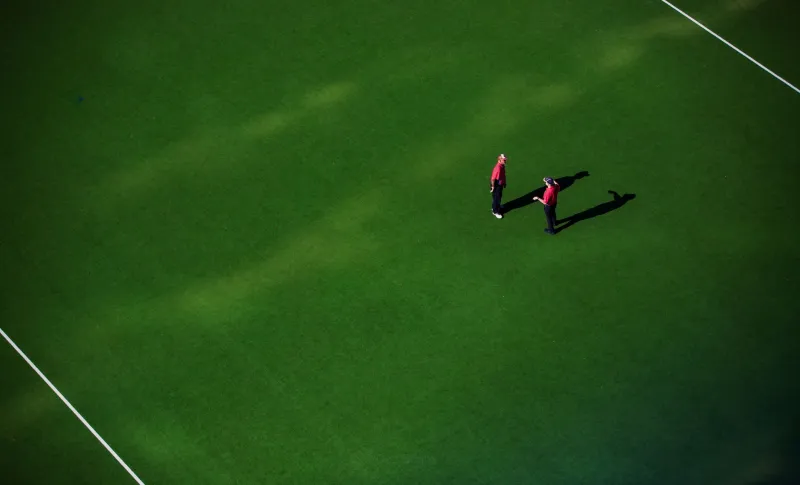
There's a particular kind of snobbery in British fitness culture. It goes something like this: if something doesn't involve a barbell, a sports bra, and a playlist that rattles your teeth, it probably isn't doing much for your body. Lawn bowls, with its pressed whites, its measured silences, and its association with village fetes and retirement clubs, has suffered more than most from this attitude.
Which is a shame. Because if you actually watch what a competitive bowler's body does over the course of a four-hour match, you start to notice something remarkable. The hips dropping low into the delivery stance. The single-leg balance held for a beat longer than feels comfortable. The lateral shuffles, the weight transfers, the controlled deceleration on the follow-through. This isn't a gentle afternoon stroll. This is functional leg training wearing a very convincing disguise.
What Actually Happens When You Bowl
Dr Priya Mehta, a sports biomechanist based in Nottingham who has worked with both elite athletes and recreational sport communities, has spent time analysing movement patterns in bowls players. Her findings are not what most gym-goers would expect.
"The delivery action alone requires significant single-leg stability," she explains. "You're loading one leg, dropping into a deep lunge position, and then transferring force through the kinetic chain in a smooth, controlled arc. If you did that same movement with a dumbbell in a gym, we'd call it a reverse lunge with a rotational component. On the bowls green, people just call it Tuesday."
The demands don't stop at delivery. Competitive bowls involves sustained periods of walking on uneven grass surfaces, repeated transitions between standing and squatting, and — particularly for skips and leads who walk the length of the rink repeatedly — cumulative lower body endurance work that adds up quickly over a full day's play.
The Stabilisers Nobody Talks About
Margaret Holloway has been bowling competitively for Cheshire since her mid-forties. Now 61, she's also a qualified fitness instructor, and she's noticed something striking about the physical condition of serious bowlers compared to their non-bowling peers.
"My hip stabilisers are genuinely stronger than those of people half my age who go to the gym three times a week," she says, without a trace of smugness. "The delivery position forces you to work the glute medius in a way that most standard gym exercises just don't hit. Everyone does squats, but not many people train that lateral hip stability with any real intent."
The glute medius — that fan-shaped muscle sitting on the outer surface of the hip — is famously undertrained in recreational gym-goers, and famously overworked in bowlers. It's the muscle responsible for keeping your pelvis level when you're balanced on one leg, and its weakness is linked to knee pain, IT band issues, and lower back discomfort. Bowlers, it turns out, have been accidentally rehabbing their hips for centuries.
Deceptive Intensity, Real Results
The thing about lawn bowls that makes it genuinely interesting from a fitness perspective is the concept of sustained low-level muscular demand. Unlike a gym session where you work hard for a set and then rest, bowls asks your legs to stay engaged and alert for hours at a stretch. The intensity at any given moment might not be high, but the cumulative load is significant.
Dr Mehta calls this "isometric endurance load" — the muscles aren't necessarily contracting explosively, but they're maintaining tension and control across long periods. "That kind of sustained stabiliser engagement is actually quite difficult to replicate in a gym environment," she notes. "It's closer to what you'd find in yoga or Pilates, but with the added complexity of dynamic movement layered on top."
Drills You Can Steal Right Now
You don't need to join a bowls club to benefit from the movement patterns that make the sport so quietly effective. Here are three drills drawn directly from what competitive bowlers do, adapted for anyone with a bit of floor space.
The Delivery Lunge Hold Drop into a deep reverse lunge and hold the bottom position for three to five seconds before rising. Focus on keeping the front knee tracking over the second toe and the back knee hovering just above the floor. Do three sets of eight each side. This replicates the isometric demand of the delivery stance without requiring a bowls green or a set of woods.
Lateral Step and Pause Using a low resistance band around your ankles, take five lateral steps to the right, then pause for two seconds before stepping back. The pause is the key — it forces the glute medius to work as a stabiliser rather than just a mover. Three sets in each direction will have you feeling muscles you didn't know existed.
Single-Leg Calf Raise with Reach Balance on one foot and slowly raise onto your toes while reaching the opposite arm forward. This combines the ankle stability work of walking on uneven grass with the balance challenge of the delivery action. It's deceptively difficult and absolutely brilliant for building that quiet, unshakeable stability that defines a good bowler's lower body.
The Body-Positive Case for Bowls
There's something genuinely refreshing about a sport where physical appearance is irrelevant, age is no barrier, and the only thing that matters is how well you move. Lawn bowls has never been about aesthetics. It's always been about control, precision, and the kind of quiet physical competence that takes years to develop.
At Thighs The Limit, we're firmly in favour of any activity that builds strong, capable legs without demanding that you look a particular way while doing it. Bowls, it turns out, is one of Britain's most underrated leg strength tools — and the people who've known that all along have been out on the green every Wednesday afternoon, quietly building bulletproof hips while the rest of us were doing leg press.
Perhaps it's time to reconsider what "training" actually looks like.