Two Wheels, Thunder Thighs: What British Cycling Is Really Doing to Your Legs
There's a moment somewhere around the third mile of a wet Tuesday morning commute — rain spattering your shins, a slight headwind off the Thames, thighs beginning to warm up through damp lycra — when you realise something is genuinely happening to your legs. Not the polished, carefully periodised something of a structured gym programme. Something older and more honest than that. Something earned.
Britain's cycling culture has always been a bit scrappy. We don't have the sun-baked cols of the Pyrenees or the lung-busting alpine switchbacks that shape the peloton's elite. What we have is something arguably more interesting: relentless variety. Rolling Pennine roads, the long coastal flats of the Norfolk Sustrans routes, the brutal short climbs of the Peak District, and roughly 13,000 miles of National Cycle Network threading through terrain that simply refuses to be boring. And all of that variety, as it turns out, is doing extraordinary things to the legs of ordinary people.
What Actually Happens When You Pedal
Let's start with the mechanics, because they're worth understanding. Every pedal stroke is a coordinated recruitment event involving the quadriceps, hamstrings, glutes, calves, and hip flexors — essentially every major muscle group below the waist working in a continuous, low-impact cycle. Unlike a squat, where you load and release, cycling maintains muscular tension across the full range of motion. The quads drive the downstroke, the hamstrings and glutes pull through the bottom, and the calves stabilise the ankle throughout.
What makes this particularly interesting from a strength perspective is the volume. A typical 45-minute commute might involve somewhere between 3,000 and 5,000 pedal revolutions. That's not a leg workout — that's a leg education. Repeated, rhythmic loading at moderate resistance builds the kind of slow-twitch muscular endurance that gym-based training often neglects entirely.
"What we see in regular cyclists — even people who'd never describe themselves as athletes — is exceptional muscular endurance in the posterior chain," says Leeds-based cycling coach Dan Hartley, who works with both competitive club riders and everyday commuters. "Their legs can sustain effort for far longer than comparable non-cyclists. The gym crowd often has more peak strength, but put them on a long climb and the cyclist wins every time."
Britain's Terrain Is Doing You a Favour
Here's the thing about the Sustrans network and Britain's general cycling infrastructure: it was never designed to be a training tool. It was designed to get people from A to B without getting flattened by a lorry. But the geography it passes through — particularly in the north, the Midlands, and across Wales — means that even leisure riders are constantly negotiating gradient changes that a dedicated coach might prescribe deliberately.
Gradient is where the real strength gains live. A flat road at steady cadence is cardiovascular work. The moment you hit even a modest 3–5% incline, the quads and glutes shift into a higher recruitment pattern. Push that to 8–10% — the kind of climb you'll find on half the B-roads in Yorkshire without even trying — and you're essentially doing weighted step-ups for extended periods.
Maggie Chen, a cycling development coach based in Sheffield who runs inclusive cycling sessions for women returning to fitness, puts it bluntly: "Sheffield is basically a free leg press machine. People moan about the hills constantly, and I tell them: those hills are the reason your legs look the way they do. You can't replicate that in a gym without spending a fortune on equipment and a lot of willpower."
Comparing It to Traditional Leg Training
So where does cycling actually sit in the hierarchy of leg development? The honest answer is: it depends what you're training for.
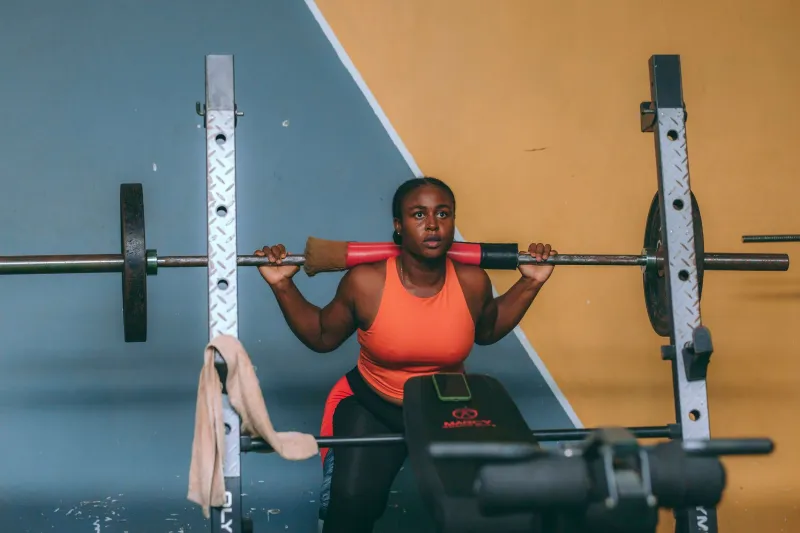
For raw, maximal strength — the kind measured in one-rep maxes and powerlifting totals — nothing replaces progressive overload with a barbell. Cycling simply doesn't load the legs heavily enough to drive significant hypertrophy or peak force production on its own. If you want to build mass, you still need to squat.
But for functional leg strength — the kind that lets you walk uphill without gasping, bound up stairs without your knees complaining, and maintain power output across long distances — cycling is genuinely exceptional. It also builds structural resilience in the tendons and connective tissue around the knee in a way that heavy lifting doesn't always address.
The smart approach, as most coaches will tell you, is to treat them as complementary. A few sessions a week on the bike builds your aerobic base and muscular endurance. Two or three sessions of lower-body resistance work builds the strength ceiling that cycling then helps you sustain.
The Body-Positive Case for Getting on the Bike
One of the reasons cycling deserves more attention in the body-positive fitness conversation is its extraordinary accessibility. You don't need to look a particular way to ride a bike. You don't need to perform in front of anyone. You set your own pace, choose your own route, and progress entirely on your own terms.
For people who've had complicated relationships with gym environments — the self-consciousness, the comparison, the feeling that certain bodies don't belong in certain spaces — the bike offers something genuinely liberating. Your legs are doing the work. The road doesn't care about your size. The hills don't judge.
"I've had clients who've completely transformed their relationship with their own bodies through cycling," says Maggie. "Not because they lost weight — though some did — but because they started to trust their legs. They started to feel what their body could do rather than focusing on what it looked like. That's a massive shift."
Making Your Rides Count
If you want to start treating your cycling as deliberate leg training rather than just transport or leisure, a few small adjustments make a significant difference.
Drop your cadence on climbs. Most casual cyclists spin out at high cadence to avoid burning their legs. Deliberately slowing down and pushing a bigger gear on inclines recruits more muscle fibre and builds strength more effectively.
Seek out short, steep efforts. Rather than always opting for the flatter route, find one climb in your regular loop and commit to it. The Sustrans network is full of these if you know where to look — or just follow any road into the Pennines and you'll find them without trying.
Don't ignore the seated position. Standing out of the saddle shifts load to your body weight. Staying seated and driving through the pedals isolates the quads and glutes more directly.
Add a post-ride stretch. Cycling keeps the legs in a shortened position for extended periods. Hip flexors and hamstrings tighten over time if you don't address it. Five minutes of targeted stretching after every ride pays dividends.
Britain's cycling culture has always punched above its weight. From the glory days of Boardman and Obree to the Olympic dominance of the last two decades, something about the way this country rides produces exceptional legs. It turns out you don't need to be chasing podiums for that to apply to you. You just need to get on the bike — and maybe stop avoiding the hills.