Platform Power: The Accidental Leg Training Hidden in Britain's Busiest Commuter Stations
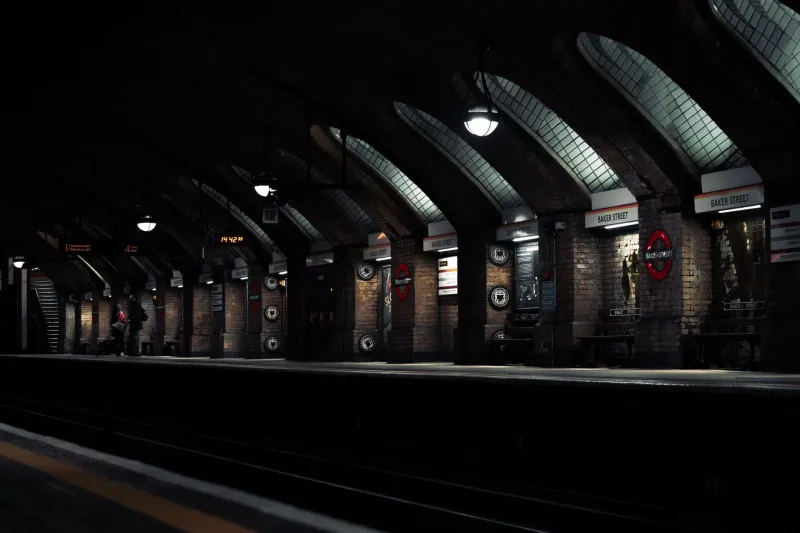
You roll onto the platform at Bank station, bleary-eyed, coffee in hand, and the escalator is out. Again. You sigh, join the shuffling queue heading for the emergency stairs, and think nothing more of it. But here's the thing — your quads, glutes and calves are quietly celebrating. Because what you just wrote off as an inconvenience is, biomechanically speaking, a rather decent lower-body workout.
Britain's train and Tube stations have been building commuter legs since the Victorian era, and almost nobody's talking about it.
The Architecture of Accidental Gains
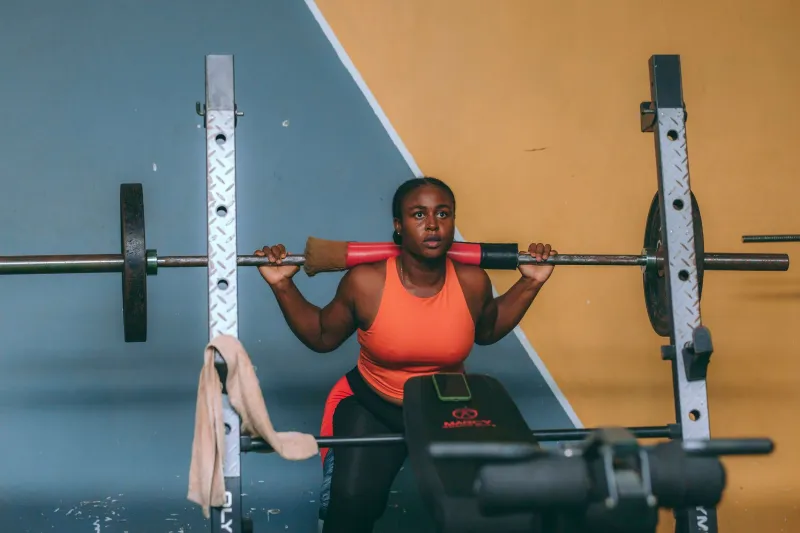
Let's start with the basics. Stair climbing is a compound movement. Every step upward demands coordinated effort from your quadriceps, hamstrings, glutes and calves — the exact same muscle groups targeted by squats, lunges and step-ups in any well-designed leg programme. The difference is that most gym-goers do three sets and go home. Commuters do this five days a week, sometimes multiple times a day, carrying a bag, often at pace, on surfaces that vary in gradient, depth and spacing.
That variability matters. The inconsistency of real-world stair design — different riser heights, platform cambers, uneven surfaces — forces stabiliser muscles to engage in ways that a perfectly uniform gym step simply doesn't replicate. Your body has to adapt constantly, and adaptation is the engine of strength.
Britain's Most Demanding Stations, Ranked by Leg Stimulus
Not all stations are created equal. Some are flat, accessible and frankly useless from a fitness standpoint. Others are, essentially, vertical assault courses dressed up in heritage tilework.
Bank / Monument, London is arguably the crown jewel of commuter leg training. The interchange between these two stations involves 23 metres of depth difference and a connecting tunnel that includes a 1-in-5 gradient — one of the steepest pedestrian subterranean inclines in the entire network. Regular users of this connection report calf soreness in their early weeks of commuting, which fades as adaptation sets in. That's a training response. Full stop.
Hampstead, London holds the record for the deepest Tube station in the network at 58.5 metres below street level. When the lifts are operational, most passengers take them. But the emergency spiral staircase — 320 steps, for those keeping count — is a genuine cardiovascular and muscular event. A handful of fitness-aware regulars have been spotted deliberately taking the stairs here, and honestly, good for them.
Glasgow Central deserves a special mention for its sheer structural complexity. The low-level platforms sit beneath the main concourse in a way that requires passengers to navigate multiple stairwells and inclined passageways, often while managing luggage or pushchairs. The cumulative vertical travel across a return journey can rival a dedicated stair workout.
Edinburgh Waverley sits in a valley, which means virtually every exit involves a meaningful climb. The steps up to Waverley Bridge, the ramps toward the Royal Mile, the passages connecting to Princes Street — it all adds up. Edinburgh commuters are, whether they know it or not, doing incline training every single day.
What Commuters Are Actually Noticing
We spoke to a handful of regular commuters across the UK about whether they'd noticed any physical changes attributable to their journeys.
Sarah, 34, who commutes into London Bridge daily from Orpington, told us: "I started a new job about eight months ago and had to switch from driving to the train. Within about six weeks my legs felt noticeably stronger — I was doing a fitness class at the time and suddenly I could hold a wall sit for way longer. I genuinely think it was the stairs at London Bridge."
Marco, 41, a Glasgow-based accountant, was more philosophical about it. "I walk up the steps at Central every morning and every evening. I never thought of it as exercise, just as getting to work. But when I started running last year, my legs were already in better shape than I expected. My running coach said my posterior chain was unusually developed. I reckon the commute had something to do with it."
These anecdotes aren't outliers. Exercise scientists refer to this phenomenon as "incidental physical activity" — movement accumulated outside of formal exercise sessions that nonetheless produces measurable physiological benefit. Research consistently shows that incidental activity contributes meaningfully to overall fitness, particularly in populations who aren't otherwise active.
How to Turn Your Commute Into a Proper Programme
If you want to stop leaving gains on the platform and start actively harvesting them, a few simple adjustments can dramatically increase the training stimulus of your daily journey.
Ditch the escalator. This one is obvious, but it bears repeating. The escalator exists for convenience, not fitness. If your station has stairs, take them. Every time. Both ways.
Slow the descent. Going down stairs is actually harder on the muscles than going up, because it involves eccentric loading — the quads are lengthening under tension, which is precisely the stimulus that causes muscle soreness and, over time, strength adaptation. Don't rush it. Control each step on the way down.
Add a bag. You're probably already carrying one, but if you're commuting light, consider it. Even a few extra kilograms of load meaningfully increases the muscular demand of stair climbing. This is the commuter equivalent of a weighted vest.
Pause at the top. If you're not in a mad rush, take a moment at the top of a long stair climb before moving on. This extends the time your legs are under load and gives you a brief window to notice how your body is responding — useful data if you're tracking your fitness progress.
Walk the long way. Most stations have multiple routes between platforms or exits. Choose the one with more stairs, more gradient, more distance. Your legs won't thank you in the moment, but they'll thank you eventually.
The Bigger Picture
There's something quietly brilliant about the idea that Britain's Victorian and post-war infrastructure — built for entirely practical reasons — has been functioning as a distributed fitness facility this whole time. Nobody designed Bank station to build strong legs. But here we are.
In an era when gym memberships are expensive, time is scarce and motivation is fickle, the commute is a guaranteed daily touchpoint with movement. You're going to work anyway. You might as well arrive with better legs.
So next time the escalator breaks down and the queue for the stairs snakes back onto the platform, try not to groan. Your glutes are about to get a freebie.
Thighs the limit, after all.