Still a Man's World: Why British Women Are Fighting for Their Place in Leg Strength Sport
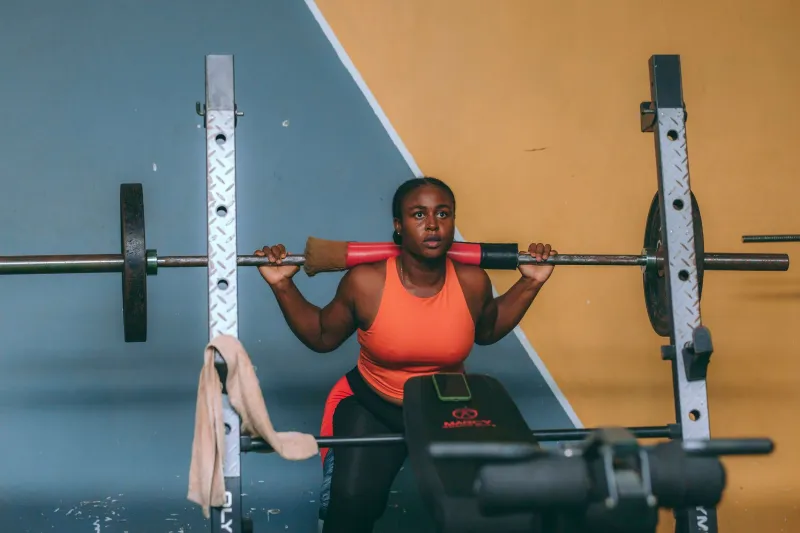
Let's be honest about something. The image of a woman with powerful, muscular legs — with quads that press against fabric and hamstrings that demand attention — still makes certain corners of British fitness culture deeply uncomfortable. Not everyone. Not even most people, perhaps. But enough people that it shapes the experiences of women who train, compete, and coach in leg-dominant strength sports every single day.
This is an uncomfortable conversation. It's also a necessary one.
We reached out to female powerlifters, weightlifters, athletics coaches, and gym owners across England, Scotland, and Wales. What came back was a picture of genuine, hard-won progress sitting alongside structural barriers and cultural attitudes that haven't shifted nearly as much as the Instagram highlight reel would have you believe.
The Numbers Don't Lie
Participation data from British Weightlifting and the British Powerlifting organisation tells a story of growth. Female membership in competitive strength sports has risen meaningfully over the past decade. Women's powerlifting, in particular, has seen a significant surge — driven partly by social media visibility, partly by a broader cultural shift toward strength-positive femininity, and partly by the sheer infectious appeal of watching a woman pull three times her bodyweight off the floor.
But raw participation numbers obscure a more complicated reality. Women make up a fraction of competitive lifters at the senior elite level. Coaching pathways remain male-dominated. Prize money and sponsorship in strength sports still skew heavily toward male athletes. And at the grassroots level — in the actual gyms where most people actually train — the squat rack remains an implicitly gendered space in ways that many men simply don't notice because they've never had to.
"I've been training for six years," says Priya Mehta, a competitive powerlifter based in Birmingham. "I've had men walk over and adjust the bar I'm about to use without asking. I've had my form critiqued by men who were lifting significantly less than me. I've been asked if I'm 'sure' I want to go that heavy. It's relentless. Not every session, but often enough that I've had to consciously decide not to let it chase me out of the sport."
What's Holding Women Back
The barriers aren't monolithic. They operate at multiple levels simultaneously, which is partly what makes them so persistent.
Cultural messaging remains a significant force. Despite a growing body-positive movement, the dominant aesthetic sold to British women by fitness culture still emphasises leanness over strength, toning over power, and cardio over compound lifting. The language used to market leg training to women — "sculpt," "tone," "lengthen" — is revealing. It subtly suggests that the goal of training is appearance management rather than capability building. Men are sold strength. Women are sold shape.
Facility design and culture compounds this. Research consistently finds that women are less comfortable in free weights areas of commercial gyms, citing a sense of being watched, judged, or unwelcome. This isn't paranoia — it's a rational response to documented behaviour. Several female gym owners we spoke to deliberately designed their spaces to counteract this, with open sightlines, clearly posted values, and staff training around creating inclusive environments.
"When I opened my gym in Leeds," says Danielle Osei, who runs a strength-focused facility in Headingley, "I made a conscious decision that the squat rack would be the centrepiece. Not the cardio machines. The message matters. Women walk in and see that this is a space built around strength, not just weight loss, and it changes the dynamic immediately."
Coaching access is another structural gap. Female athletes in leg-dominant sports are disproportionately coached by men — partly because there are simply fewer qualified female coaches at senior levels. This isn't inherently problematic, but it does create situations where female athletes' experiences — around menstrual cycle periodisation, pregnancy and postpartum return to sport, or simply navigating the social dynamics of training environments — may not be fully understood or addressed.
The Menstrual Cycle Conversation That's Long Overdue
One area where the science is genuinely advancing, and where British sports institutions are slowly catching up, is the relationship between the menstrual cycle and training performance. Research into how hormonal fluctuations across the cycle affect strength, recovery, injury risk, and neuromuscular function is growing rapidly — and it has direct implications for how female athletes should structure their leg training.
"We know that oestrogen affects ligament laxity, which has injury implications particularly for the knee," explains sports scientist and coach Harriet Voss, who works with female athletes across several disciplines in the north of England. "We know that strength performance can vary across the cycle. We know that recovery rates differ. And yet most periodisation models used in strength sports were developed on male athletes and have been applied wholesale to women without adjustment."
The good news is that this is changing, at least in elite sport. The bad news is that it's changing slowly, and the trickle-down to recreational and grassroots training is lagging significantly behind.
Where Progress Is Real
It would be dishonest — and unfair to the people doing genuinely good work — to paint this as a picture of unrelieved grimness. Because progress is real, even if it's uneven.
Women-only lifting clubs and training groups have proliferated across UK cities, creating spaces where female athletes can develop confidence, technique, and community without navigating the social friction of mixed environments. Online communities have connected women in smaller towns and rural areas who previously had no access to peers in the sport. Role models — British women competing at the highest levels of powerlifting, Olympic weightlifting, and athletics — are more visible than at any previous point.
"The generation of women coming into strength sport now," says Priya Mehta, "they don't have the same internalised hesitation that I had when I started. They've grown up seeing strong women celebrated. That's genuinely different. That matters."
What Still Needs to Change
Visibility and vibes are not enough. Structural change requires structural action.
British Weightlifting and British Powerlifting both have equality commitments on paper. Translating those commitments into concrete outcomes — equal prize money, funded coaching pathways for women, active monitoring of participation barriers — requires ongoing pressure and accountability. Gym operators need to examine not just their written policies but the actual daily experience of women in their spaces. And the fitness media, including platforms like this one, needs to consistently centre female strength as the norm rather than the exception or the inspiration.
Because here's the thing. The women who are showing up to squat heavy, to pull hard, to build legs that are powerful and capable and entirely their own — they're not doing it for your approval. They never were. But they deserve environments, institutions, and a culture that actively supports rather than passively tolerates their presence.
Quad equality isn't a luxury. It's the baseline.