Your Weekly Pub Quiz Is Slowly Dismantling Your Legs — Here's How to Fight Back
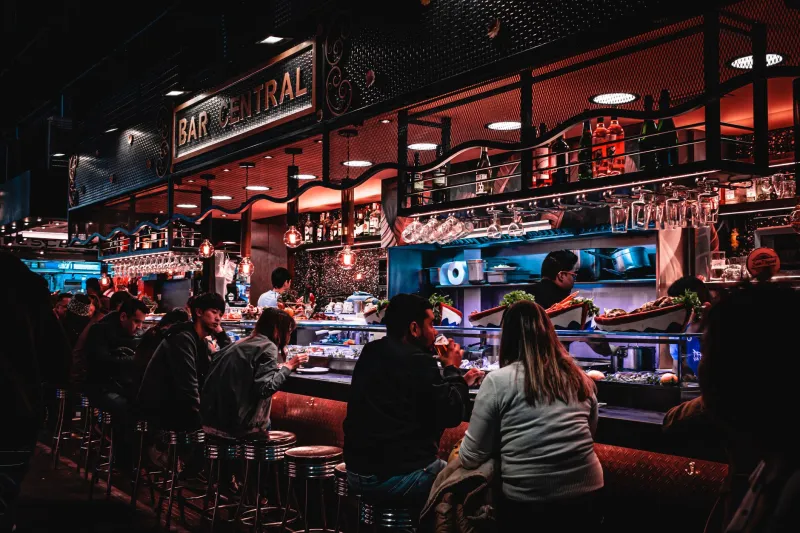
Let's not beat around the bush. Britain is brilliant at sitting down. We sit in offices. We sit on trains. We sit in front of the telly. And then, in a move we collectively frame as "being social," we go to the pub and sit there too. The weekly pub quiz — that beloved institution of bad puns, contested answers, and warm bitter — is one of the most enthusiastically sedentary things this nation does together.
None of this is a moral failing. Sitting is not a character flaw. But it is, from a purely physiological standpoint, doing a number on your legs — and the fitness industry has been remarkably bad at talking about it in a way that doesn't feel like a lecture.
So let's try a different approach.
What Two Hours in a Pub Chair Actually Does
When you sit down, your hip flexors shorten. Your glutes switch off. The postural muscles that keep your pelvis in alignment stop receiving meaningful signals and start to forget what they're supposed to be doing. This isn't dramatic — it doesn't hurt, you don't notice it happening — but it accumulates. Do it enough times, across enough evenings, and you end up with what physiotherapists sometimes call "gluteal amnesia": the cheerful medical term for glutes that have essentially forgotten how to fire properly.
Dr Callum Reid, a sports physiotherapist working in Manchester, sees the results of this pattern regularly. "The thing about prolonged sitting isn't one single catastrophic event," he explains. "It's the chronic, low-level deactivation of the posterior chain. Your hamstrings stay in a shortened position, your hip flexors adaptively tighten, and your glutes lose their recruitment efficiency. Over time, that creates compensatory patterns — the knees, the lower back, the ankles all start picking up slack that the glutes should be handling."
And before you ask: no, the walk to the pub and back doesn't fully offset it. Nice try.
The Pub Quiz Paradox
Here's where it gets interesting. The pub quiz is not inherently the problem. It's a symptom of a broader British tendency to treat "social" and "sedentary" as synonyms. We've built our leisure culture around seated activities, and nobody questions it because everyone's doing the same thing.
But a group in Leeds decided to question it anyway.
The Headingley Harriers Quiz League — six teams, twelve pubs, Tuesday nights — introduced a standing rule in 2022. Not for the entire evening, but for specific rounds: teams had to stand during the music round and the picture round, and one designated team member had to stand for the duration of any round they chose to nominate as their "standing round." It sounds minor. The effect, according to organiser Bev Cartwright, was not.
"People started noticing within about three weeks," she says. "Not dramatic fitness transformations — it's a pub quiz, not a boot camp. But the conversations changed. People were talking about how they felt during the standing rounds, noticing tightness in their hips, realising they didn't have very good balance. It made the whole thing more physical in a way that felt fun rather than worthy."
Two of the participating teams have since started doing calf raises during the tie-break rounds. Nobody thought this would happen. Here we are.
Why Micro-Movement Is the Answer
The fitness world has a tendency to think in big gestures. Do a leg day. Run a 5K. Join a gym. These are all fine things, but they miss the point when it comes to sedentary damage, because the problem isn't a lack of big gestures — it's the vast stretches of time between them.
Micro-movement is exactly what it sounds like: small, frequent, low-intensity movements that keep the muscles of the lower body engaged throughout the day and evening. They're not a replacement for proper training. But they're the difference between your glutes switching off for three hours and your glutes staying vaguely awake throughout.
The key is that they need to be invisible enough that you don't feel like a weirdo doing them in public.
Your Pub Quiz Leg Toolkit
These movements can all be performed while seated at a pub table without attracting attention, starting arguments, or spilling anyone's drink.
Seated Glute Squeezes Sit up tall, squeeze both glutes firmly for a count of five, release, repeat. Do ten of these every time a new round starts. Nobody will know. Your glutes will.
Heel Raises Under the Table Keep your feet flat on the floor, then slowly raise both heels until you're on the balls of your feet. Hold for three seconds, lower slowly. This works the soleus and gastrocnemius with zero visual footprint. Do sets of fifteen between rounds.
Knee Extensions Straighten one leg under the table until it's parallel to the floor, hold for five seconds, lower slowly. Alternate legs. This engages the quadriceps through a partial range and helps counteract the hip flexor shortening from sustained sitting. It looks like you're stretching. Nobody cares.
Foot Presses Press both feet firmly into the floor as if you're trying to push through it. Hold for eight seconds. This activates the entire posterior chain in a low-level isometric contraction that keeps the neural pathways to your glutes from going completely dormant.
The Standing Round Borrow from the Headingley Harriers and nominate one round per evening where you stand. If you're self-conscious, frame it as needing to see the screen better. Stand with feet hip-width apart, weight even. Your hip flexors will thank you.
The Bigger Picture
None of this is about making pub quizzes into exercise classes. The point isn't to turn your Tuesday night into a leg day. The point is to stop treating sedentary leisure as a complete write-off from a physical perspective, and to recognise that the small choices — the standing, the squeezing, the heel raise during the geography round — genuinely add up.
Britain's sedentary culture is a real issue, and it's one that hits the legs first and hardest. But it doesn't require a dramatic overhaul. It requires the kind of quiet, persistent, micro-level resistance that, as it happens, is exactly what strong legs are built from.
Your quiz team might not win the league. But your glutes don't have to lose it.