Mud, Muscle and Mayhem: How Britain's Obstacle Run Revolution Is Forging the Nation's Toughest Legs
Mud, Muscle and Mayhem: How Britain's Obstacle Run Revolution Is Forging the Nation's Toughest Legs
There's a particular kind of suffering that only a British mud run can deliver. It's 8am on a grey October morning somewhere in the Midlands. You're calf-deep in a bog that smells faintly of agricultural history, your quads are screaming, and a stranger in a fluorescent headband is cheerfully urging you to "push through it." And somehow — inexplicably — you're having the time of your life.
Welcome to the UK obstacle course racing scene. And if you've been sleeping on it as a legitimate leg training stimulus, it's time to wake up.
From Niche to Nationwide
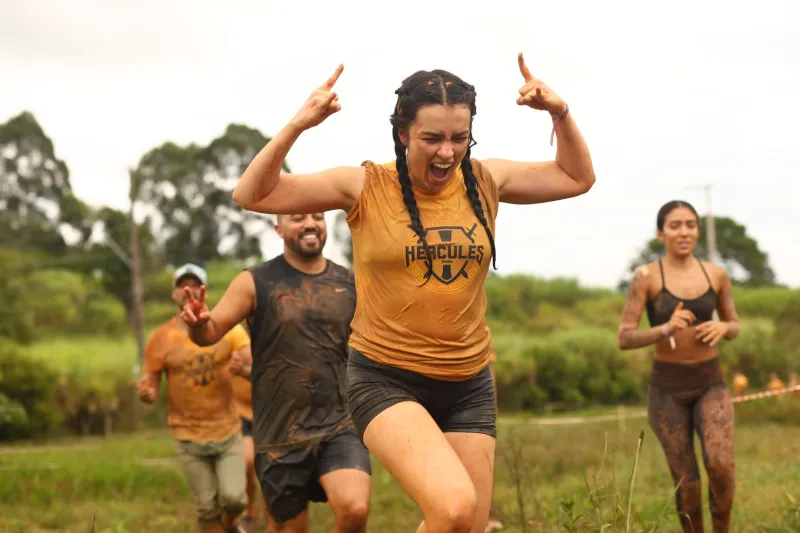
What started as a fringe pursuit for ex-military types and extreme fitness enthusiasts has exploded into one of Britain's most popular weekend activities. Tough Mudder events routinely sell out across the country. Spartan Race draws thousands to venues from Edinburgh to Exeter. And at the grassroots level, charity mud runs, colour dashes, and locally organised obstacle events pop up on village greens and farmland every single weekend from spring through to late autumn.
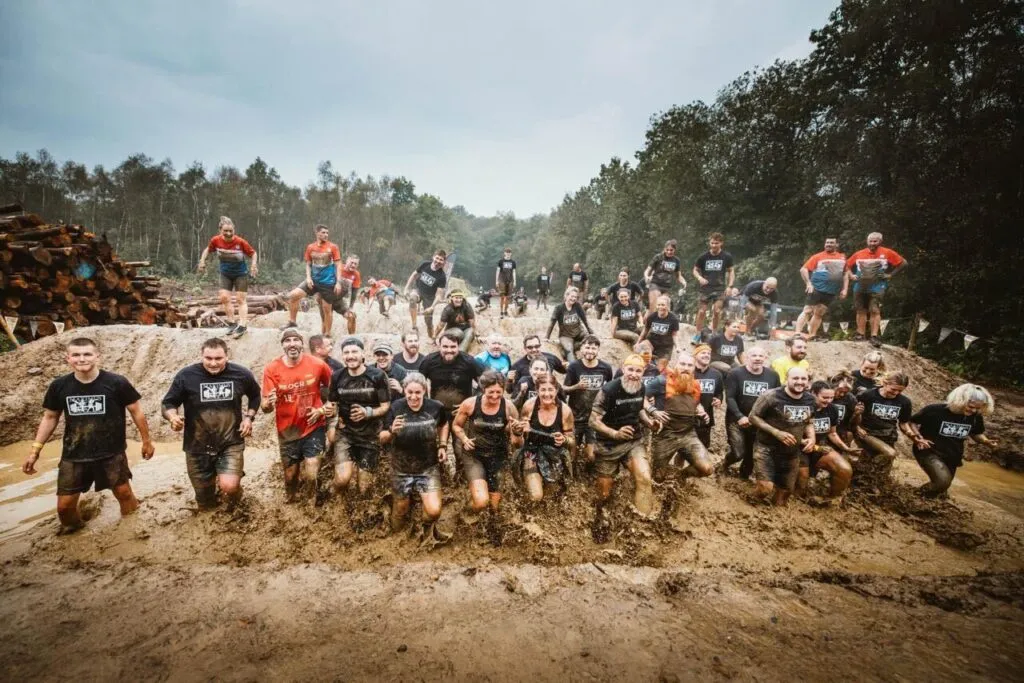 Photo: Tough Mudder, via toughmudder.co.uk
The Sport and Recreation Alliance estimates that hundreds of thousands of Brits now participate in obstacle course racing (OCR) annually, with the demographic skewing decidedly mainstream — office workers, parents, teachers, nurses. People who might never describe themselves as "athletes" but who are, whether they realise it or not, putting their legs through something extraordinary.
What the Mud Is Actually Doing to Your Muscles
Here's where it gets interesting. The reason obstacle course racing is such a phenomenal lower body workout isn't just the running — it's the variety of demands placed on your legs across a single event.
Consider what happens biomechanically during a typical mud run:
Deep mud wading forces your hip flexors, glutes, and hip abductors to work overtime just to lift each leg clear of the resistance. It's essentially a loaded functional movement repeated dozens of times. Sports physiotherapist Caitlin Marsh, who works with OCR athletes in Manchester, describes it as "resistance training you can't replicate on a cable machine — the drag is multidirectional and completely unpredictable, which means stabiliser muscles you'd normally neglect are constantly firing."
Uneven terrain — the rutted fields, rocky tracks, and waterlogged paths that characterise British OCR venues — demands constant micro-adjustments from the ankle, knee, and hip. Your proprioceptive system goes into overdrive. This is the same mechanism that makes fell runners and trail athletes so noticeably stable compared to road runners.
Cargo net climbs and wall obstacles recruit the quads and calves in a completely different range of motion to flat running — think explosive push-off, sustained isometric holds, and eccentric loading on the descent.
Crawling sections — those glorious tunnels of freezing water and military-grade mud — engage the quads and hip flexors in a low, sustained contraction that would make most gym-goers tap out after thirty seconds.
Taken together, a single OCR event can hit your quads, hamstrings, glutes, calves, tibialis anterior, hip flexors, and adductors — all in one muddy morning. Try getting that from a leg extension machine.
Voices From the Start Line
Kayleigh, 34, from Sheffield, completed her first Tough Mudder three years ago after a friend dragged her along. "I'd been going to the gym for years but I never really felt my legs the way I did after that first event," she says. "The day after, muscles I didn't even know I had were letting me know they existed. My inner thighs, the sides of my calves — everything. It was brilliant."
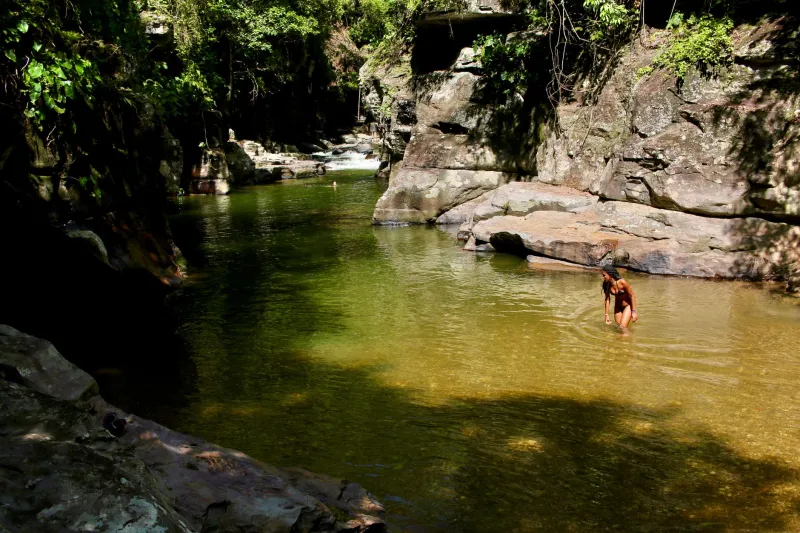
Dave, 41, a secondary school PE teacher from Cardiff, has competed in over twenty OCR events and credits them with transforming his leg strength. "I was a decent road runner, thought I was fit. Then I did my first fell-style obstacle course up in the Brecon Beacons and I was absolutely destroyed. The descent sections in particular — your quads just have to keep braking. There's nowhere to hide."
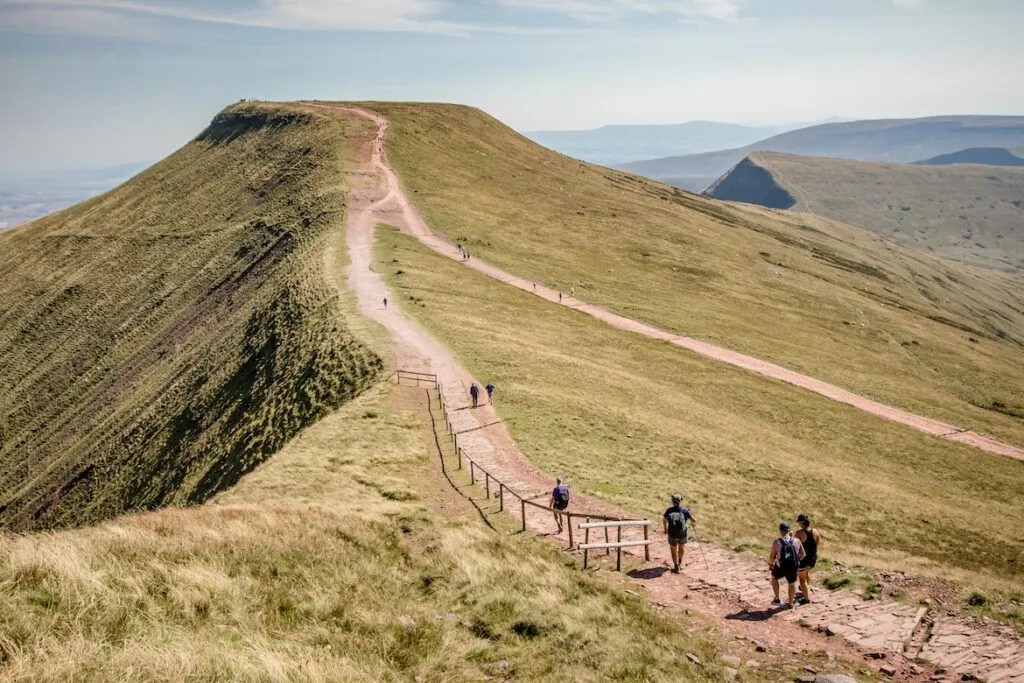 Photo: Brecon Beacons, via www.globeguide.ca
For Priya, 28, from Birmingham, the appeal is as much psychological as physical. "There's something about getting genuinely muddy and uncomfortable that makes you feel incredibly capable afterwards. My legs have never looked or felt stronger, but more than that — I trust them now. I know what they can do."
Why Mud Beats Machines for Functional Strength
Gym leg machines are designed around fixed movement planes. The leg press pushes you straight back; the hamstring curl moves in a single arc. These have their place — but they train your legs in isolation, on stable surfaces, in predictable patterns.
Real-world leg strength — the kind that prevents injury, improves posture, and makes everyday life feel easier — is built through varied, unpredictable, multi-planar movement. And British mud runs, with their chaotic mix of terrain, obstacles, and resistance, deliver exactly that.
Caitlin Marsh puts it plainly: "OCR essentially gamifies functional training. People are doing lateral lunges through mud without realising it. They're performing single-leg stability work every time they navigate a slippery log. The variety of stimulus in a single event is genuinely impressive from a training perspective."
Getting Started Without Getting Overwhelmed
If you've never done an obstacle run before, the good news is that the UK scene is remarkably beginner-friendly. Most events have wave categories, with "first-timer" or "open" waves that are genuinely inclusive and non-competitive. The community ethos — helping strangers over walls, cheering each other through ice baths — is one of the sport's defining features.
A few practical tips before your first event:
- Train for the terrain, not the gym. Get outside on uneven ground before race day. Local parks, canal towpaths, and any nearby hills will prepare your ankles and stabilisers far better than a treadmill.
- Work on single-leg strength. Bulgarian split squats, step-ups, and single-leg Romanian deadlifts will build the unilateral strength that obstacle courses demand.
- Don't neglect your calves. The constant uphill push-off and landing forces are brutal on the lower leg. Build calf raises into your routine in the weeks before.
- Wear trail shoes, not road trainers. This is non-negotiable. Lugged soles are the difference between confident movement and comedy falling.
The Bottom Line
Britain's obstacle course racing scene isn't just a fun weekend activity — it's an accidentally brilliant leg training programme hiding inside a very muddy adventure. The unpredictable terrain, the resistance of deep mud, the climbing and crawling and lunging — all of it adds up to a lower body stimulus that even the best-equipped gym would struggle to replicate.
So next time someone asks why your legs look incredible, you can tell them honestly: it's the bog water.
Thighs the limit, after all.