Pedal Power: How Britain's Cycling Commuters Are Accidentally Building Legs Worth Bragging About
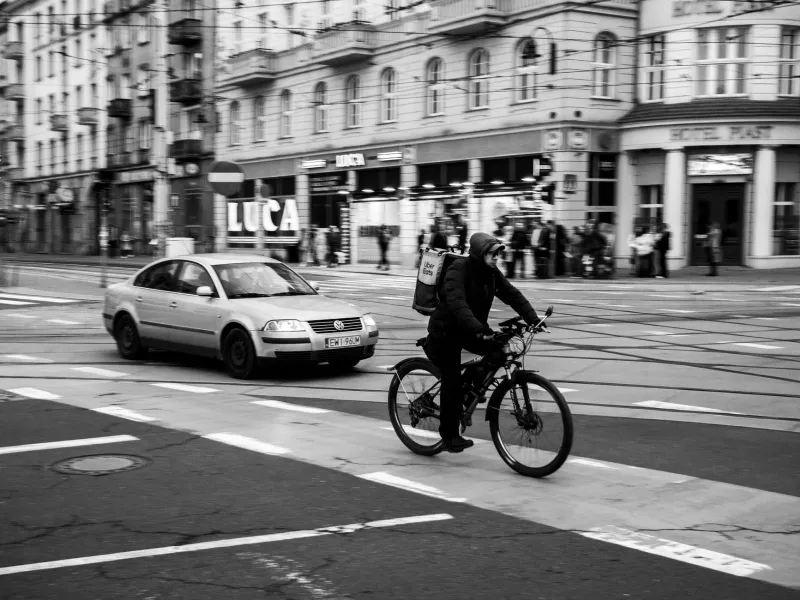
Every weekday morning, somewhere between six and eight million journeys across the UK begin with a saddle, two wheels, and absolutely zero intention of doing leg day. Cyclists threading through London's congested Embankment lanes, grinding up Manchester's Ancoats hills, or navigating Edinburgh's punishing Old Town cobbles aren't thinking about their vastus lateralis. They're thinking about getting to work on time without getting doored by a taxi.
And yet — quietly, stubbornly, without anyone's permission — their legs are transforming.
This is the accidental fitness revolution hiding in plain sight on Britain's bike lanes. And it's time we talked about it.
The Biomechanics Nobody Tells You About
Here's the thing about cycling that most gym-goers miss: it's resistance training with a commute attached. Every pedal stroke requires your quads, hamstrings, glutes, and calves to fire in a coordinated sequence, and when you're pushing through a headwind on the A40 or hauling yourself up a Sheffield incline, you're adding meaningful load to that cycle.
Dr. Emma Cartwright, a sports physiologist at Leeds Beckett University, explains it simply: "Urban cycling is essentially interval training in disguise. You've got stop-start traffic forcing repeated acceleration efforts, you've got gradient changes, and you've got the sustained low-level muscular endurance of keeping pace over distance. The muscles don't know whether you're commuting or competing. They just respond to the stimulus."
The key muscles doing the heavy lifting? Quadriceps during the downstroke, hamstrings and glutes through the pull phase, and calves stabilising throughout. Over a 30-minute commute each way, a cyclist might complete thousands of controlled repetitions — a volume that would look impressive written on any gym programme.
Why Cyclists Don't Believe Their Own Legs
Here's where it gets interesting. Speak to regular cycling commuters and a curious pattern emerges: many of them genuinely don't consider themselves to be "training." They'll describe their commute as "just getting around" while casually mentioning they ride 12 miles each way through central London five days a week.
Take Marcus, a 38-year-old graphic designer who's been cycling from Walthamstow to Shoreditch for four years. "I never thought of it as exercise, really," he admits. "Then I went back to the gym after lockdown and my legs were noticeably stronger than before I started cycling. My personal trainer actually asked what I'd been doing differently. I felt a bit embarrassed saying 'commuting.'"
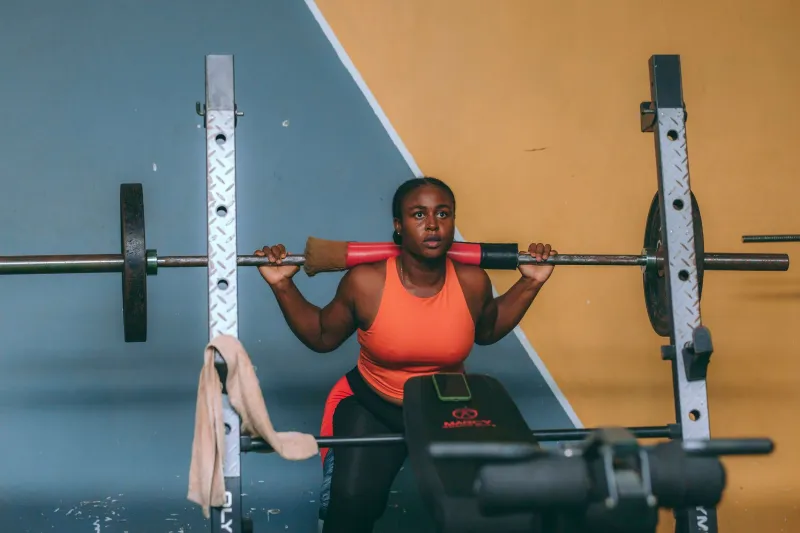
This disconnect is partly cultural. Gym culture in Britain has spent decades building the idea that proper leg training means squat racks, leg press machines, and scheduled sessions. Anything that doesn't look like a workout doesn't count as one. It's the same logic that once told people walking was "not really exercise" — and we all know how that argument aged.
There's also the comparison trap. Cyclists tend to benchmark themselves against lycra-clad road racers with legs carved from granite, rather than recognising that their own functional strength has been quietly compounding for months or years.
What the Long-Haulers Know
Long-distance commuters — those doing 15 miles or more each way — tell a different story. By that mileage, the gains are impossible to ignore.
Sarah, a 44-year-old NHS administrator who cycles from Didsbury into central Manchester four days a week, describes the change she noticed after her first year of regular commuting. "My legs just look different. More defined. I can climb stairs without thinking about it. My knees used to ache after a long day — that's completely gone. I haven't set foot in a gym in three years and I feel stronger than I ever did when I had a membership."
The data backs her up. Research published in the Journal of Transport & Health found that regular cycling commuters demonstrated significantly greater lower-limb muscular endurance than non-cyclists, with particularly pronounced development in the quadriceps and calf complex. Crucially, these gains appeared even in commuters who weren't riding particularly fast — consistency and volume were the decisive factors.
Gradient Is Your Secret Weapon
If you want to supercharge the leg-building potential of your commute, topography is everything. Britain, fortunately, is extraordinarily well-supplied with hills.
Cycling uphill shifts the muscular demand dramatically, recruiting the glutes far more aggressively and forcing the quads to work against genuine resistance. A commuter in Bristol, Bath, or any of the Peak District's gateway towns is getting something that flat-city riders simply aren't: built-in progressive overload.
But even without dramatic gradients, urban cycling offers its own version of resistance training. Accelerating from a standstill at traffic lights is a mini-sprint. Navigating a headwind on an exposed stretch of the A1 is sustained isometric effort. Carrying a loaded rucksack adds meaningful extra load across every pedal stroke — something any strength coach would recognise as a sensible progression.
Making the Most of Your Accidental Leg Day
If you're a cycling commuter who's read this far, here are a few ways to get even more from what you're already doing:
Add a gear. Shifting up on familiar flat stretches increases resistance and pushes your muscles harder. Think of it as adding a plate to the bar.
Stand and climb. When you hit a hill, get out of the saddle for part of the ascent. This fires up the glutes and adds a strength component to what would otherwise be purely endurance work.
Ditch the direct route occasionally. If your commute allows flexibility, occasionally route yourself over a hill or through a longer, more undulating path. Your legs will thank you — even if your timekeeping doesn't.
Slow down at the bottom. Not a joke. Riding in a slightly harder gear at lower cadence increases muscular load. Some coaches call this 'strength endurance' work. You can call it whatever you like as long as you do it.
The Bigger Picture
Britain's cycling commuter population has roughly doubled over the past decade, with schemes like Santander Cycles in London and cycling infrastructure investment in cities like Leeds, Birmingham, and Bristol bringing more people onto bikes than ever before. That's millions of people unknowingly enrolled in one of the most consistent leg training programmes available.
The fitness industry would charge you a monthly fee for a fraction of what a good commuting route provides for free. Your legs don't need a gym membership. Sometimes all they need is a destination and a decent pair of legs to get there.
Which, as it turns out, you've already got.