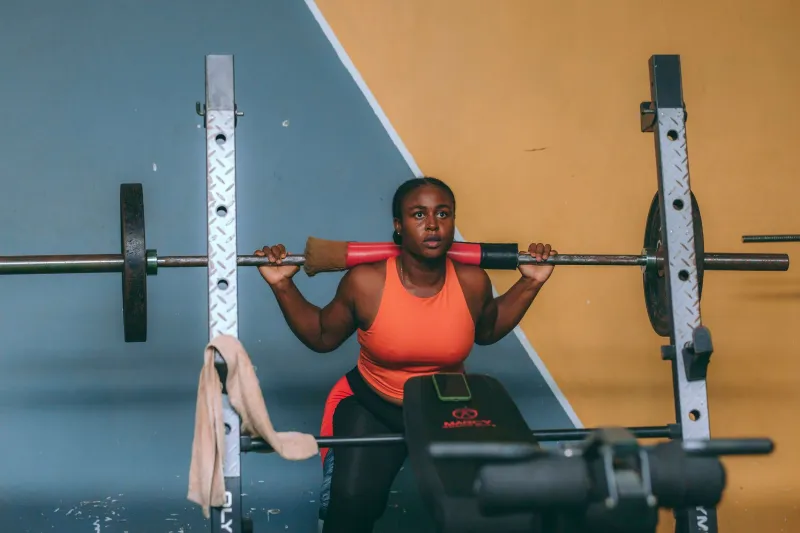
Stack, Haul, Repeat: The Invisible Leg Workout Running Through Britain's Independent Shops
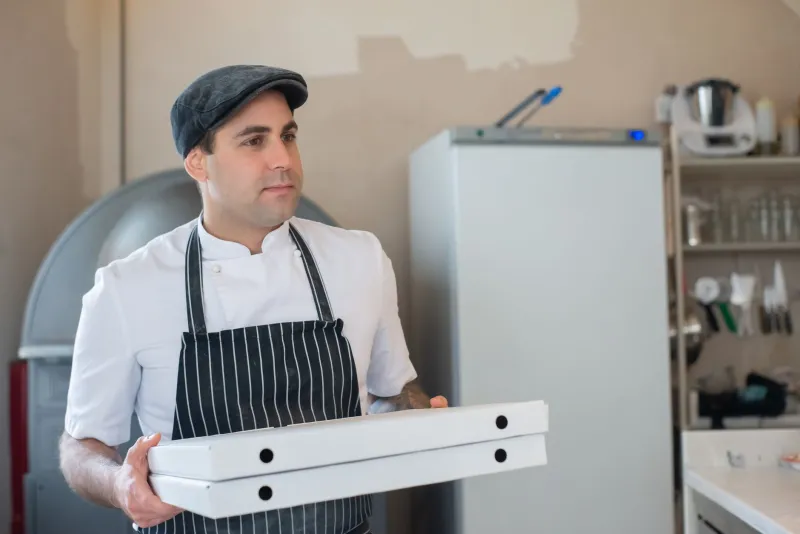
Let's say you run a small corner shop in Salford. Tuesday morning, the wholesale delivery arrives. Fourteen crates of soft drinks, eight trays of tinned goods, five sacks of rice, two flat-packed displays and a box of something that should have gone to the newsagent three doors down. You've got 45 minutes to get all of it off the van, through the shop floor, and down a staircase that was clearly designed by someone who had never moved anything heavier than a pen.
No one is calling that leg day. And yet.
Across Britain's 280,000-odd independent retail businesses, something quietly extraordinary is happening. Market traders, deli owners, hardware merchants, florists, off-licence operators and greengrocers are logging the kind of lower-body workload that would make most gym programmes look like a gentle suggestion. They're just not calling it training.
Functional Strength Has Been Here All Along
The fitness world has recently rediscovered "functional training" — movements that mimic real-world activity, load the body in multiple planes, and build strength you can actually use. Fitness influencers film themselves doing farmer's carries and box step-ups while wearing expensive trainers and looking meaningfully into the middle distance.
Britain's independent shopkeepers have been doing functional training since before the term existed. They just called it Tuesday.
The biomechanics are worth spelling out. Carrying a loaded tray up a narrow staircase requires sustained quad and glute engagement, ankle stability, and core bracing — essentially a weighted step-up under dynamic conditions. Crouching to restock bottom shelves repeatedly throughout the day is a functional squat pattern performed under load. Hauling delivery crates across uneven market cobblestones introduces lateral stability demands that a leg press machine simply cannot replicate.
Physiotherapist and strength coach Joanna Pearce, who works with manual workers in Leeds, puts it bluntly: "The shopkeepers I see professionally often have remarkably resilient lower limbs. Not necessarily the most powerful, but genuinely durable. They've spent years building connective tissue strength and muscular endurance through consistent, varied loading. That's hard to replicate in a gym setting without a very thoughtful programme."
A Day in the Legs of a Market Trader
Spend a morning with Dave Hollingsworth, who runs a fruit and veg stall at Bury Market in Greater Manchester, and the numbers start to add up.
Dave arrives at 5am to unload his van — roughly 40 to 60 trips carrying boxes, crates and sacks from the vehicle to his pitch. He's on his feet for nine hours. He crouches, bends, lifts and carries throughout the day. By the time he's packing down at 3pm, he's walked an estimated six to eight miles without leaving a 20-metre radius.
"My feet are wrecked, obviously," he laughs. "But my legs? Never had a problem with my legs. I'm 58. I can still carry a 25-kilo sack of spuds up three steps without thinking about it. My son-in-law goes to the gym four times a week and he struggled with one last Christmas. I didn't say anything."
That last detail is telling. Dave isn't boasting — he's genuinely bemused. The idea that what he does constitutes physical training hasn't really occurred to him. It's just work.
The Staircase Problem (Which Is Actually a Staircase Advantage)
If there's one architectural feature that unites independent shops across Britain, it's the impractical staircase. Victorian shopfronts, converted terraces, and Edwardian high street units all share a tendency to place storage in cellars or upper floors connected by staircases that are steep, narrow, and apparently designed to maximise difficulty.
For the shopkeeper, this is a daily annoyance. From a leg-training perspective, it's a gift.
Step-ups are a staple of lower-body strength programming precisely because they load each leg independently, challenge balance, and drive meaningful glute and quad development. Doing them repeatedly, under load, multiple times daily, is essentially the same stimulus — with the added benefit that you're also running a business at the same time.
Jaswinder Kaur, who runs a convenience store in Wolverhampton with her husband, estimates she makes between 40 and 60 stair trips on a busy delivery day. "I never thought about it as exercise," she says. "But I'm 52 and my legs are fine. My doctor was surprised at my last check-up. She asked if I was particularly active. I said I just run the shop. She looked at me like I was being modest."
Why the Gym Can't Quite Replicate This
Here's what structured gym training often misses: unpredictability. The body adapts most comprehensively when it's exposed to varied, irregular demands — different loads, different directions, different durations. A shopkeeper never quite knows what Tuesday's delivery will look like. Their legs have to be ready for anything.
This stands in contrast to the typical gym lower-body session, which tends to follow predictable patterns: same exercises, same rep ranges, same rest periods. Progressive, certainly. But somewhat narrow in the range of adaptation it produces.
Functional leg strength — the kind that means you can carry a 20-kilo box up stairs at 7am, stand on a cold concrete floor for nine hours, then drive home and do it all again tomorrow — is built through exposure, not just load. The shopkeeper accumulates both, constantly.
Celebrating the Legs That Labour Built
There's a broader point here that goes beyond biomechanics. Britain's independent retail sector has been squeezed for years — by supermarket chains, online giants, and now by rising costs. The people keeping those shops alive are working extraordinarily hard, and their bodies reflect that commitment in ways they rarely receive credit for.
Body-positive fitness culture has rightly pushed back against the idea that only gym bodies are strong or worthy of celebration. The legs of a market trader who's been on their feet since dawn, hauling and stacking and standing, deserve exactly the same recognition as any pair of quads that's ever faced a barbell.
Perhaps more, given they've been doing it without a spotter.
Taking Notes
If you want to bring a bit of the shopkeeper's edge into your own training, the principles are straightforward:
- Add carries to your sessions. Farmer's carries, suitcase carries, and loaded walks build the kind of full-leg resilience that isolated machines can't touch.
- Do your step-ups under load. A heavy rucksack transforms a step-up from a warm-up exercise into a genuine strength movement.
- Train on your feet. Spending more of your session standing, walking between exercises, and avoiding unnecessary rest builds the postural endurance that keeps shopkeepers functional across a nine-hour shift.
- Embrace inconsistency. Mix up your rep ranges, loads, and movement patterns. Your legs will adapt more broadly for it.
Britain's independent shops are, among other things, the nation's most underrated leg training facilities. Show them a bit of respect next time you pop in for a pint of milk.