Toddler Terrain: Why British Playground Parents Are Getting a Leg Workout They Absolutely Did Not Sign Up For
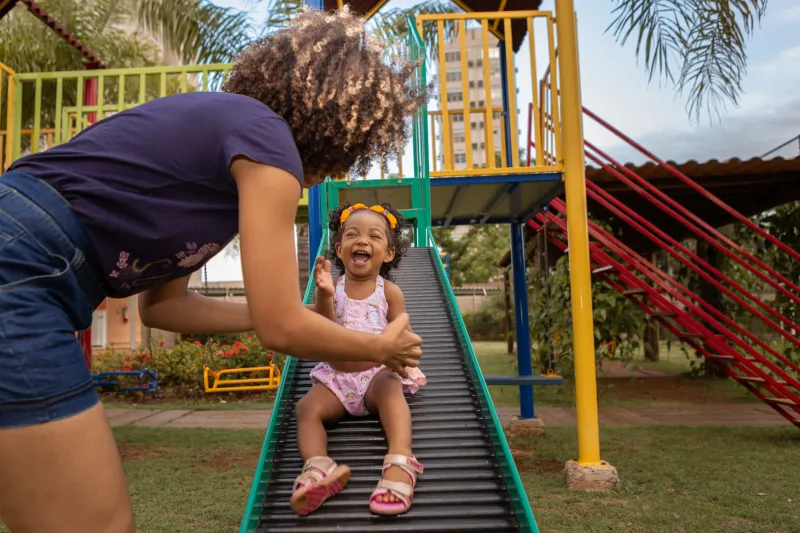
There is a particular kind of squat that no fitness influencer has ever filmed. It happens in a soggy British park, usually around 10am on a Saturday, when a small child decides to investigate something deeply suspicious near the bottom of a hedge. The parent — still half-asleep, holding a travel mug that's gone cold — drops into a full, loaded squat to peer into the foliage, stays there for approximately two minutes while the child explains the hedge at length, then stands back up and jogs after them as they bolt towards the slide.
Repeat this for two hours. Add a toddler in a carrier, a nappy bag over one shoulder, and a persistent drizzle. Congratulations: you've just done leg day.
Nobody told Britain's parents this was happening. But the evidence — both scientific and anecdotal — is increasingly hard to ignore.
The Playground as Training Ground
Let's be honest about what supervising a toddler in an outdoor setting actually involves. It is not a leisurely stroll. It is a series of unpredictable physical demands executed on uneven terrain, usually while sleep-deprived, often while carrying additional weight, and always at the mercy of a tiny person whose movement patterns make absolutely no biomechanical sense.
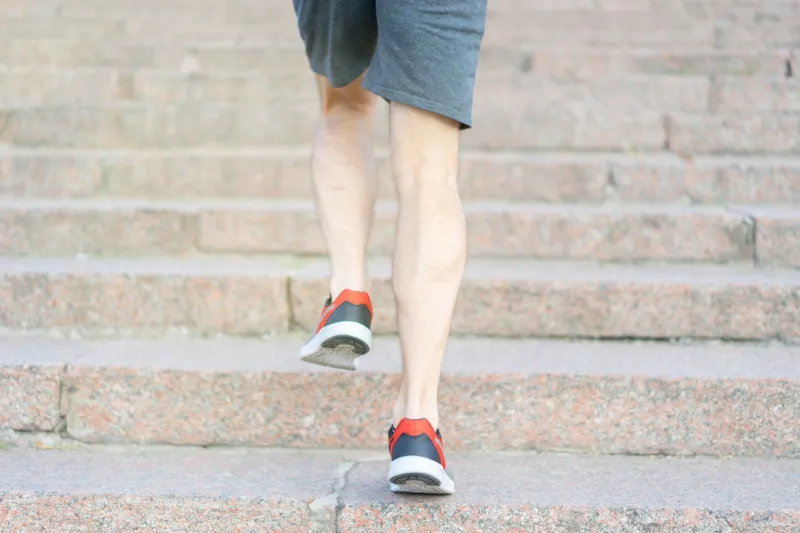
Consider the movement inventory. Squatting to a child's eye level — repeatedly, throughout the session. Sprinting short distances when they make a run for it. Climbing up soft play structures, frames, and the occasional inappropriate thing they've decided to scale. Lunging to catch a falling child from a modest height. Standing on tiptoe to see over equipment. And through all of it, carrying — a child on the hip, a bag on the back, a scooter under one arm.
Dr. Rachel Fowler, a kinesiologist at the University of Birmingham, has studied incidental physical activity in parents of young children. Her findings are striking. "Active childcare — particularly outdoor supervision of toddlers — generates movement patterns that map closely onto structured lower-body training. The squat-to-stand transitions alone, when counted across a typical park visit, can easily reach 50 to 80 repetitions. Add the load-bearing and the sprint intervals and you're looking at a genuinely meaningful training stimulus."
The Numbers Don't Lie (Even if the Sleep Deprivation Helps You Forget Them)
A 2022 study from Loughborough University tracking parental physical activity found that parents of children aged one to three years logged significantly higher daily step counts and more frequent high-intensity movement bursts than their childless counterparts — often without perceiving themselves as particularly active.
Calorie burn data tells a similar story. An hour of active toddler supervision — real supervision, where you're actually following them around, not sitting on a bench — burns between 280 and 420 calories for an average adult, depending on terrain and child-related chaos level. That's comparable to a moderate gym session, and it's happening in Clissold Park, Sefton Park, and recreation grounds up and down the country every single weekend.
More specifically relevant to leg development: the combination of loaded carries (child on hip equals roughly 10 to 15 kilograms of asymmetric load), repeated squat patterns, and explosive short sprints hits the quads, hamstrings, glutes, and calves in ways that a conventional gym session often struggles to replicate in a single workout.
Real Talk from the Swings
Pop into any British park on a weekend morning and you'll find the evidence in human form.
Claire, a 34-year-old from Bristol, has twins aged three. "I used to go to a gym. Then the twins arrived and that obviously stopped. I assumed I'd just get weaker and that would be that. But then I noticed — my legs are actually better now than they were. Firmer. More stamina. I was carrying one of them up a hill the other day and I thought, I'm not even out of breath. That would have finished me before."
Tom, 41, from Newcastle, tells a similar story. "My daughter is four and she does not stop moving. I've started wearing a fitness tracker on park days just to see, and I'm regularly hitting 12,000 to 15,000 steps before lunch. And it's not flat walking — it's up and down the climbing frame, crouching down to look at stuff, catching her before she launches herself off something. My calves are brilliant. I don't know how else to describe it."
The Biomechanics of Catching a Falling Child
Let's give this particular movement the analysis it deserves, because it's genuinely one of the most demanding things a parent's legs do.
When a toddler begins to topple — from a low wall, a step, the bottom rung of a climbing frame — the parent performs what is essentially a reactive loaded lunge or lateral squat under time pressure. The movement is explosive, asymmetric, and entirely unpredictable in direction. Strength coaches would call this a reactive strength demand. Parents call it Thursday.
These reactive movements are actually among the hardest to train deliberately. They require the neuromuscular system to generate force rapidly in response to an unexpected stimulus — exactly the kind of training that sports performance specialists spend considerable effort trying to programme. Toddlers provide it for free, continuously, and with great enthusiasm.
Making Playground Time Work Even Harder
If you're a parent who wants to lean into what you're already doing, a few small adjustments can meaningfully increase the leg-training effect:
Carry more intentionally. When you're carrying your child, switch sides regularly and focus on keeping your posture upright. This turns a casual carry into a loaded single-leg stability challenge.
Don't take the short route. When you're walking to the park, take the hillier path. A toddler in a buggy up a proper incline is a genuine resistance workout. They won't know the difference. You will, in your glutes, tomorrow.
Get on the equipment. Stop standing at the bottom of the climbing frame and actually get up it with them. It feels ridiculous. Your legs will love it.
Use the squat intentionally. When you're crouching to your child's level, pause at the bottom for a moment rather than immediately springing up. That brief isometric hold adds up over a two-hour park visit.
Embrace the sprint. When they bolt — and they will bolt — actually run after them. Don't shuffle. Sprint. Your fast-twitch muscle fibres will appreciate the reminder that they exist.
A Word on Giving Yourself Credit
British culture has a particular talent for dismissing the physical demands of parenting. It's "just" looking after the kids. It's "not really" exercise. It doesn't count because it wasn't planned.
This is, to put it politely, nonsense.
The legs you build chasing a determined three-year-old across a muddy park in November are real. The endurance you develop carrying a sleeping toddler back to the car because they refused to walk is genuine. The strength you accumulate over months and years of this relentless, joyful, exhausting outdoor activity is absolutely worth acknowledging.
Thighs the limit doesn't care how you built your legs. It only cares that you're using them.
And if the method involves a slide, a puddle, and someone who still thinks the word 'no' is optional, then honestly — that's one of our favourite training programmes yet.